Summary
- A US worker filed a lawsuit against Sutherland Healthcare Solutions.
- She alleges she was fired after refusing monitoring involving 160 webcam images per shift.
- She had requested an exemption on privacy and medical grounds.
- No court has ruled on her allegations.
One photograph every three minutes. Not for a creative project, but to prove that an employee is sitting at her computer. According to a lawsuit filed in New Jersey, that was the monitoring arrangement Glennis Von Sander-Timinski was asked to accept.
The former Sutherland Healthcare Solutions employee alleges she was fired on September 8, 2026 after refusing software that would take roughly 160 webcam photographs during an eight-hour shift. She filed suit on September 23. Her allegations have not been established by a court.
A camera checking her presence throughout the day
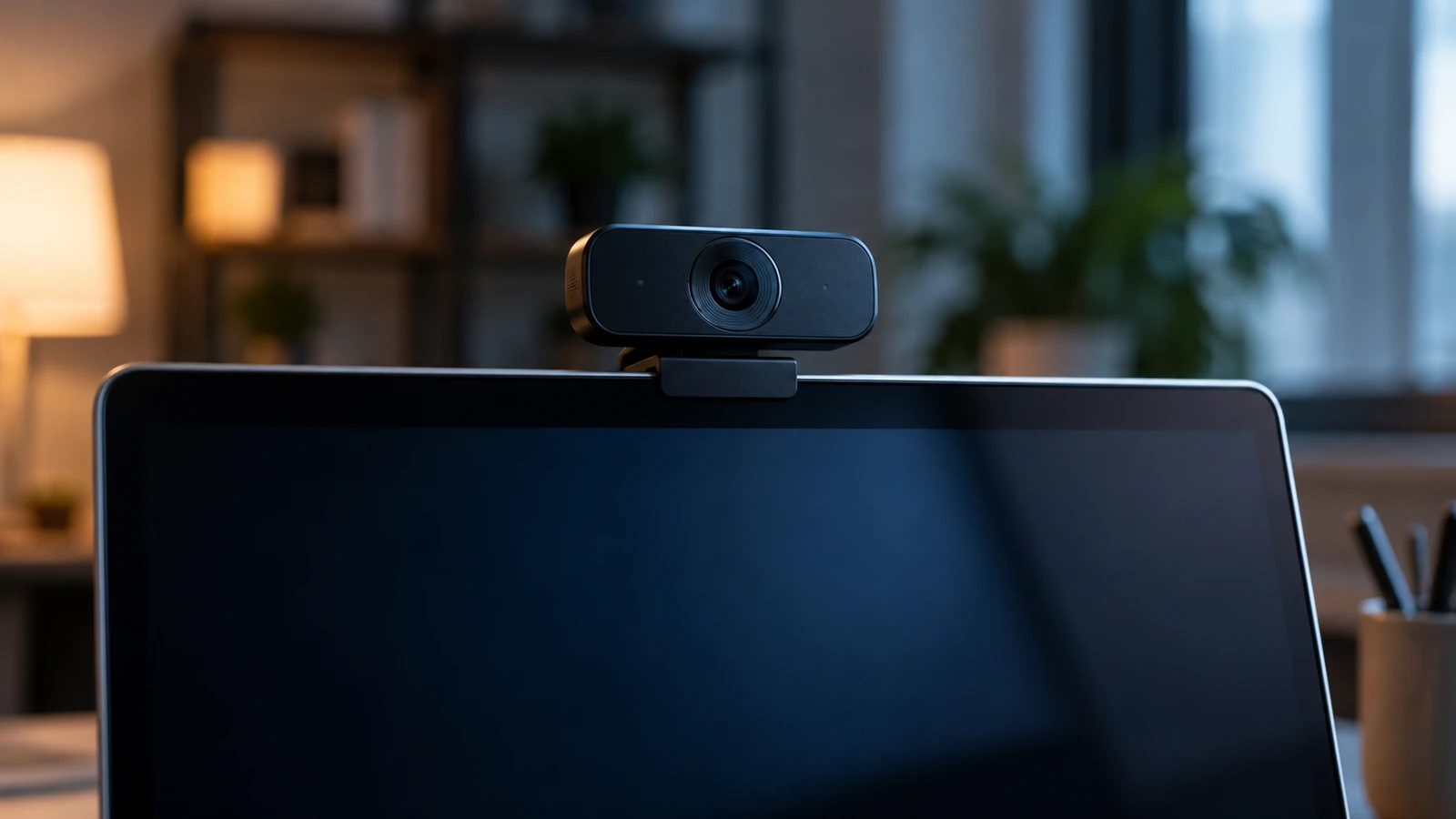
According to the lawsuit, Sutherland planned to use Sentinel AI, combining the company computer’s webcam with facial recognition to verify that the employee was at her desk.
At 160 images in eight hours, that amounts to one photograph every three minutes. This is not a one-time identity check at the beginning of a shift, but repeated image capture throughout the working day.
Von Sander-Timinski had worked remotely since 2018. She objected that the camera could reveal the interior of her home and raised questions about image storage and data security.
A request for medical accommodation
The employee cited medical conditions including systemic lupus erythematosus. She alleges that the prospect of constant surveillance increased her anxiety and stress. She requested a full or partial exemption, including the possibility of less frequent checks.
According to her account, she received a 24-hour ultimatum on August 13, 2026: accept the monitoring or resign. She did not resign. The company allegedly offered office-based work as an alternative, but the commute would have taken approximately six hours in total.
Her employment ended on September 8. She claims the termination was linked to her refusal to accept the software and her request for a medical accommodation.
This is about more than facial recognition
There is a substantial difference between joining a scheduled video meeting and having a system repeatedly photograph an employee. The latter raises questions about capture frequency, purpose, retention and who can access the images.
Facial recognition adds automated analysis of a person’s characteristics. Photographers understand that a frame captured inside a home can reveal far more than whether someone is at their desk. That does not establish that this particular system unlawfully processed images.
What the lawsuit asks the court to consider
The case was filed in the Superior Court of New Jersey, Atlantic County, on September 23, 2026, under docket ATL-L-002018-26. Among other arguments, the plaintiff invokes state anti-discrimination law and the handling of her request for reasonable accommodation.
No court has ruled that Sutherland broke the law. The filing establishes that a legal dispute exists, not that every allegation has been proven.
What we think
The idea that an employer needs 160 photographs a day to determine whether someone is working deserves serious scrutiny. Being visible to a camera is not a meaningful measure of productivity or quality. Someone can sit at a desk all day and achieve little, while another person can deliver excellent work without proving their presence in photographs.
More troubling is the extension of surveillance into the home. Working remotely does not automatically turn a private living space into an area an employer may monitor. The technical ability to capture images and identify faces is not, by itself, a sufficient reason to do so.
The court must evaluate the evidence and the company’s legal obligations. We do not need to predict the outcome to ask the central question: what legitimate need justifies such frequent image capture, and what safeguards accompany it?
For people who work with images, a photograph is never merely a technical file. It carries content, personal information and potential consequences for its subject. When taking that photograph becomes a condition of keeping a job, the question is also who has the right to demand it.