


Summary
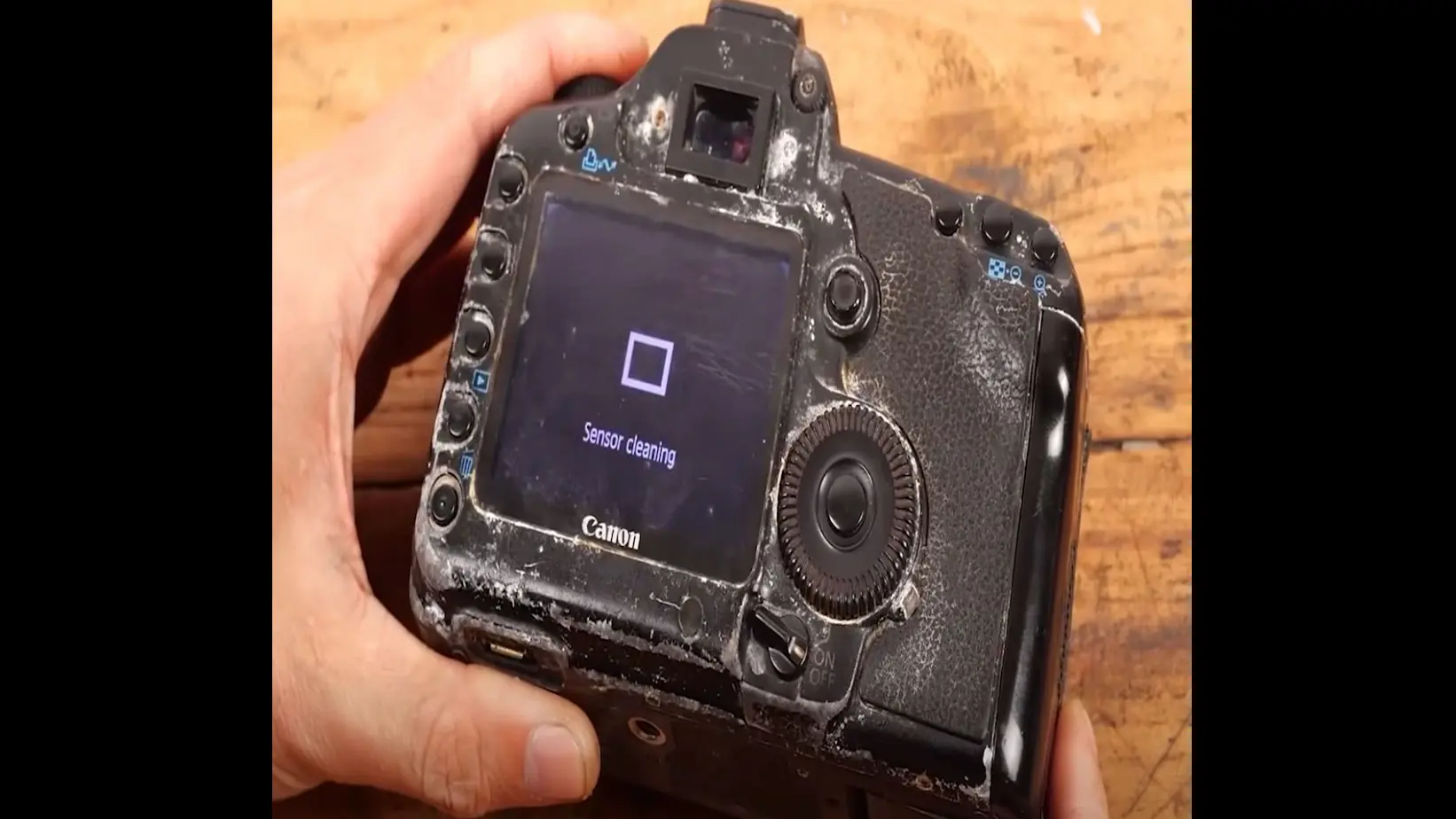
- A Pretty Restoration video shows the restoration of a Canon EOS 5D Mark II.
- The 2008 full-frame DSLR features a 21.1-megapixel sensor and, according to Canon, was the industry's first digital SLR capable of Full HD video recording.
- The 5D Mark II played an important role in the rise of DSLR filmmaking and later became closely associated with Magic Lantern.
- In 2026, used bodies in Europe can be found starting at just over €100, making restoration fascinating but not always economically sensible.
- A DSLR that defined an era
- Full HD was the feature that changed everything
- Then came Magic Lantern
- Why this kind of restoration still matters
- Does a Canon 5D Mark II still make sense in 2026?
- The 5D Mark III makes the decision more difficult
- What to watch for with an old 5D Mark II
- What we think
- Frequently asked questions
A fascinating restoration video brings the Canon EOS 5D Mark II back into the spotlight, revisiting a 2008 DSLR that earned its own place in the history of photography and, especially, video production.
The Pretty Restoration video titled “Restoring a Forgotten Digital Camera DSLR” features the restoration of a Canon EOS 5D Mark II, turning an apparently forgotten digital camera into the subject of an unusually interesting restoration project.
The choice of camera is anything but insignificant. The 5D Mark II became one of the models that helped bridge still photography and filmmaking, with Canon itself recording it in its history as the industry’s first digital SLR capable of Full HD video recording.
A DSLR that defined an era
The Canon EOS 5D Mark II reached the market in November 2008 as the successor to the original EOS 5D. At its heart was a 36 x 24 mm full-frame CMOS sensor with 21.1 megapixels and a DIGIC 4 processor. Its standard sensitivity ranged from ISO 100 to 6400 and could be expanded from ISO 50 all the way to ISO 25,600.
For still photography, it offered continuous shooting at up to approximately 3.9 frames per second, a 9-point autofocus system supported by six additional Assist AF points, an optical viewfinder with approximately 98% coverage and a shutter rated for 150,000 cycles. Its exterior used a rigid magnesium-alloy construction, and the body weighed approximately 810 grams.
Storage was handled by Type I or II CompactFlash cards with UDMA support, while the camera accepted Canon EF lenses rather than EF-S optics. The LP-E6 battery introduced with this generation went on to become one of the most recognisable battery families in the EOS system.
Full HD was the feature that changed everything
The feature that transformed the 5D Mark II from another capable full-frame DSLR into a historically important camera was video.
It could record 1,920 x 1,080 Full HD footage at 30 fps in MOV files using H.264 video and Linear PCM audio. Those specifications appear basic today, but in 2008 they represented something very different when combined with the large full-frame sensor of a digital SLR.
Canon states in its own historical record that the EOS 5D Mark II was the industry’s first digital SLR with Full HD recording capability and that its video functionality attracted the attention of professional broadcasters and video creators. The camera also collected major international honours including TIPA, Camera Grand Prix and EISA awards.
pttl had already highlighted the importance of the 5D Mark II to videographers and filmmakers in 2012, when Canon discontinued production. Three years later, during the tenth anniversary of the 5D family, we again noted its role in helping popularise DSLRs as video-production tools.
Then came Magic Lantern
The influence of the 5D Mark II extended well beyond Canon’s official firmware.
Magic Lantern began in 2009 around the EOS 5D Mark II and gradually brought filmmaking-oriented tools to compatible Canon DSLRs, including focus peaking, waveform displays, advanced time-lapse functionality and, in later developments and implementations, RAW video capabilities.
That says a great deal about the unusual position of this camera in the market. Users and developers were actively attempting to extract more from hardware that proved capable of significantly more than the original factory software initially offered.
Shutter Count: Πώς βρίσκεις πόσα κλικ έχει η κάμερά σου
Why this kind of restoration still matters
The Pretty Restoration video works on two levels. On one hand, there is the simple satisfaction of seeing an old, neglected piece of technology receive attention again. On the other, it is a reminder of how differently cameras from this generation can be viewed today.
The 5D Mark II was built around a solid body with a magnesium-alloy exterior and a shutter rated for 150,000 cycles. That does not mean every body will reach or exceed that figure, but extreme examples of longevity do exist. In 2022, pttl covered a 5D Mark II that was reportedly still functioning after more than 2.2 million shutter actuations — an exceptional case that should not be treated as representative of every camera.
This is where the restoration becomes more than simply a satisfying video. It serves as a reminder that older digital cameras do not automatically become useless simply because 15 or 20 years have passed since their introduction.
Does a Canon 5D Mark II still make sense in 2026?
For photographers who already own good EF lenses and want a very inexpensive full-frame body for portraits, landscapes, studio work or slower-paced photography, the 5D Mark II can still produce perfectly usable 21-megapixel RAW files.
The situation changes when modern autofocus, high shooting speeds, sophisticated subject tracking or contemporary video features are required. Its nine primary AF points, 3.9 fps continuous shooting and 1080p/30 video clearly show the age of the platform.
Price is another very practical factor. In the European used market on August 14, 2026, MPB listed more than ten EOS 5D Mark II bodies at approximately €104 to €234, while available Kamerastore examples were listed at roughly €248 to €271 depending on the individual camera and condition.
That also affects the economics of a real restoration. When a working used body costs only a few hundred euros, a substantial professional repair may not make financial sense, even if restoration remains worthwhile for collecting, sentimental value, education or simply the pleasure of preserving older hardware.
The 5D Mark III makes the decision more difficult
Anyone considering the 5D Mark II purely as a low-cost working tool rather than a historically interesting camera should also consider the EOS 5D Mark III.
The 2012 Mark III moved to a 22.3-megapixel full-frame sensor, DIGIC 5+, a 61-point AF system with up to 41 cross-type points and continuous shooting at approximately 6 fps. It represents a substantial upgrade, particularly in autofocus and overall usability.
At the same time, used 5D Mark III bodies were appearing on MPB Europe from approximately €144 to €534 during the same market check. That means the pricing of the two generations now overlaps to a meaningful degree.
A very good 5D Mark II at a low price can therefore make sense. If its price approaches that of a comparable 5D Mark III, however, the newer generation is usually the more practical choice.
What to watch for with an old 5D Mark II
Age is now more important than the original specification sheet. On a used body, the overall operation of the shutter and mirror, sensor condition, physical controls, CompactFlash slot, connections and battery condition all deserve attention.
Its history of use is equally important. A body that spent years in professional production may have experienced entirely different levels of wear from a 5D Mark II occasionally used by an enthusiast.
Unlike a restoration video, where the process itself is a large part of the attraction, anyone looking for an everyday professional tool should prioritise reliability over nostalgia.
What we think
The Canon EOS 5D Mark II is one of those digital cameras worth preserving, not because it can technically compete with a modern mirrorless model, but because it represents a genuine turning point in the history of imaging.
This restoration is an excellent reason to revisit an era when a still camera could suddenly become a filmmaking tool and change the workflow of an entire generation of creators. And when a body from 2008 can still be repaired, used and made to create images, there is good reason not to dismiss it simply as obsolete electronic waste.
Frequently asked questions
When was the Canon EOS 5D Mark II released?
The Canon EOS 5D Mark II reached the market in November 2008 as the successor to the original EOS 5D.
What sensor does the Canon EOS 5D Mark II use?
It features a 36 x 24 mm full-frame CMOS sensor with approximately 21.1 megapixels and a DIGIC 4 processor.
What video can it record?
The EOS 5D Mark II can record 1,920 x 1,080 Full HD video at 30 fps in MOV format using H.264.
Is the 5D Mark II still worth buying today?
It can make sense as an inexpensive full-frame body for still photography or for someone who already owns EF lenses, but its price should be compared carefully with the 5D Mark III, which provides significantly more capable autofocus and faster performance. Used prices for the two models now overlap to some extent in Europe.