Summary
- Brendan Larsen photographed Mount Taranaki on September 9, 2026, taking 578 eight-second exposures.
- He spent about 45 hours combining satellite trails in Photoshop.
- The resulting composite contains roughly 14,000 trail appearances, not 14,000 distinct satellites.
- After going viral, the image drew accusations that it was AI-generated.
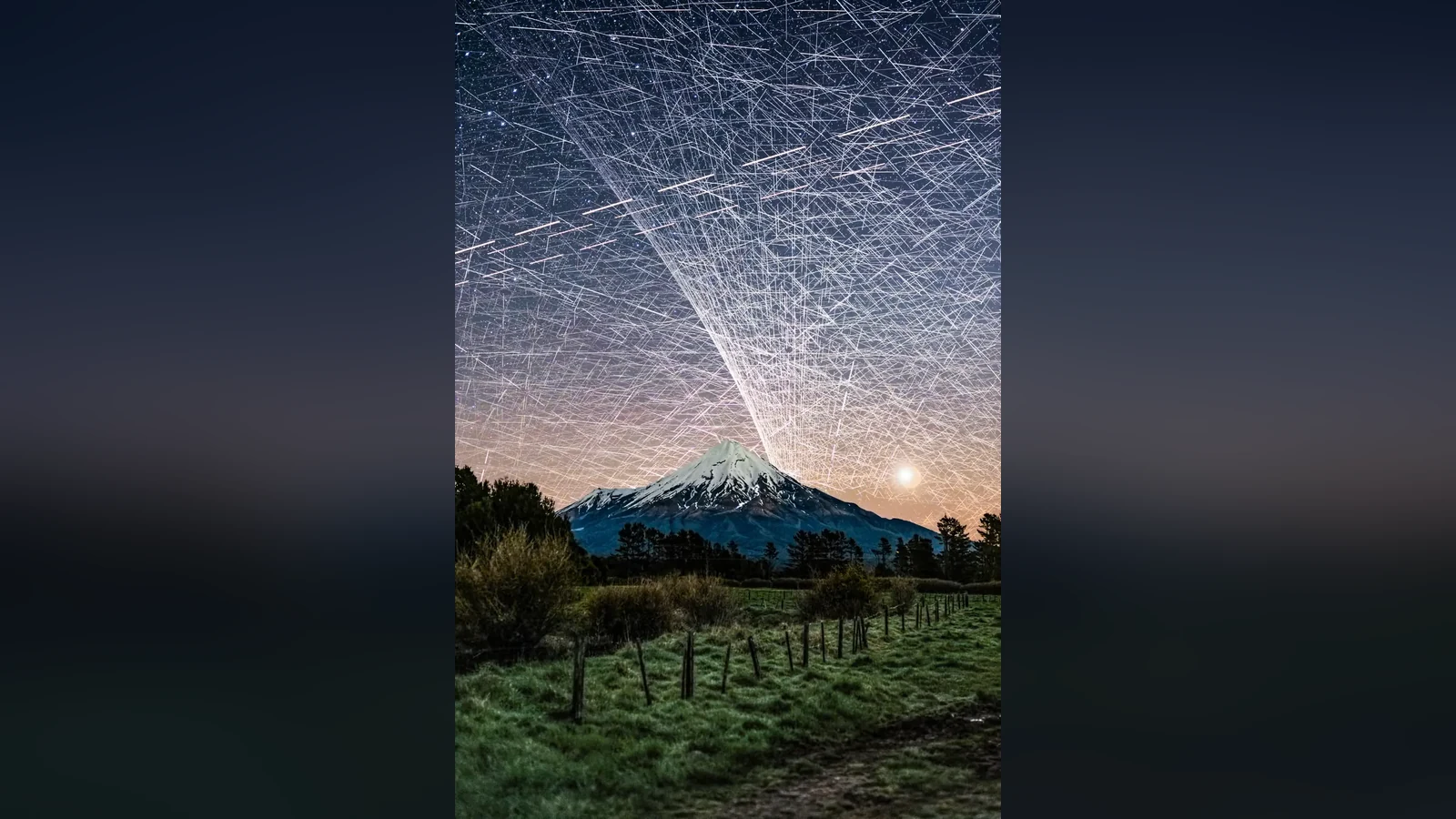
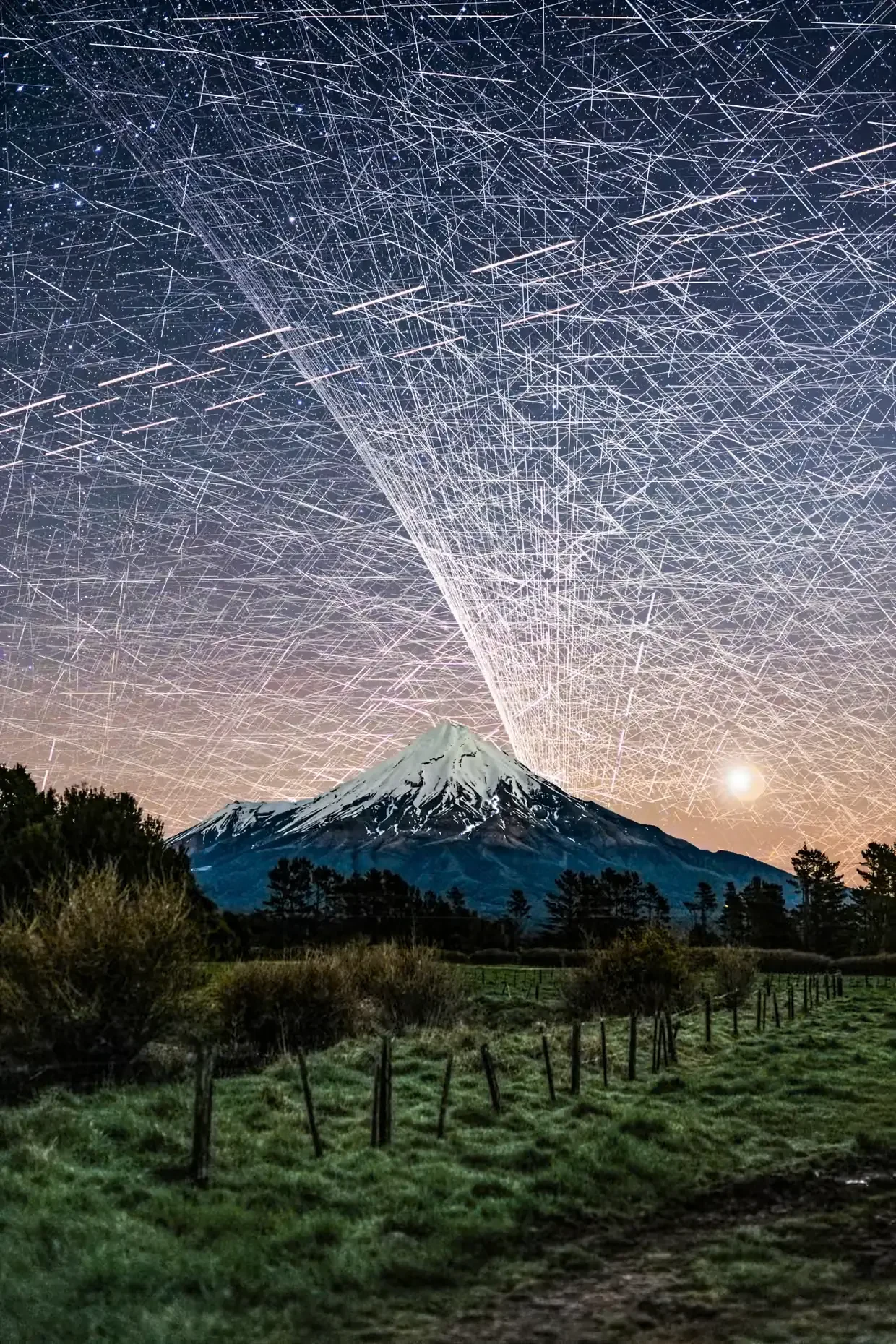
A photograph showing thousands of satellite trails over Mount Taranaki in New Zealand looked so improbable that some viewers accused its creator of using artificial intelligence.
Astrophotographer Brendan Larsen had actually spent nearly two hours capturing the sky, followed by around 45 hours of painstaking work in Photoshop to combine real satellite passes into a single composite.
The process returned to the spotlight in an interview published on November 4, 2026, after the image had gone viral and sparked a debate about photographic authenticity and the growing traffic above us.
578 exposures over Mount Taranaki
On September 9, 2026, between 8:18 p.m. and 10:13 p.m., Larsen photographed the volcano and the surrounding sky. His camera recorded 578 eight-second exposures with short intervals between frames.
Satellites can appear as bright streaks when they reflect sunlight while moving during an exposure. A single frame captures only a limited number. Combine the passes recorded over almost two hours, however, and the sky looks dramatically different.
45 hours in Photoshop, not an AI-generated image
Capturing the frames was only the beginning. Larsen manually collected satellite trails from the individual exposures, working with layers and masks in Adobe Photoshop. He also removed repeated stars from the composite so the paths of the satellites would stand out.
The editing took about 45 hours, according to Larsen’s own account. This is neither a single exposure nor an untouched image: it is a photographic composite that combines recorded light from the same vantage point and night. That distinction matters in any discussion of authenticity.
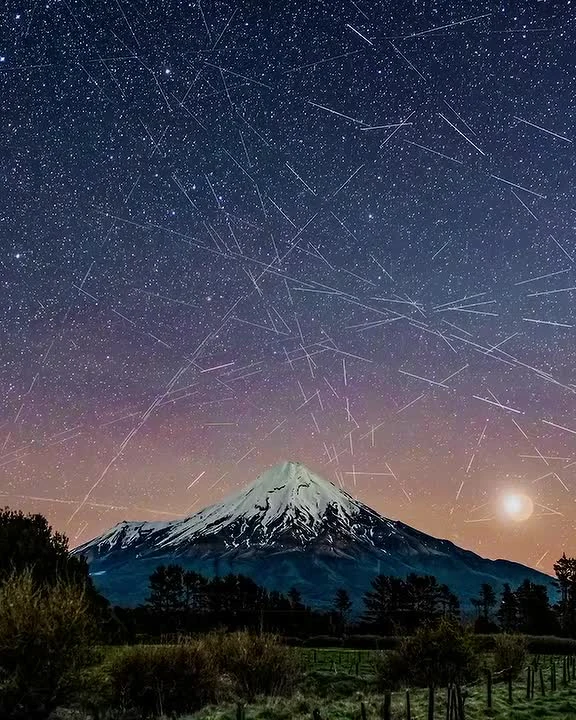
The finished image contains roughly 14,000 individual trail appearances, which Larsen estimates were made by around 1,400 different satellites. The same satellite can appear in successive frames, leaving more than one recorded trail.
Doubts about the image—and concern for the night sky
The photograph spread widely across social media in October. Admiration was followed by accusations that it could not be real. Larsen had documented his creative process, anticipating that an image this unusual would prompt suspicion.
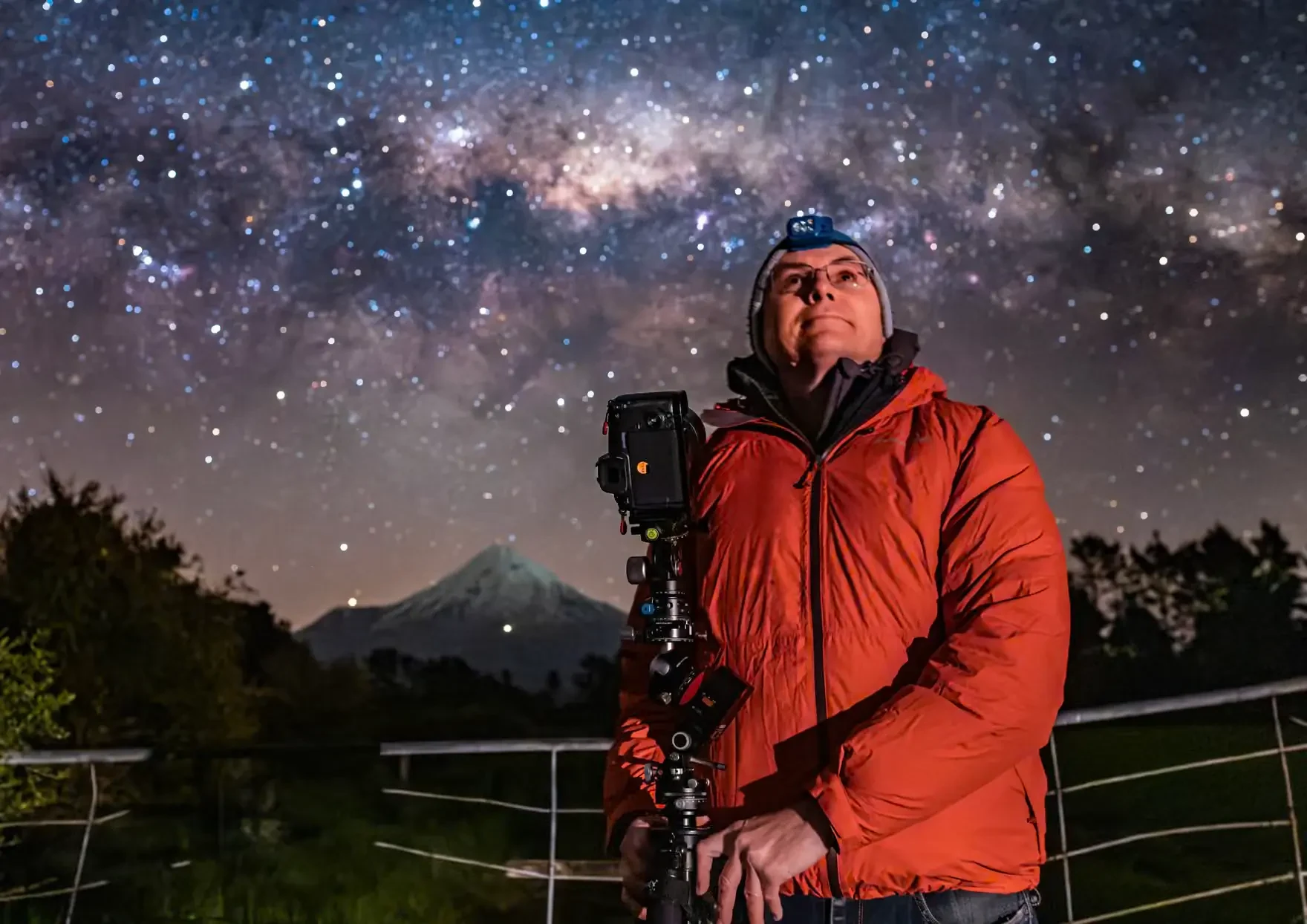
There is more here than an argument about photography and AI. The image illustrates how frequently satellites now pass across the sky, including above dark landscapes. This has become a practical problem for astrophotographers and astronomers: the ESA and IAU collaboration to protect dark and quiet skies addresses these and other sources of interference with astronomical observations.
Larsen also created a completely separate, 78-frame image of the same mountain for the Milky Way Photographer of the Year 2026 collection. That earlier work shows the Milky Way over Syme Hut; the new 578-exposure composite is about satellite trails.
What we think
Larsen’s photograph makes you stop scrolling, but the part that really stays with you is how he made it. Anyone who has spent hours carefully masking dozens of Photoshop layers knows how much work a relatively small composite can take. Here, there are 578 source frames and the deliberate choice to preserve every trail by hand.
A composite is not automatically a fake photograph. There is a fundamental difference between combining actual exposures and asking a model to invent a scene. What matters is being clear about the method, as Larsen has been. It gives viewers an accurate understanding of what they are looking at.
The less comfortable point is what these exposures reveal. It takes a nearly two-hour accumulation to make the satellite traffic this obvious, so it is easy to underestimate how often those moving lights now intrude into our night-sky frames. For those of us who photograph the stars, that is not just visually striking—it changes the practical realities of shooting.