Summary
- Excire Foto 2027 version 5.1 indexes content from multiple scenes within supported videos.
- Creators can save selected video frames as still images.
- Reverse geocoding derives place names from existing GPS coordinates.
- The update is free for Excire Foto 2027 owners and AI analysis runs locally.
Excire Foto 2027 adds multi-scene video content search in its free 5.1 update, with AI analysis performed locally rather than in the cloud.
Anyone managing a large archive of footage knows the problem: you remember filming a particular moment, but not which clip contains it. Excire, best known for photo organisation, is now making video material easier to retrieve as well.
Version 5.1.0 is available for Windows and macOS, with new tools for video footage, geographic metadata and everyday library management.
Finding more scenes within each video
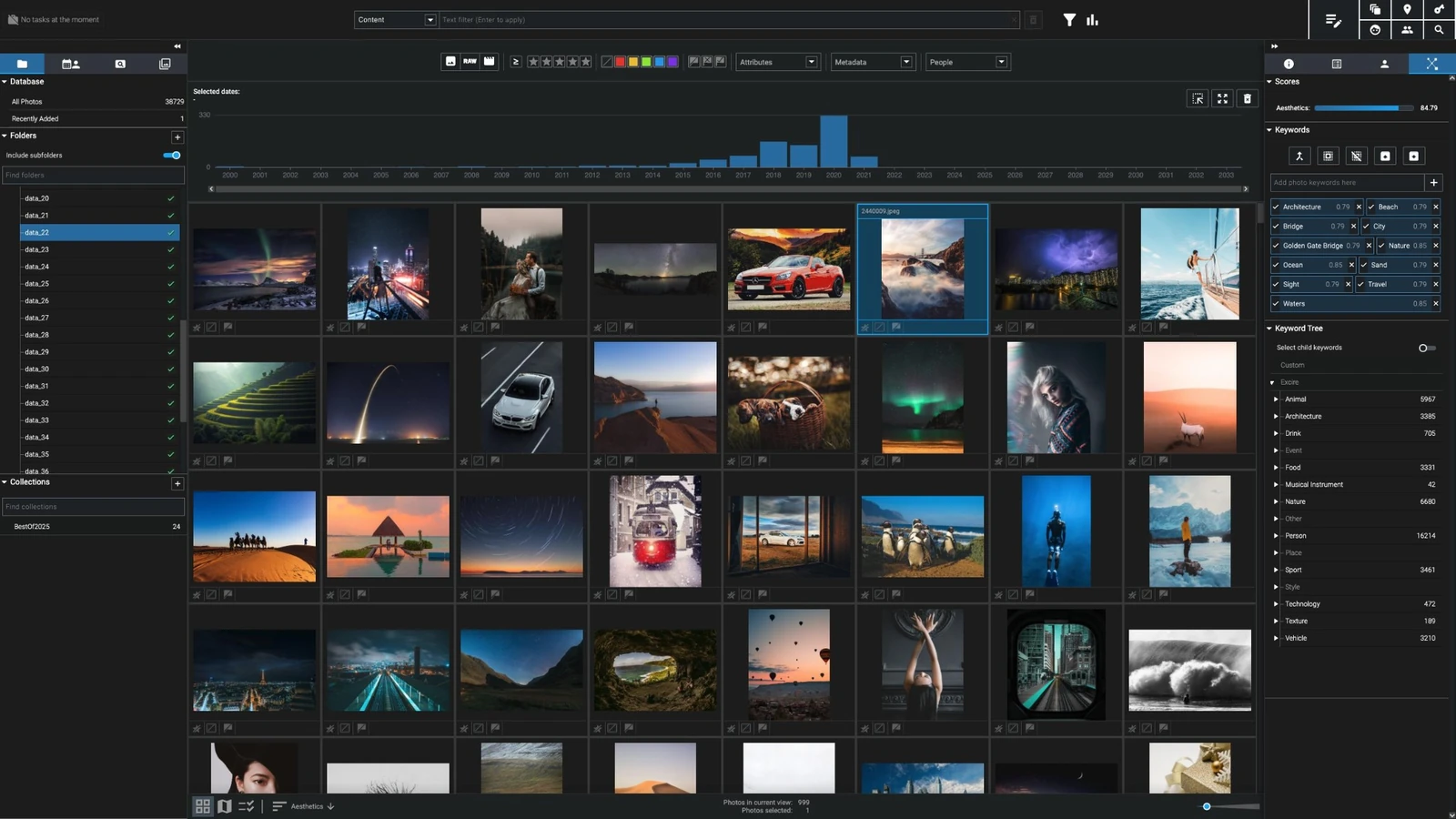
Extended Video Indexing analyses content from multiple scenes within a supported video file and generates relevant keywords. A long clip is therefore no longer represented solely by a single preview frame. Combined with existing natural-language search, this makes it easier to locate footage featuring particular subjects or objects.
For videographers, that could mean searching an archive for scenes with the sea, city streets or animals without opening files one by one. The search works on visual content indexed by the application; it is not automatic audio transcription, nor a guarantee that every individual frame can be identified.
Version 5.1 also allows selected video frames to be saved as still images. That can be handy for previews, production references or extracting a useful still without reopening the same moment in a separate application.
Reverse geocoding and library improvements
Reverse geocoding converts existing GPS coordinates into readable location information, including city, region and country. It does not invent GPS coordinates for files that have none; it uses geographic data already recorded.
The update also introduces a filter for missing metadata values, the ability to import individual photos instead of entire folders, text-filter history and an option to show a location in Google Maps.
Local AI, compatibility and what happens after updating
According to Excire, AI analysis runs on the user’s own computer, without uploading photographs or videos to a cloud service. That distinction matters for creators working with private, unreleased or client material. The optional Google Maps location view is separate from the local AI analysis.
Videos already in the library need to be re-indexed to benefit from the expanded scene information. The time required depends on the amount of footage, and the process can be started later. Video analysis support also depends on the file container, codec and operating system.
The company recommends backing up the database before a major version migration: a database converted from an older release to version 5.x cannot subsequently be opened by that older version.
Price and availability
Update 5.1.0 is free for existing Excire Foto 2027 owners. The application is offered as a one-time purchase without a recurring subscription, with a 14-day free trial. The official list price was €229 as of August 2026.
More information here.
What we think
The useful part is the time this could save when searching through footage. After several days of shooting, you may remember filming a bird taking off or a particular landscape but have no idea which of dozens of clips contains it. Searching by what is visible in the footage, rather than relying only on filenames, is a genuinely practical improvement.
I also like that the analysis stays on our own machines. With client work, unreleased documentaries or private archives, there is good reason not to send every search to someone else’s server. The trade-off is that indexing takes processing power and time on your own computer.
Excire has previously put AI in the role of judge at its People in Focus photography competition. To me, using it as an assistant that helps us find our own material is a much more convincing application. Choosing the right shot, shaping a story and making the final edit remain our decisions.
Frequently asked questions
Do I need to reanalyse videos already in my library?
Yes, if you want the new multi-scene indexing data. The application offers this option during the update or later through the video re-indexing command.
Does the AI analysis upload my files to the cloud?
No. Excire says AI analysis runs locally. That does not mean every optional online feature, such as opening Google Maps, works without an internet connection.
Is version 5.1 also free for Excire Foto 2025 users?
Version 5.1 is a free update for Excire Foto 2027. Moving from an earlier major edition to Foto 2027 is a separate paid upgrade.