

Summary
- The four lead actors recreated the iconic Abbey Road image during filming
- Paul Mescal plays McCartney, Harris Dickinson Lennon, Joseph Quinn Harrison and Barry Keoghan Starr
- Greig Fraser is the cinematographer on all four films
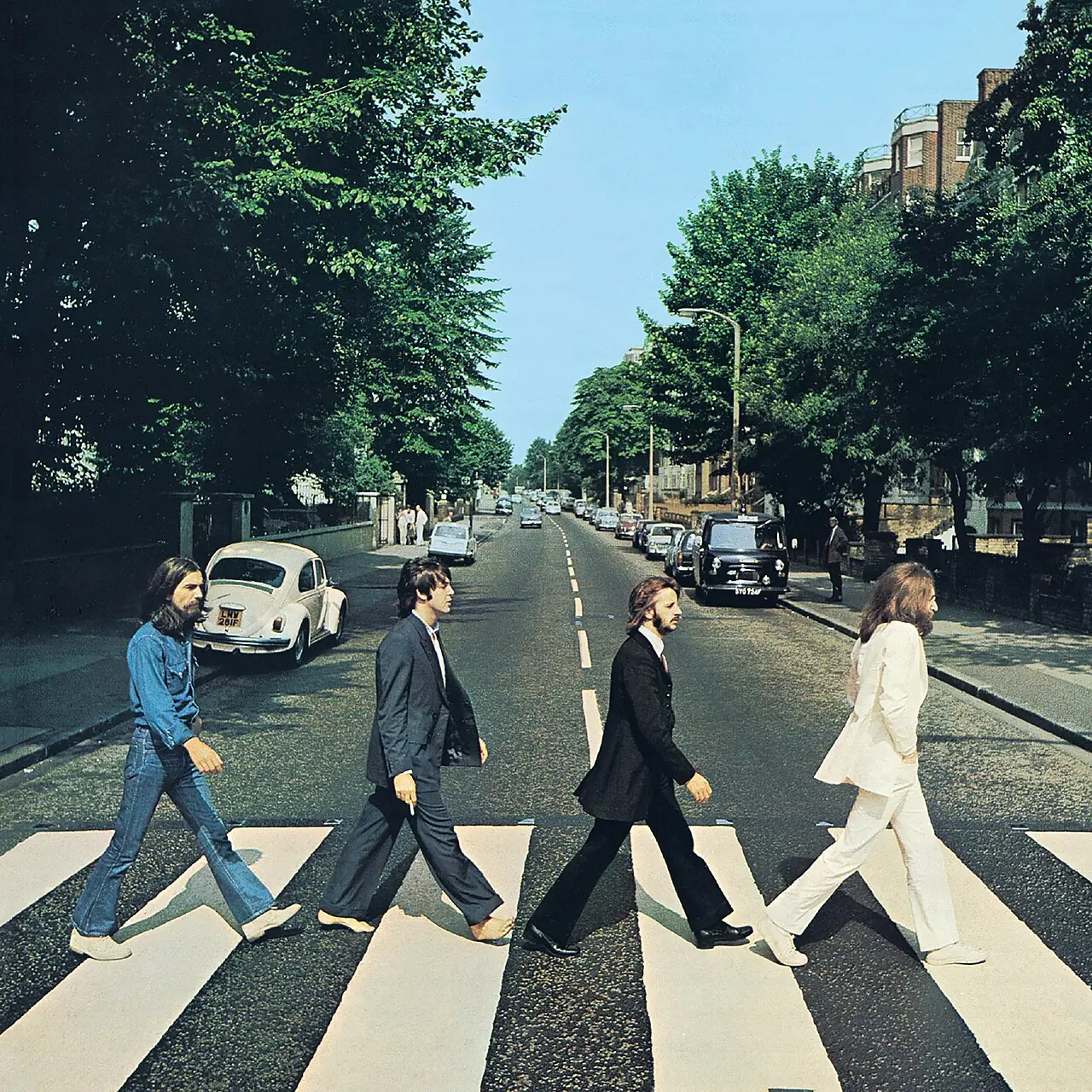
- Iain Macmillan photographed the original Abbey Road cover on August 8, 1969
- Macmillan captured only six frames during the famous crossing session
- Sam Mendes' four films are scheduled for theatrical release in April 2028
- The new Beatles return to the real Abbey Road
- The original photograph took only minutes
- Abbey Road almost never happened
- Greig Fraser behind the cinematic image
- From Dune and The Batman to The Beatles
- Four movies rather than one biopic
- A 1969 photograph becomes a cinematic event again
- What we think
- Frequently Asked Questions
The four actors portraying The Beatles in Sam Mendes’ upcoming films returned to the real Abbey Road crossing and recreated one of the most famous photographs in music history during production.
Paul Mescal, Harris Dickinson, Barry Keoghan and Joseph Quinn were seen at the crossing outside Abbey Road Studios on August 16, portraying Paul McCartney, John Lennon, Ringo Starr and George Harrison respectively for The Beatles – A Four-Film Cinematic Event.
The sequence is particularly interesting for photographers and filmmakers because it translates into cinema an image created in just a few minutes by photographer Iain Macmillan in 1969, which went on to become one of the most recognisable album covers ever made. Oscar-winning cinematographer Greig Fraser is responsible for the photography of all four new films.
The new Beatles return to the real Abbey Road
Footage from the production shows the four actors walking in single file across the distinctive pedestrian crossing.
Harris Dickinson plays John Lennon, Paul Mescal portrays Paul McCartney, Joseph Quinn plays George Harrison and Barry Keoghan takes the role of Ringo Starr.
This is not a conventional single music biopic. Sam Mendes is directing four separate feature films, each presenting the story from the perspective of a different Beatle, with the narratives intersecting. Sony currently plans to release the project theatrically in April 2028.
The project also marks the first time Apple Corps Ltd. and The Beatles have granted full life-story and music rights for scripted feature films.
The original photograph took only minutes
The image being recreated by the production was made on August 8, 1969.
John Lennon, Ringo Starr, Paul McCartney and George Harrison stepped outside the then EMI Studios and repeatedly crossed Abbey Road while Scottish photographer Iain Macmillan stood on a stepladder in the middle of the street. A police officer temporarily stopped traffic while Macmillan made only six exposures.
The session lasted roughly ten minutes. One of the six frames was selected for the cover after McCartney reviewed the transparencies.
The image became so recognisable that Abbey Road remains one of the rare album covers requiring neither the band’s name nor the album title on its front.
PTTL has previously examined in detail how the famous Abbey Road cover photograph was created.
Abbey Road almost never happened
Even the idea for the cover emerged largely from practicality.
The album’s original working title was Everest, inspired by the cigarette brand smoked by engineer Geoff Emerick, and a trip to Nepal for a photograph had been considered.
That idea was abandoned, and Paul McCartney proposed something far simpler: photograph the band outside the studio where they were already working.
A practical decision ultimately created one of the most frequently copied photographic compositions in popular culture.
Greig Fraser behind the cinematic image
For PTTL, one of the most interesting aspects of the production is behind the camera.
All four films are being shot by Greig Fraser, the Academy Award-winning cinematographer of Dune and Dune: Part Two, who also photographed The Batman. The official production announcement lists Fraser among its core creative team alongside editor Lee Smith and production designers Stefania Cella, Mark Tildesley and Neal Callow.
That choice becomes especially interesting for a sequence such as Abbey Road.
Macmillan’s original is a static frame with exceptionally simple visual geometry: four people, a crossing, a road and strong perspective lines.
In a movie, however, the composition needs to acquire time and movement. Reproducing the recognisable frame is only part of the task; the sequence also needs to work before and after the precise instant familiar from the album cover.
It is therefore a useful illustration of the difference between reproducing a historical photograph and translating that photograph into a cinematic sequence.
From Dune and The Batman to The Beatles
Fraser is particularly known for creating very different visual worlds.
The official production lists him as cinematographer across the entire four-film project.
His involvement also suggests that the films are being treated as considerably more than conventional music biopics. Sony and Mendes are building four theatrical productions that examine the same history from different perspectives.
Whether those perspectives will also be expressed through different lighting, lenses, colour or cinematographic approaches remains to be seen. No such visual differentiation has yet been officially announced.
Four movies rather than one biopic
Mendes has chosen an unusual structure.
Each Beatle receives his own cinematic perspective:
Paul Mescal as Paul McCartney
Harris Dickinson as John Lennon
Joseph Quinn as George Harrison
Barry Keoghan as Ringo Starr
The four narratives will intersect to tell the band’s journey from Liverpool to global fame and ultimately its breakup.
Sony currently plans to release The Beatles – A Four-Film Cinematic Event theatrically in April 2028.
A 1969 photograph becomes a cinematic event again
Returning to the crossing is more than an easy reference for fans.
Abbey Road is one of the rare examples of a photograph becoming so closely identified with a cultural work that the location itself became a landmark.
More than half a century later, four actors are repeating a movement that lasted only seconds in 1969 but remains instantly recognisable around the world.
What we think
This sequence is exactly the kind of film story that remains interesting beyond its celebrity element.
A six-frame photo session lasting only a few minutes in 1969 is returning as part of an enormous motion-picture production almost six decades later.
For photographers and cinematographers, Greig Fraser’s involvement adds another layer. The key question is not only how faithfully the famous frame will be recreated, but how such an iconic static photographic composition will be transformed into a moving cinematic scene.
Frequently Asked Questions
Who plays The Beatles in the new movies?
Paul Mescal plays Paul McCartney, Harris Dickinson plays John Lennon, Joseph Quinn portrays George Harrison and Barry Keoghan plays Ringo Starr.
Who is the cinematographer?
Greig Fraser, known for Dune, Dune: Part Two and The Batman, is the cinematographer on the four films.
Who photographed the original Abbey Road cover?
Iain Macmillan photographed the famous cover on August 8, 1969, capturing just six frames while standing on a stepladder in the road.
How many Beatles films is Sam Mendes making?
The project consists of four films, each presenting events from the perspective of a different member of the band.
When will the films be released?
Sony currently lists The Beatles – A Four-Film Cinematic Event for theatrical release in April 2028.