

Summary
- Christopher Nolan disagreed with Matt Damon’s pessimistic assessment of the future of epic film productions.
- He argued that cinema remains vital, essential and capable of reinventing itself.
- Nolan rejected claims that younger audiences cannot engage with long and complex films.
- He said younger generations are reacting strongly against low-quality, mass-produced AI content.
- The director believes artificial intelligence can become a useful tool but cannot replace human creativity.
Christopher Nolan is defending the future of cinema and rejecting the idea that artificial intelligence could entirely replace human creativity.
The Oscar-winning filmmaker publicly disagreed with Matt Damon’s suggestion that “The Odyssey” could be one of the last major productions of its kind, describing that perspective as defeatist. He also addressed the growing public backlash against low-quality content created and distributed at scale through artificial intelligence tools.
His comments are particularly significant at a time when Hollywood is debating the use of AI, the cost of major productions and whether younger audiences remain interested in demanding, long-form theatrical experiences.
His Disagreement With Matt Damon
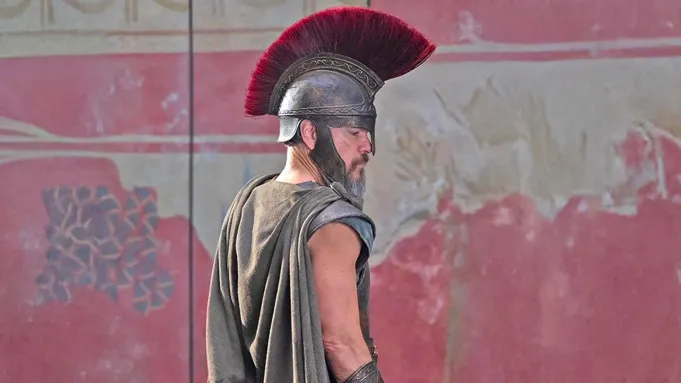
Matt Damon, who plays Odysseus in the film, had described making “The Odyssey” as an almost nostalgic experience. The production was shot on real locations, involved a large cast and crew, and was designed specifically for the big screen.
According to the actor, similarly ambitious projects are becoming increasingly rare. Nolan acknowledged the point his leading actor was making but said he did not share the pessimistic side of that assessment.
The director argued that cinema remains vital and essential while continuing to transform through new creative voices.
Audiences Have Not Lost Their Attention Spans
Nolan also rejected the claim that younger viewers are no longer capable of following long, complex or deliberately paced stories.
According to the filmmaker, the popularity of contemporary films with mysterious or contemplative storytelling proves that audiences still seek work that requires concentration. In his view, length and complexity are not obstacles when a film is supported by a meaningful creative vision.
That position is directly connected to “The Odyssey,” an epic production based on Homer’s poem that brings Odysseus’ long journey home to the big screen.
The Backlash Against “AI Slop”
Nolan focused particularly on the response of younger generations to artificial intelligence. He observed that the technology has been enthusiastically adopted by investors, technology companies and businesses without receiving the same level of acceptance from the public.
The term “AI slop” is used to describe mass-produced text, video, audio and visual material generated by artificial intelligence, often without meaningful editorial oversight or a distinct creative identity.
The director said the speed with which young people have dismissed this kind of content is remarkable. In his view, there is now clear distrust toward work that feels impersonal or mechanically produced.
AI as a Tool, Not a Creator
Christopher Nolan did not deny that artificial intelligence could develop into a useful tool for producing and processing images.
However, he rejected the idea that it could completely replace human beings and human creativity. For Nolan, the real value of the technology will depend on how it is used and on who accepts responsibility for its results.
The director has previously argued that executives, employers and producers should not use AI as a way to avoid personal and professional accountability.
A Large-Scale Production
“The Odyssey” is one of the largest productions of Nolan’s career, with Matt Damon starring as Odysseus. The cast also includes Anne Hathaway, Tom Holland, Robert Pattinson, Zendaya, Lupita Nyong’o and Charlize Theron.
The film is based on the ancient Greek epic and follows the hero’s long struggle to return home after the Trojan War. Production took place across several countries, with Nolan emphasizing real locations, practical effects and large-scale cinematography.
What We Think
Christopher Nolan’s position is not simply a rejection of technological change. Instead, it separates the use of AI as a tool from the indiscriminate replacement of human work and expression. The public response to “AI slop” suggests that speed of production is not enough to create cultural value, while the success of ambitious cinematic projects could prove that the big screen has not lost its power.
Frequently Asked Questions
What did Christopher Nolan say about artificial intelligence?
He argued that AI could offer useful tools but described the idea that it could entirely replace human creativity as nonsensical.
What does the term “AI slop” mean?
It describes low-quality content that is mass-produced with artificial intelligence and distributed without meaningful creative or editorial oversight.
Why did Nolan disagree with Matt Damon?
Damon expressed concern that productions such as “The Odyssey” may no longer be made in the future. Nolan considered that perspective defeatist and argued that cinema continues to evolve.
Who plays Odysseus?
Matt Damon plays the central role of Odysseus.
What does Nolan believe about younger audiences?
The director believes younger viewers remain interested in long and complex films when those projects have a strong creative identity.