

Summary
- DJI used an AI-generated avatar in an advertisement for the Mic Mini.
- The advertisement was published on TikTok and was later removed.
- Creators criticized the company for not working with a real professional.
- DJI said the incident does not signal a change in its broader strategy.
- The company stated that it will continue collaborating with real creators.
DJI’s use of an AI-generated person in an advertisement sparked strong reactions from photographers, filmmakers, and content creators.
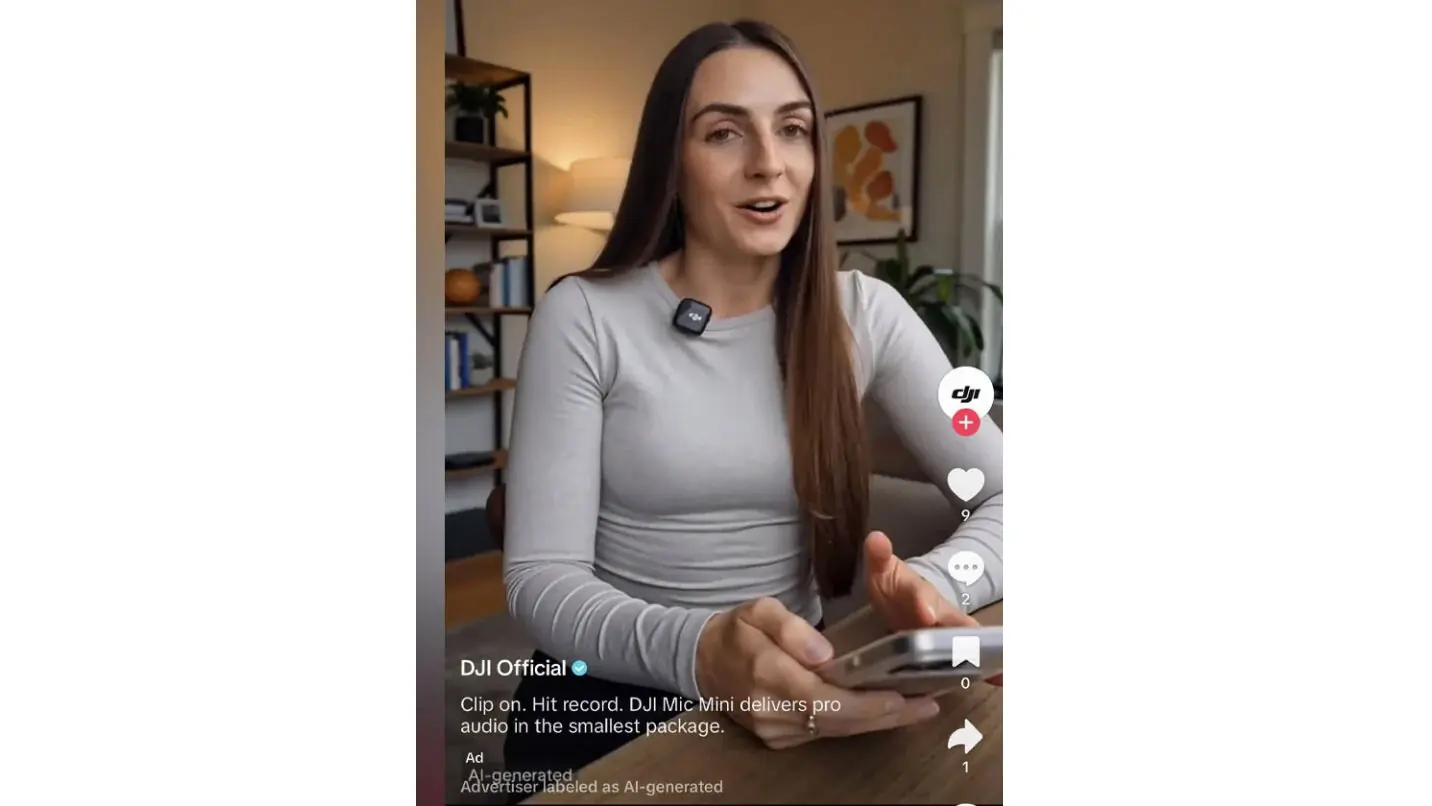
The advertisement was published on TikTok to promote the DJI Mic Mini and featured a digitally generated avatar that resembled a real person. The company removed the video following the backlash.
The incident is particularly significant because DJI relies heavily on real creators to promote and use its products. Many professionals viewed it as contradictory that a company centered around the creative community chose a synthetic person instead of collaborating with an actual creator.
The DJI Mic Mini Advertisement
The controversial video promoted the DJI Mic Mini, a product aimed at people who create videos, podcasts, and social media content.
The person appearing in the advertisement was not a real presenter or influencer, but an avatar created with artificial intelligence. Its appearance was realistic enough that viewers could initially mistake it for an actual person.
Why Creators Reacted
The main criticism was that DJI could easily have hired a real creator to present the product.
Commenters pointed out that the company sells cameras, drones, microphones, and other tools to photographers, filmmakers, and content creators. As a result, the decision to use an AI avatar was seen by many as dismissive of the people who buy and use its products.
The reaction was intensified by the pressure already facing many creative professionals as artificial intelligence is increasingly used for work that was previously assigned to humans.
The Advertisement Was Removed
DJI deleted the advertisement from TikTok following the negative publicity.
Removing the video did not end the discussion, as copies and clips had already been shared on other platforms. Creators continued to criticize the company’s decision and the message it sent to its audience.
DJI’s Response
A DJI spokesperson said the company is exploring emerging technologies and creative formats as part of its marketing activities.
At the same time, the company clarified that the advertisement does not represent a broader change in DJI’s strategy. According to DJI, creators, filmmakers, photographers, and storytellers remain central to its identity.
DJI also said it intends to continue working with real creators who present its products in authentic ways.
Different Reactions Across International Markets
AI-generated advertisements are not received in the same way in every country.
In some markets, synthetic people have become relatively common in television and online advertising. In others, however, audiences react more negatively, particularly when it is not clear that the person being shown is not real.
DJI’s case demonstrates how an advertising practice that goes largely unnoticed in one country can trigger significant criticism in another.
What We Think
The use of artificial intelligence in advertising is not inherently a problem. However, when a company that depends on creators replaces a real professional with a synthetic person, it should expect criticism. Transparency and meaningful support for the creative community will become increasingly important.
Frequently Asked Questions
What did DJI’s advertisement promote?
The advertisement promoted the DJI Mic Mini and used an AI-generated avatar instead of a real presenter.
Where was the advertisement published?
The advertisement was published on TikTok and was removed following the backlash.
Why did creators react negatively?
Many believed that a company relying on photographers, filmmakers, and content creators should have hired a real professional.
What did DJI say in response?
DJI said it is exploring emerging technologies but argued that the AI avatar does not represent a broader change in its marketing strategy.
Will DJI continue working with real creators?
The company said creators remain central to its identity and that it will continue supporting and collaborating with them.