

Summary
- Fstoppers reports that carry-on enforcement is becoming stricter in 2026, especially in the United States
- Airlines are applying size limits and fare restrictions more consistently
- Photographers risk having camera bags gate-checked on full flights
- Lithium batteries and power banks must remain in the cabin
- Choosing the right kit, bag, and fare is now essential
Stricter carry-on enforcement in the United States is creating new challenges for photographers traveling with cameras, lenses, and batteries.
According to an Fstoppers article, 2026 appears to be the year when airlines, especially in the United States, are applying existing carry-on rules more consistently, with more attention to dimensions, cabin space, and fare-based restrictions.
This matters for photographers because camera gear is heavy, fragile, and difficult to send into the hold without risk.
The Rules Are Not Always New, but Enforcement Is Changing
The main point raised by Fstoppers is that many of these limits did not suddenly appear in 2026. In several markets, especially outside the United States, airlines have had specific weight and size limits for cabin baggage for years.
The difference is that in the US, where enforcement has traditionally been more relaxed and carry-ons were rarely weighed, things appear to be changing. Airlines are applying published size limits more consistently, while on full flights passengers who board last are more likely to see their bags sent to the hold.
For an ordinary traveler, that is an inconvenience. For a photographer, it can mean camera bodies, lenses, batteries, and chargers suddenly leaving their control.
The Problem With Basic Fares
One of the most important points concerns fare structure. In the United States, basic fares do not always offer the same carry-on rights.
Fstoppers notes that United is one of the airlines photographers should watch carefully, as domestic Basic Economy usually allows only a personal item and not a full-size overhead carry-on. American and Delta, by contrast, remain more generous on their cheapest domestic fares by still allowing a full-size carry-on.
This means photographers can no longer look only at the airline. They must also check the exact fare they are buying.
Why Photographers Are More Affected
A mirrorless body, a fast zoom lens, a second lens, batteries, chargers, and a laptop can quickly add significant weight before any clothing or other travel items are packed.
The issue becomes even bigger when a bag fits the rules while empty but exceeds the allowed dimensions once fully loaded. Straps, handles, wheels, side pockets, and bulges all count when the bag goes into the airline sizer.
In the United States, weight is usually not the main issue with major carriers, as enforcement focuses more on dimensions. However, on international connections or in other markets, the same kit may run into 7 kg, 8 kg, or 10 kg limits.
Batteries Need Special Attention
Lithium batteries and power banks are critical for photographers and filmmakers. The basic rule remains that spare lithium batteries and power banks must travel in the cabin, not in checked baggage.
This becomes especially important if a carry-on is gate-checked. In that case, the photographer must remove batteries and power banks and keep them in the cabin.
Fstoppers also notes that in 2026 there are tighter restrictions around power banks in the cabin, with some airlines requiring them to remain accessible rather than stored in overhead bins.
How to Adapt a Photography Kit
The safest strategy is careful gear selection before the trip. One body and two small prime lenses may be more practical than a heavy zoom-based kit, especially when traveling on a basic fare or with an airline that enforces rules strictly.
The personal item under the seat becomes more important. That is where the most valuable and fragile items should go: camera body, main lens, batteries, memory cards, and chargers.
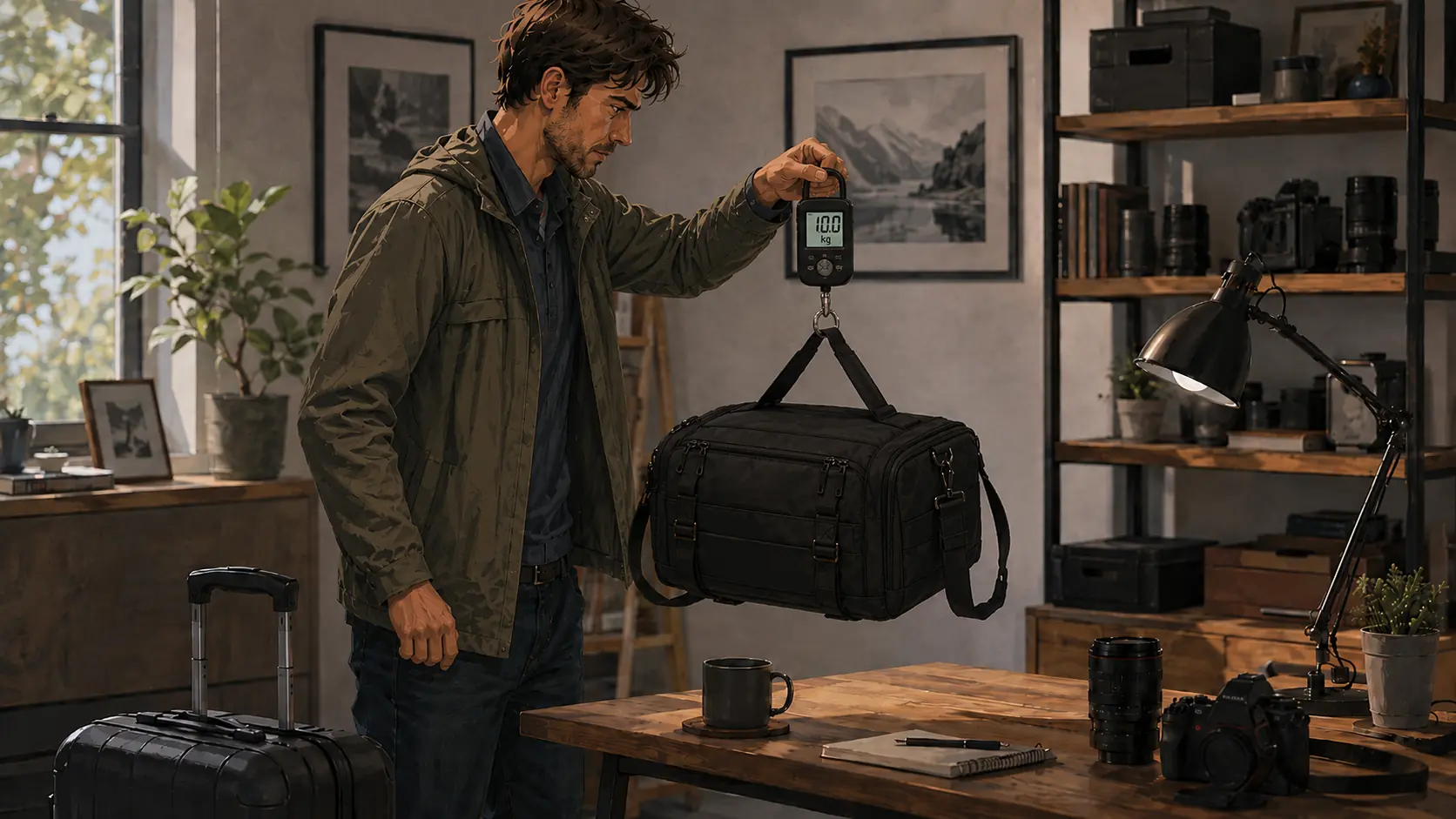
Fstoppers also recommends weighing and measuring the bag at home, fully loaded, including handles and wheels. The real size of the packed bag is what matters at the gate.
What starts in the US often reaches the rest of the world
Even if stricter carry-on checks currently appear to be focused mainly on flights and airports in the United States, photographers should not treat this as something distant or irrelevant.
In air travel, practices that first become common in the US often spread later to other markets, especially when they involve baggage policies, boarding procedures, delays and extra airline revenue.
For photographers, this means the issue is not limited to those traveling to or within the US. It concerns every professional or creator who flies with cameras, lenses, batteries, a laptop and backup gear in the cabin.
The weight of the camera bag is becoming just as important as its dimensions. A camera backpack can easily reach or exceed 8–10 kg, especially when it includes two camera bodies, lenses, chargers, power banks, storage drives and a computer. If weight checks become more common, many photographers will have to rethink what they really need to carry onboard.
What We Think
The change in the United States does not mean photographers can no longer travel with serious gear. It does mean the era of “it always gets through” is ending. Choosing the right fare, using a smaller bag, checking dimensions, and keeping batteries in the personal item are now part of travel preparation, just like charging the camera before a trip.
Frequently Asked Questions
Do these changes mainly concern the United States?
Yes, the Fstoppers article focuses especially on the United States, where carry-on enforcement has historically been more relaxed than with many international airlines.
Are weight limits changing on US airlines?
For major US airlines, the main issue is not so much weight, but more consistent enforcement of size limits and fare-based restrictions.
What is the biggest risk for photographers?
The biggest risk is being asked at the gate to send a camera bag into the hold, especially on full flights or when boarding last.
Where should batteries be carried?
Spare lithium batteries and power banks should remain in the cabin, ideally in the personal item under the seat.
What should a photographer check before buying a ticket?
They should check the exact fare, carry-on dimensions, overhead bin access, and the rules for batteries and power banks.