Summary
- Vogue, ELLE and Wall Street Journal Magazine published three visually related covers by Szilveszter Makó within days.
- They feature Jenna Ortega, Hunter Schafer and Gigi Hadid, whose Wall Street Journal Magazine cover was digital.
- Their similarity sparked a debate about exclusivity and signature style in fashion photography.
- A source close to the Wall Street Journal Magazine production said its concept dated back to March 2026.
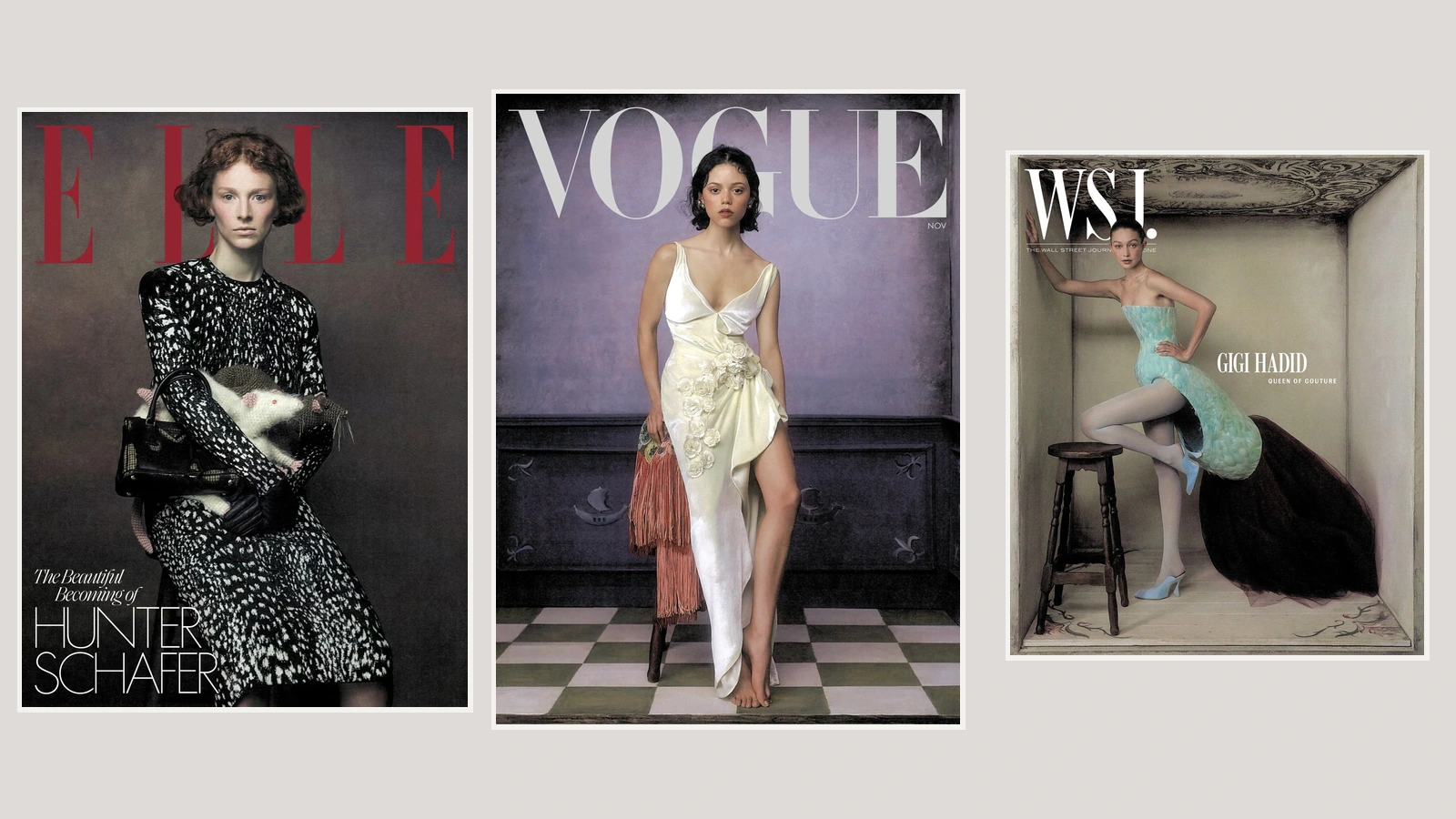
Three major fashion magazines published covers just days apart that seem to belong to the same photographic set — and the same person is behind every image: Szilveszter Makó.
Jenna Ortega for Vogue, Hunter Schafer for ELLE and Gigi Hadid for WSJ. Magazine were photographed by the Hungarian artist for November 2026 covers. The pictures are not identical, but their shared aesthetic has drawn criticism and revived a familiar fashion photography question: when does a photographer’s signature style become too repetitive across competing clients?
Three magazines, three stars, one photographic signature
The first to appear was WSJ. Magazine’s digital cover with Gigi Hadid, published on October 15. ELLE’s Hunter Schafer cover followed, and American Vogue unveiled Jenna Ortega on October 22. The close timing made the similarities hard to overlook.
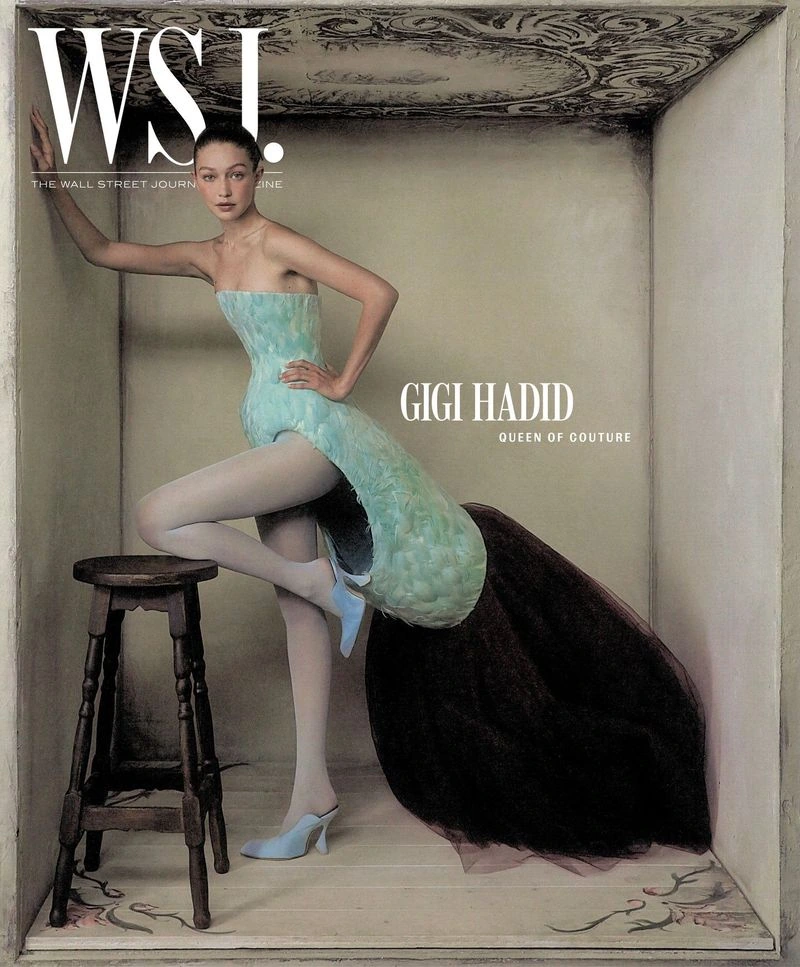
Gigi Hadid poses in a fabricated room with a decorated ceiling, resting one leg on a wooden stool. The pale-blue dress with its substantial dark volume below, together with the painted surfaces, makes the cover feel like a miniature stage. Importantly, this was a digital cover, not a print cover.
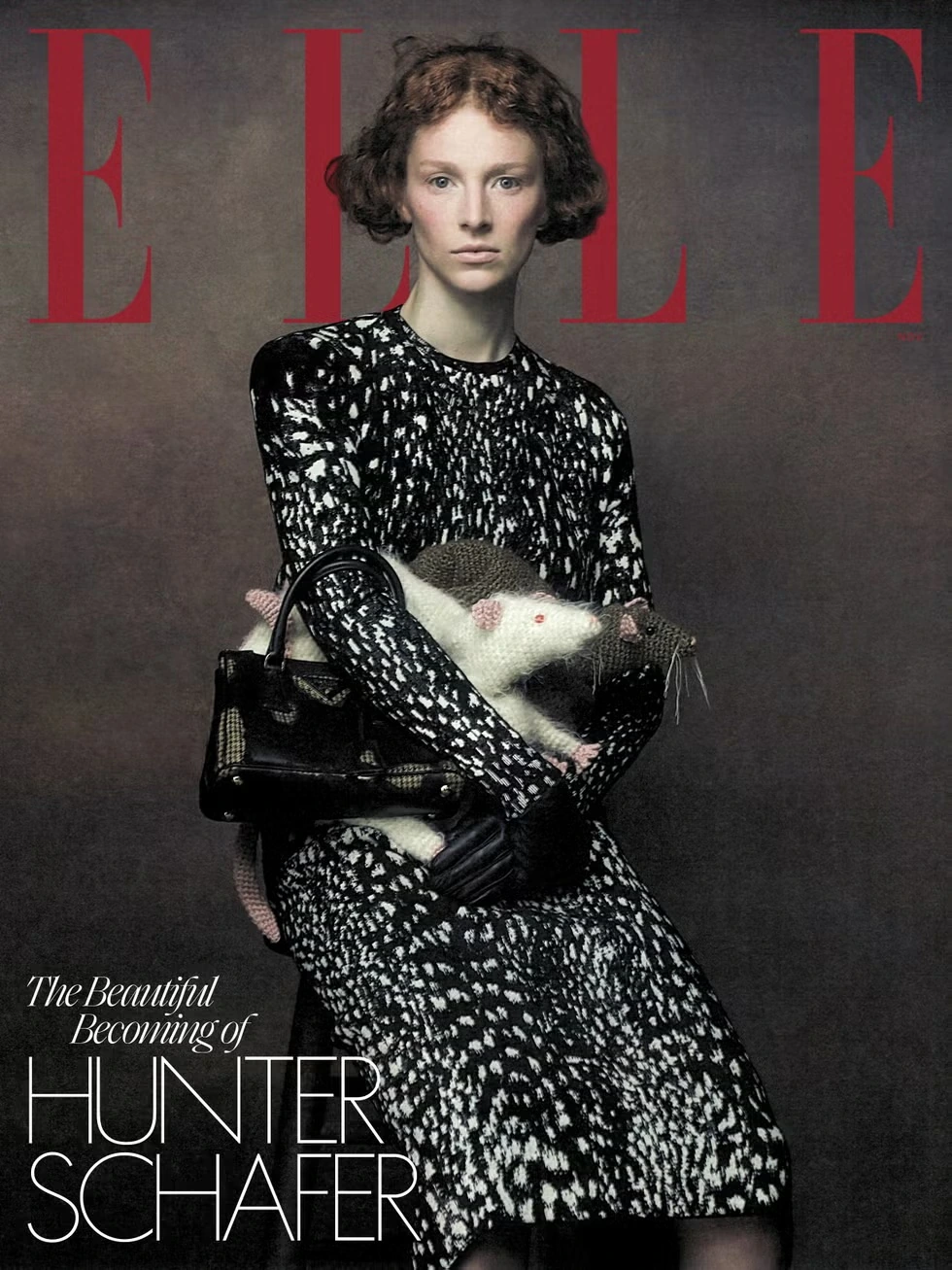
For ELLE, Hunter Schafer stands against a dark backdrop in a black-and-white dress, holding a handbag and two knitted rats. Her frontal pose, still expression and the textured setting evoke a portrait from another era.
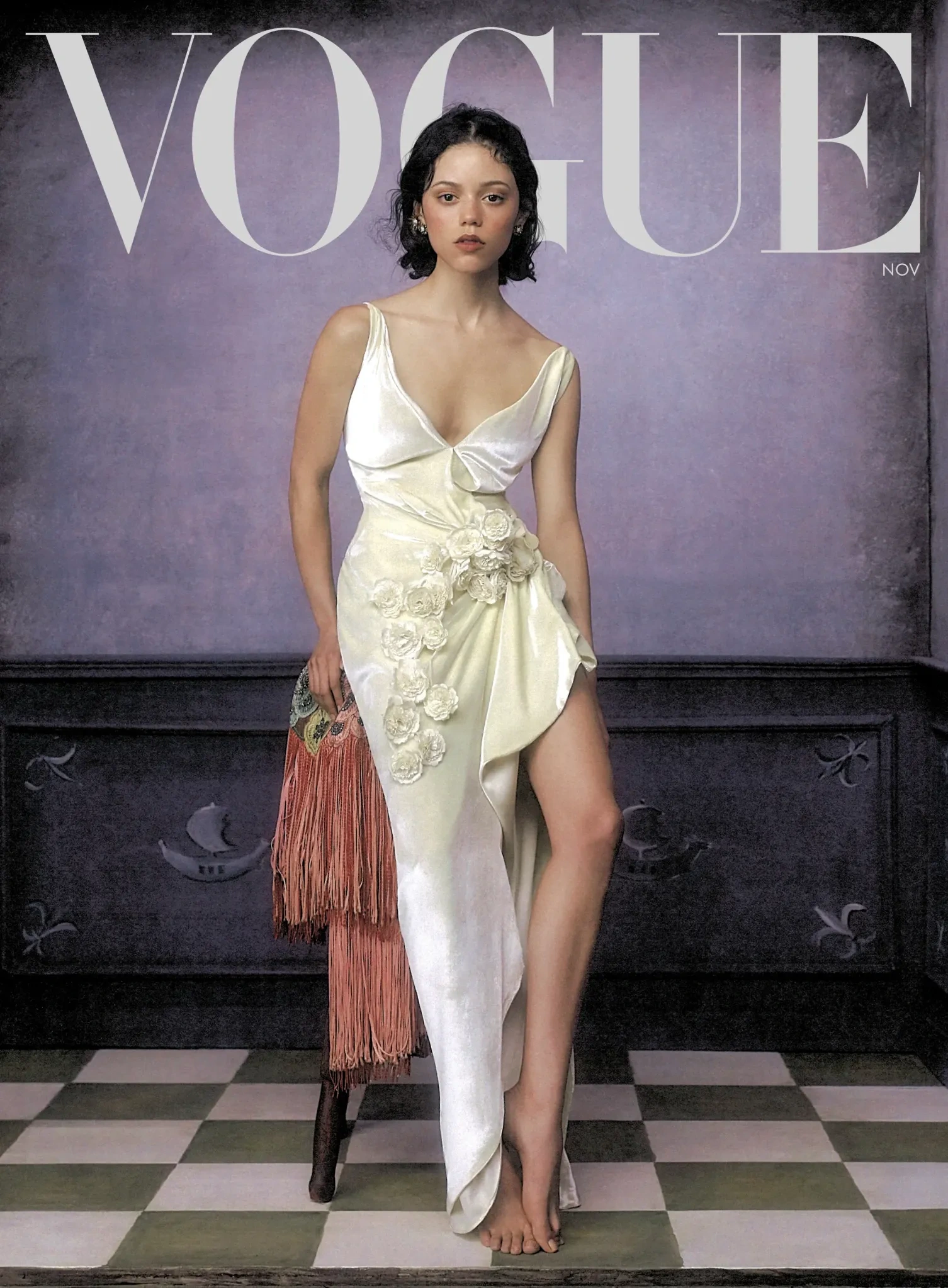
Jenna Ortega appears on Vogue in a white dress with floral details against a purple background reminiscent of a painted interior. It is a different composition and palette, yet the relationship between pose, costume and set is instantly familiar.
Why the covers drew criticism — and the question of exclusivity
The main concern was that three competing publications had unveiled closely related visual concepts almost simultaneously. An anonymous fashion media source argued that Makó should have warned his clients if he was preparing similar ideas for other major magazines. That is the source’s criticism, not evidence that a contractual agreement was breached.
Another detail intensified the comparisons: an identical feathered Balenciaga couture dress appears in photographs inside the Jenna Ortega and Gigi Hadid editorials. This overlap concerns pictures within the features, not the clothes shown on the two covers.
Photographer exclusivity was once a central part of the relationships between major fashion publications and leading image-makers, but shifting budgets and commissioning practices have made such arrangements harder to maintain. No specific exclusivity clause has been made public in connection with these covers.
What the production side says
A source close to Hadid’s shoot said the WSJ. Magazine concept had been developed in March 2026, with the photographs taken in July. That source attributed the resemblance to Makó’s established visual style. Publication order alone, therefore, does not establish who conceived a concept first or when.
Born in Hungary and based in Milan, Makó builds sets using handmade and recycled materials. His photographs draw on historical painting, theatre and effects constructed in front of the camera rather than relying exclusively on digital manipulation. That recognisable visual language has made him a sought-after photographer for major magazines.
A strong personal visual identity is not inherently a problem. Other fashion photographers, including Rafael Pavarotti, have developed instantly recognisable styles through very different colours and staging. The question with Makó is what happens when several unusually similar covers appear within the same week.
What we think
Looking at the three photographs side by side, it takes almost no time to recognise who made them. That is something most photographers would love to achieve: a visual identity so distinct that the credit is barely needed.
At the same time, when a magazine commissions a major cover, it reasonably expects something that will stand apart from its competitors. We would not automatically place all responsibility on the photographer; creative directors, stylists and editorial teams also shape these productions. The important thing is that everyone understands what is being commissioned and what image will ultimately be released.
And one more distinction matters: the pictures of Hadid, Schafer and Ortega are not duplicates. Their resemblance lies mainly in the crafted visual language rather than a copied frame. We would keep Makó’s talent in the picture — and ask the magazines to take a little more risk by choosing genuinely different creative directions.
Frequently asked questions
Who photographed all three covers?
All three were photographed by Hungarian fashion photographer Szilveszter Makó.
Are the photographs identical?
No. They feature different people, clothing, poses and sets, but share a closely related theatrical, painterly aesthetic.
Are these all print covers?
No. Gigi Hadid’s WSJ. Magazine cover was released as a digital cover for November 2026.