

Summary
- More than 300 unauthorized drones have been seized in the United States
- Drone flights are banned around stadiums and fan zones
- FBI teams are deployed to detect and disable drones
- Operators can face fines of up to $100,000
- A suspected drone incident was also reported near South Korea’s training base
More than 300 unauthorized drones have been seized at World Cup sites in the United States.
US authorities said that since the start of the tournament they have detected and seized hundreds of drones flying illegally near stadiums and FIFA fan zones, as the 2026 FIFA World Cup is being co-hosted by the United States, Canada and Mexico.
The issue is significant because drones are not only seen as a risk to spectators on the ground, but also as a potential threat involving terrorism, spying or interference with critical infrastructure.
What applies at World Cup venues
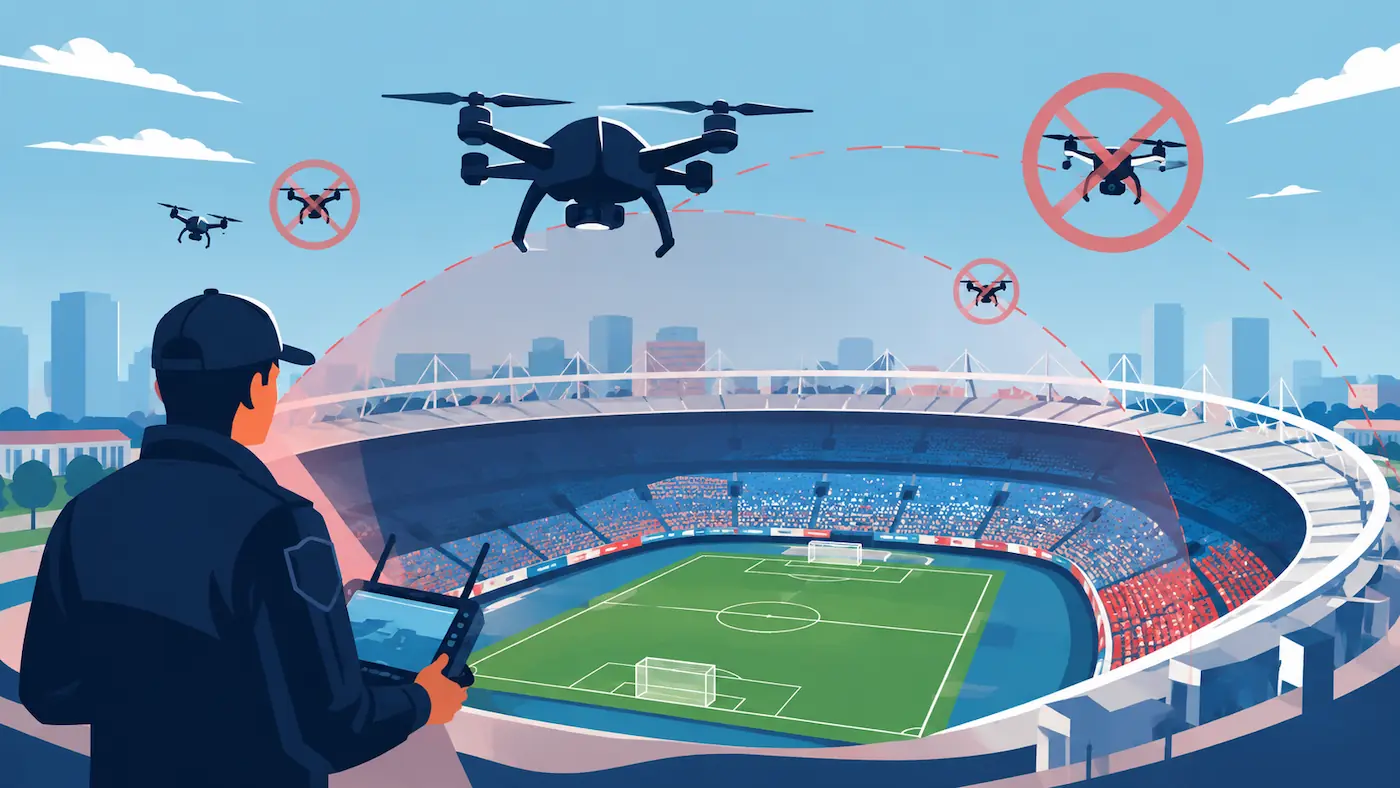
On matchdays, all aircraft operations, including drones, are prohibited within a three-mile radius of stadiums and up to 3,000 feet above them.
Similar restrictions also apply to fan zones, where thousands of supporters gather.
The measures are intended to prevent incidents that could endanger people on the ground or disrupt the operation of the tournament.
FBI teams around stadiums
FBI teams have been stationed around World Cup stadiums to detect and disable unauthorized drones.
According to US authorities, enforcement is swift and proactive.
The Transportation Security Administration said the United States has implemented its most comprehensive airspace security and drone mitigation effort in history for the FIFA World Cup.
Fines and criminal consequences
Drone operators who violate World Cup no-fly zones can face fines of up to $100,000, equipment seizure and criminal charges.
Last week in Kansas City, Missouri, the FBI, working with other law enforcement agencies, seized eight drones and controllers.
The drones allegedly violated temporary flight restrictions at World Cup events at Kansas City Stadium and at a FIFA fan zone.
Two drone operators were also issued violation notices by the Federal Air Marshal Service.
The spying issue
The issue of drones in football is not limited to spectator safety.
Before South Korea’s second Group A match against Mexico, the Mexican military reportedly intercepted and brought down an unregistered drone flying over South Korea’s training base in Guadalajara.
According to reports, the South Korean camp suspected possible spying.
A similar issue emerged in 2024, when Canada’s women’s team was accused of using a drone to spy on a New Zealand training session before their opening match at the Paris Olympic Games.
Head coach Bev Priestman was dismissed by Canada Soccer, two members of staff were suspended and the team was deducted six points.
What we think
This case shows that drones have moved beyond the level of a simple gadget and are now a serious security issue for major events. Their use in sports needs strict regulation, as even a small drone can create a major operational and competitive problem.
Frequently asked questions
How many drones have been seized at the 2026 World Cup?
US authorities have seized more than 300 unauthorized drones at World Cup sites.
Where are drone flights banned?
On matchdays, drone flights are banned within a three-mile radius of stadiums and up to 3,000 feet above them, as well as in fan zones.
What penalties can operators face?
Operators can face fines of up to $100,000, equipment seizure and criminal charges.
Why are drones considered a threat?
They can pose risks to spectators, disrupt matches or be used for surveillance and spying.