

Summary
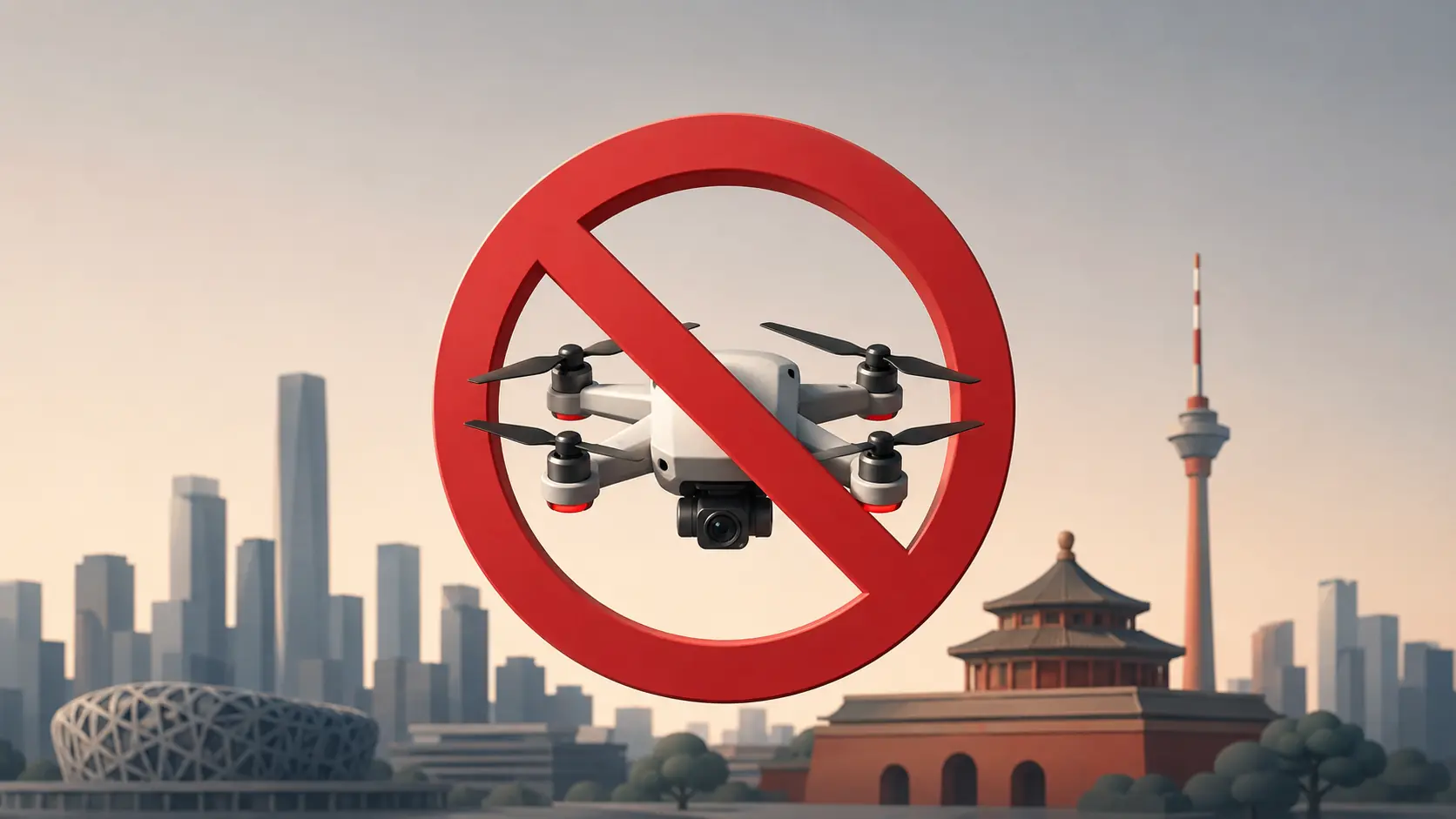
- From May 1, 2026, Beijing requires prior approval for every outdoor drone flight
- Sales and rentals of drones destined for the city are banned
- Transporting a drone into Beijing by visitors is prohibited
- Exceptions exist for research, universities, and public safety with approval
- Violators risk equipment confiscation and fines
Beijing is now enforcing one of the strictest drone regimes seen in a major city.
As of May 1, 2026, the Chinese capital no longer allows the purchase, rental, or outdoor flight of a drone without prior approval from the authorities, while the restrictions apply both to residents and to people traveling to the city by plane, train, bus, or car. Users are also required to complete online training and pass a related test on the regulations.
This development carries particular weight because it comes from the country that dominates the global consumer drone market and from a city where security restrictions are already tighter than elsewhere. Beijing authorities present the measures as part of an effort to strengthen the management of unmanned aircraft and protect the security of the capital.
What changes from now on
The new rules do not apply only to flights. In Beijing, the sale or rental of a drone for delivery within the city is no longer allowed, whether through physical stores or online platforms. At the same time, the entire administrative area of Beijing is treated as controlled airspace, which means every outdoor flight requires prior approval.
For those coming from another city, the restrictions are even harsher: entering Beijing with a drone, remote controller, or key components is treated as transporting such equipment and is prohibited. For local users, exit and re-entry are allowed only for drones that have already gone through identification and police verification procedures.
What applies to repairs and pickups
According to PetaPixel’s report, the new rules also affect after-sales support. Users cannot freely proceed with drone repair or replacement inside Beijing, while a device at a repair shop must be picked up in person rather than returned by delivery service.
This shows that the new framework targets not only flight activity, but the entire ownership and circulation cycle of a drone within the city. For hobbyist operators and image professionals, the change means much more bureaucracy and a clearly more limited field of use.
What happened with DJI and the stores
The impact was immediately visible in retail. The Associated Press reported that e-commerce platforms were not allowing drone purchases to be completed with a Beijing delivery address, while DJI stores had been instructed to remove drones from their stock. PetaPixel, citing CNN, also noted that drones were pulled from DJI stores in Beijing shortly before the measures took effect.
That image is especially symbolic: even in the home market of the world’s largest consumer drone maker, the product can no longer be sold freely inside the capital.
Exceptions, fines, and checks
The new regime is not absolute for every use case. Exceptions exist for universities, research institutions, or public safety bodies, but even then police approval is required. For violations, authorities may order compliance, confiscate equipment, and impose fines ranging from 500 to 10,000 yuan, depending on the seriousness of the case.
At the same time, local users must complete real-name identification and information verification procedures, showing that Beijing wants full control not only over flight activity but also over ownership.
Why it matters beyond Beijing
This is not just a local ban. It points to the direction drone regulation may take in cities with stronger concerns over security, critical infrastructure, and politically sensitive sites. Beijing has chosen a model in which ownership, purchase, transport, and operation are treated as one unified field of control.
For photographers and content creators, the message is clear: the drone market may remain strong in China, but actual use in certain areas can become much more difficult than the commercial dominance of Chinese manufacturers might suggest.
What we think
Beijing did not stop at yet another flight ban. It built a framework that controls almost every stage of a citizen’s relationship with a drone, from purchase and transport to use and repair. That makes the decision far more important than a simple local regulation and it may signal how rules could evolve in other major cities as well.
Frequently asked questions
When did the new Beijing rules take effect?
The main restrictions took effect on May 1, 2026.
Can someone fly a drone in Beijing for leisure?
Not freely. Every outdoor flight requires prior approval from the authorities.
Can someone buy a drone with a delivery address in Beijing?
No, the new rules block both physical-store sales and online shipments of drones to Beijing.