

Summary
- Over 4,000 new domains are associated with November shopping campaigns.
- Nearly one in five was classified as risky.
- Cyber attacks on the consumer goods and services sector increased by 28%.
- Fake shops and delivery alerts threaten online shoppers.
More than 4,000 newly registered web domains are linked to November shopping events, and nearly one in five has already been classified as risky, according to Check Point Research.
With Black Friday approaching on November 27, 2026, scammers are copying familiar retailers, building fake sign-in pages and sending fraudulent parcel-delivery alerts. That matters to photographers and filmmakers hunting for discounted cameras, lenses, computers or software.
What the research found
Between October and November 8, 2026, researchers identified over 4,000 new domains using terms such as Black Friday, Cyber Monday and Singles’ Day, alongside major retail and courier brand names. Nearly 20% were classified as risky by Check Point ThreatCloud AI. The classification does not mean every domain has already been involved in a confirmed scam.
During September and October, organizations in the Consumer Goods & Services sector faced an average of 2,458 cyber attacks per organization per week, a 28% increase from the earlier part of the year. The global increase across all industries was 22%. These are attacks against organizations, not a count of defrauded shoppers.
Fake stores and discount traps
Check Point Research identified websites impersonating Amazon, Walmart, Best Buy and other major brands. One fake Black Friday prize draw collected registration details. Other storefronts offered implausibly deep discounts, scarcity cues and checkout forms collecting shoppers’ names, addresses, emails and phone numbers.
The threats continue past checkout. Fake sign-in screens for Amazon, AliExpress and Temu sought account credentials, while fraudulent DHL, FedEx and USPS delivery messages directed users to address-update or small-fee payment forms. Researchers also logged 647 newly registered domains following a particular FedEx naming pattern between September and November 8; the pattern itself does not establish that every domain is malicious.
How to shop more safely
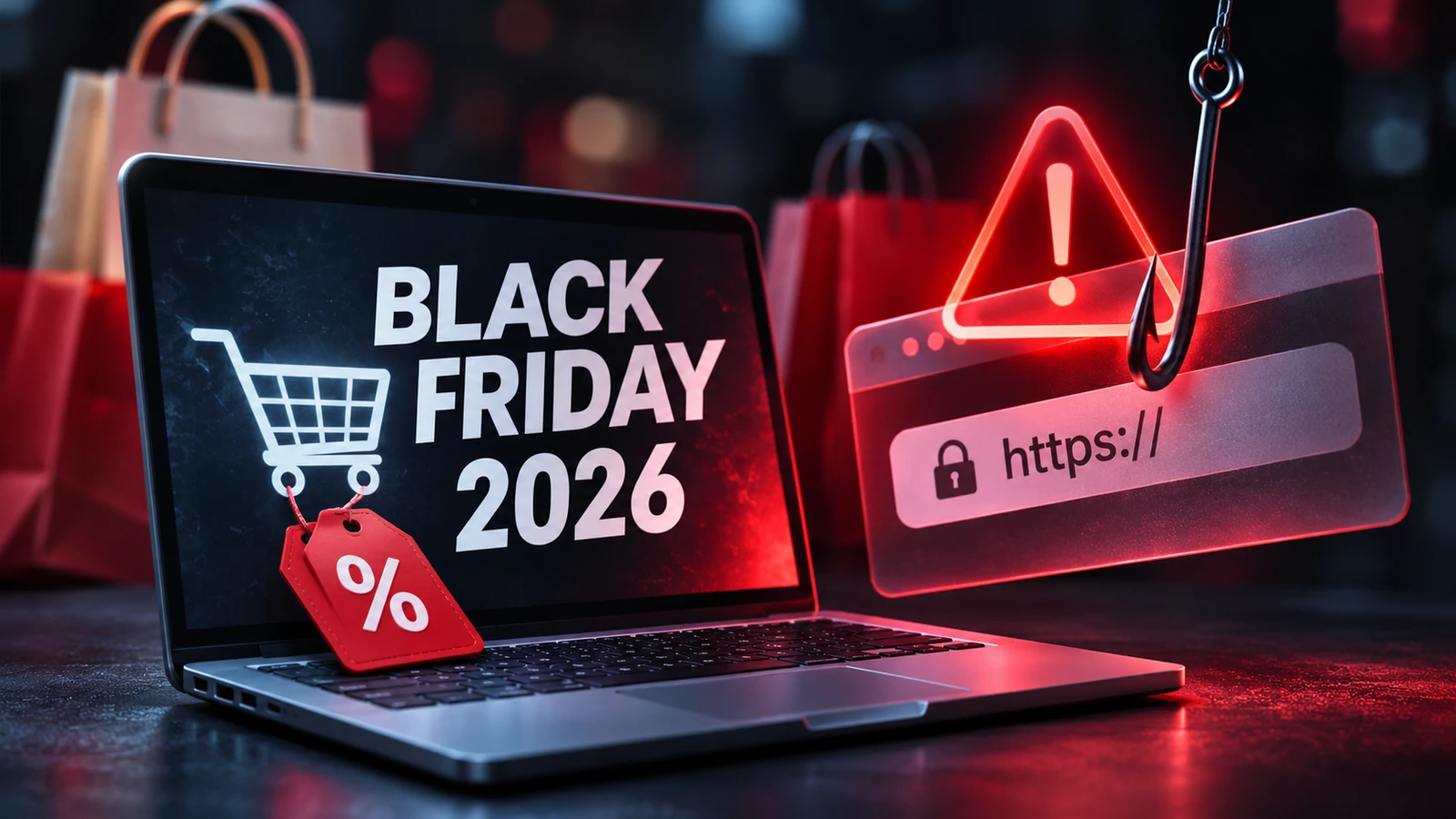
Visit a retailer’s official website or app directly rather than following unsolicited email, SMS or social-media links. Inspect the entire domain, not just the logo or HTTPS padlock: a fraudulent page can still use an encrypted connection. Never enter passwords or payment-card data on a page reached through an unexpected message.
If a shipping notification claims there is a problem with a package, verify the status using the courier’s official website. Enable multi-factor authentication on shopping accounts and use unique passwords. For prices and terms, see the consumer warning about misleading offers and the Black Friday and Cyber Monday shopping guide.
What we think
For a photographer or filmmaker who has waited all year for a deal on a lens, SSD or editing-software license, a dramatic discount is difficult to ignore. Fraudulent shops exploit exactly that combination: a familiar store name, a price you do not want to miss and pressure to pay immediately.
The practical response is to slow the purchase down. Search for the exact model through the retailer’s established website, check the address and do not let a countdown or “few items left” banner make the decision for you. The same caution applies to delivery notifications after checkout.
Frequently asked questions
Does HTTPS prove that an online store is genuine?
No. HTTPS encrypts the connection, but it does not prove that the business operating the website is genuine or trustworthy.
What if I entered my password on a suspicious website?
Change it immediately through the genuine service, sign out unfamiliar sessions where possible and enable multi-factor authentication. Change it anywhere else you reused it. If you shared card details, contact your bank promptly.