

Sponsored
Videography

First-Ever Live Footage Captures Goblin Shark in Its Natural Habitat

The rare discovery in the depths of the Pacific Ocean

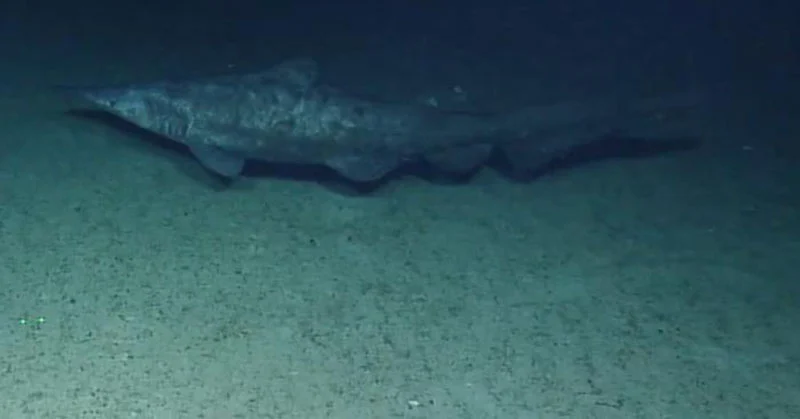
Καρχαρίας goblin κολυμπά στα μεγάλα βάθη του ωκεανού
Ο σπάνιος καρχαρίας goblin καταγράφηκε ζωντανός στα βάθη του Ειρηνικού.

Summary

  • First confirmed footage of a live goblin shark in its natural habitat.
  • Two observations were made near Jarvis Island and the Tonga Trench.
  • The species is considered a 125-million-year-old “living fossil.”
  • Researchers captured just over 20 seconds of footage after more than 50 days of monitoring.
  • The discovery improves scientific understanding and conservation efforts.
Contents

  1. A Living Fossil of the Oceans
  2. The Two Key Observations
  3. Just 20 Seconds After 50 Days of Recording
  4. Why the Discovery Matters
  5. What We Think
  6. Frequently Asked Questions

One of the rarest and strangest sharks on Earth has been filmed alive in its natural habitat for the first time.

Researchers from the University of Hawaii at Manoa published the first fully confirmed, peer-reviewed footage of a goblin shark (Mitsukurina owstoni) swimming freely in its natural environment. The species is exceptionally rare and lives at great depths, hundreds to thousands of meters below the ocean surface.

The discovery is particularly important because most previous records came from individuals accidentally caught in fishing gear and brought to the surface, which usually resulted in their deaths. For the first time, scientists were able to observe the shark in its natural habitat and collect valuable information about its behavior and distribution.

A Living Fossil of the Oceans

The goblin shark is often described as a “living fossil” because it is the only surviving member of the Mitsukurinidae family, an evolutionary lineage estimated to be around 125 million years old.

The species is known for its distinctive appearance, including its elongated snout and remarkable jaws that can extend forward to capture prey. This unusual anatomy has led many people to compare it to a creature from a horror movie.

The Two Key Observations

The first observation took place in 2019 near Jarvis Island in the South Pacific. Scientists were using a remotely operated vehicle to explore the seafloor and did not immediately realize the importance of the footage they had collected.

Years later, while reviewing archived recordings, researchers realized they had captured a goblin shark in an area where the species was not previously known to exist, significantly expanding its known geographic range.

The second and even more important observation occurred in 2024 in the Tonga Trench, the deepest trench in the Southern Hemisphere and the second deepest in the world after the Mariana Trench. There, scientists recorded the shark using specialized baited deep-sea camera systems.

Just 20 Seconds After 50 Days of Recording

The rarity of the species is reflected in the research itself. Scientists needed more than 50 days of nearly continuous monitoring to obtain just over 20 seconds of usable footage.

Researchers emphasize that very little is known about the goblin shark because live observations are extremely uncommon. Every new sighting provides valuable information about its behavior, habitat depth, and movements.

Why the Discovery Matters

Beyond its scientific importance, the new footage has direct value for conservation efforts. Researchers stress that it is impossible to design effective protection measures for an animal when its habitat and distribution remain largely unknown.

The two new observations significantly expand current knowledge about the goblin shark’s range and depth use, creating a stronger foundation for future studies and conservation initiatives.

What We Think

The first confirmed footage of a live goblin shark in its natural habitat is a reminder of how much remains unknown in the deepest parts of the oceans. Despite rapid technological advances, discoveries like this continue to reshape our understanding of marine life and highlight the importance of protecting some of the planet’s most remote ecosystems.

Frequently Asked Questions

What is a goblin shark?

It is an extremely rare deep-sea shark species belonging to an evolutionary lineage that dates back around 125 million years.

Where was it recorded?

The two confirmed observations were made near Jarvis Island in the Pacific Ocean and in the Tonga Trench.

Why is it considered so rare?

It lives at extreme depths, making direct observation exceptionally difficult.

How much footage did researchers capture?

Just over 20 seconds of video after more than 50 days of underwater monitoring.

Comments

Leave a comment