

Summary
- Terzan 5 is located in the Galactic bulge.
- Webb and Hubble combined observations to study it.
- The system contains four distinct generations of stars.
- It is now considered a primordial building block of the Milky Way.
- The discovery helps explain the evolution of our Galaxy.
New observations from the James Webb and Hubble Space Telescopes have revealed important clues about the earliest stages of our Galaxy’s formation.
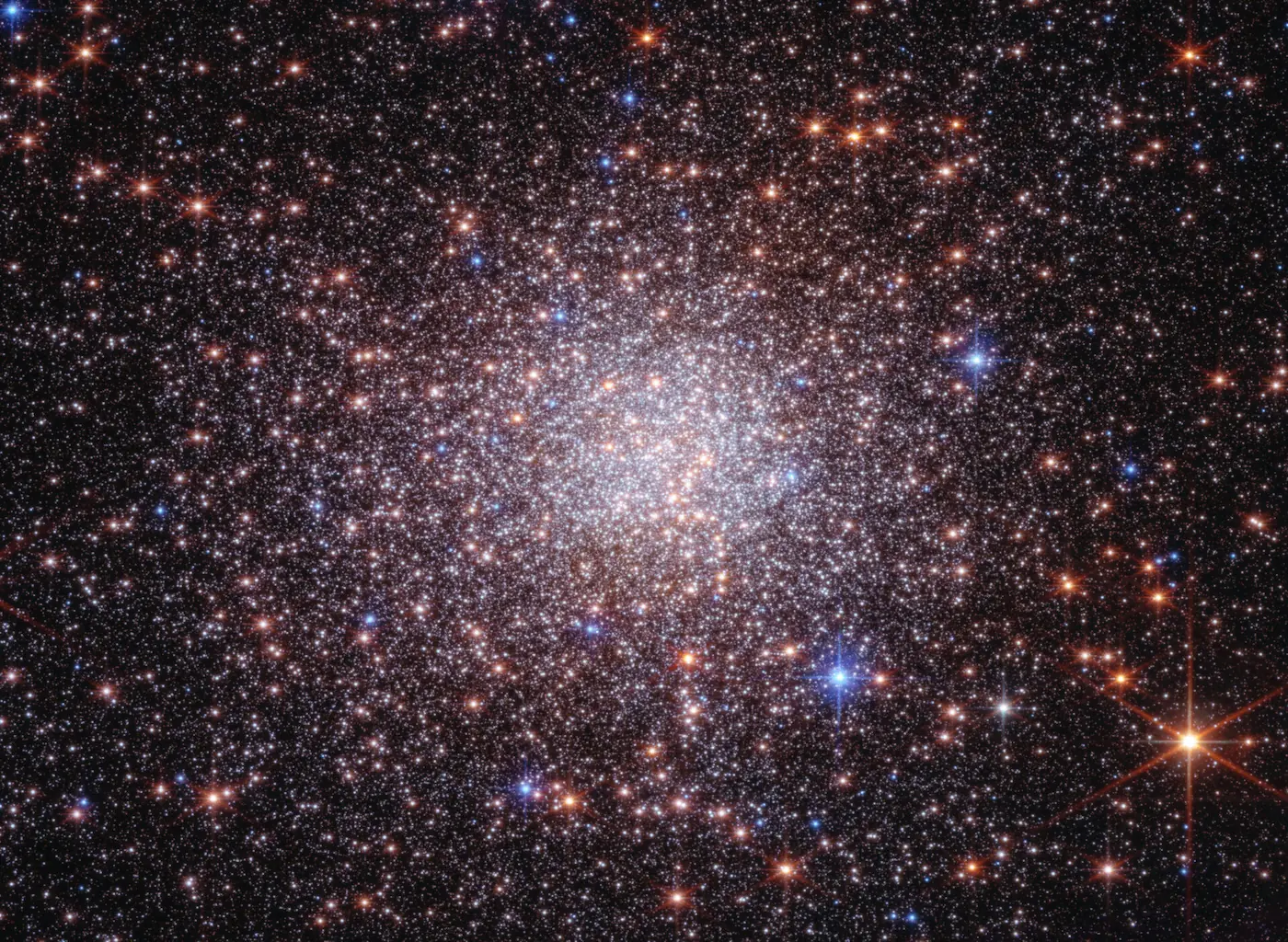
An international team of astronomers studied the stellar system Terzan 5, a dense collection of stars located in the Galactic bulge, and concluded that it is a true fossil of galactic history. The new data show that Terzan 5 is not an ordinary globular cluster but a primordial building block from which part of the Milky Way formed.
The discovery is significant because it offers a rare glimpse into the processes that created the Galactic bulge billions of years ago. Scientists believe that systems like this acted as the “building blocks” that merged together to create the large galactic structures observed today.
What James Webb Revealed
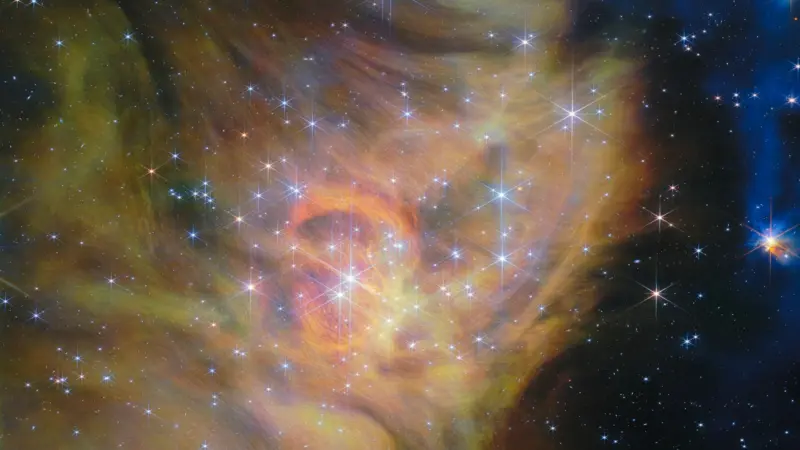
New near-infrared observations from James Webb allowed researchers to see through the dense clouds of dust that obscure Terzan 5 in visible light. Combined with archival Hubble data, astronomers were able to reconstruct the history of the system with much greater precision.
The analysis showed that Terzan 5 contains four distinct stellar populations that formed at different times. This indicates that the system managed to retain its gas and continue forming stars over a long period, something not seen in ordinary globular clusters.
A Galactic Fossil
Researchers now describe Terzan 5 as the prototype of a “bulge fossil fragment.” In simple terms, it is a primordial object that still preserves evidence from the earliest phases of the Galactic bulge’s formation.
The study strengthens the idea that the Milky Way’s central bulge was not created in a single event but emerged through the merger and evolution of multiple ancient structures during the early history of the Universe.
Why It Matters
Understanding the origin of Terzan 5 helps astronomers reconstruct the history of our Galaxy. Because we cannot directly observe the earliest stages of the Milky Way’s formation, ancient systems like this act as natural archives preserving information about events that occurred more than 12 billion years ago.
The results also demonstrate how the combined power of Webb and Hubble continues to reveal details that would be impossible to uncover with a single telescope.
What We Think
Terzan 5 is one of the most valuable windows into the Milky Way’s past. James Webb’s ability to observe through interstellar dust, combined with decades of Hubble observations, is providing an increasingly clear picture of how the cosmic environment surrounding our Solar System was formed.