Summary
- The first Harry Potter film was released on 16 November 2001.
- Cinematographer John Seale created a warm, welcoming visual world.
- The production used Panaflex cameras and up to six cameras simultaneously for some major scenes.
- The film’s 25th anniversary was marked in 2026 with cinema screenings and special events.
On this day, 16 November 2001, the first Harry Potter film opened the doors of Hogwarts on the big screen. Twenty-five years later, its cinematography remains a reference point for fantasy filmmaking.
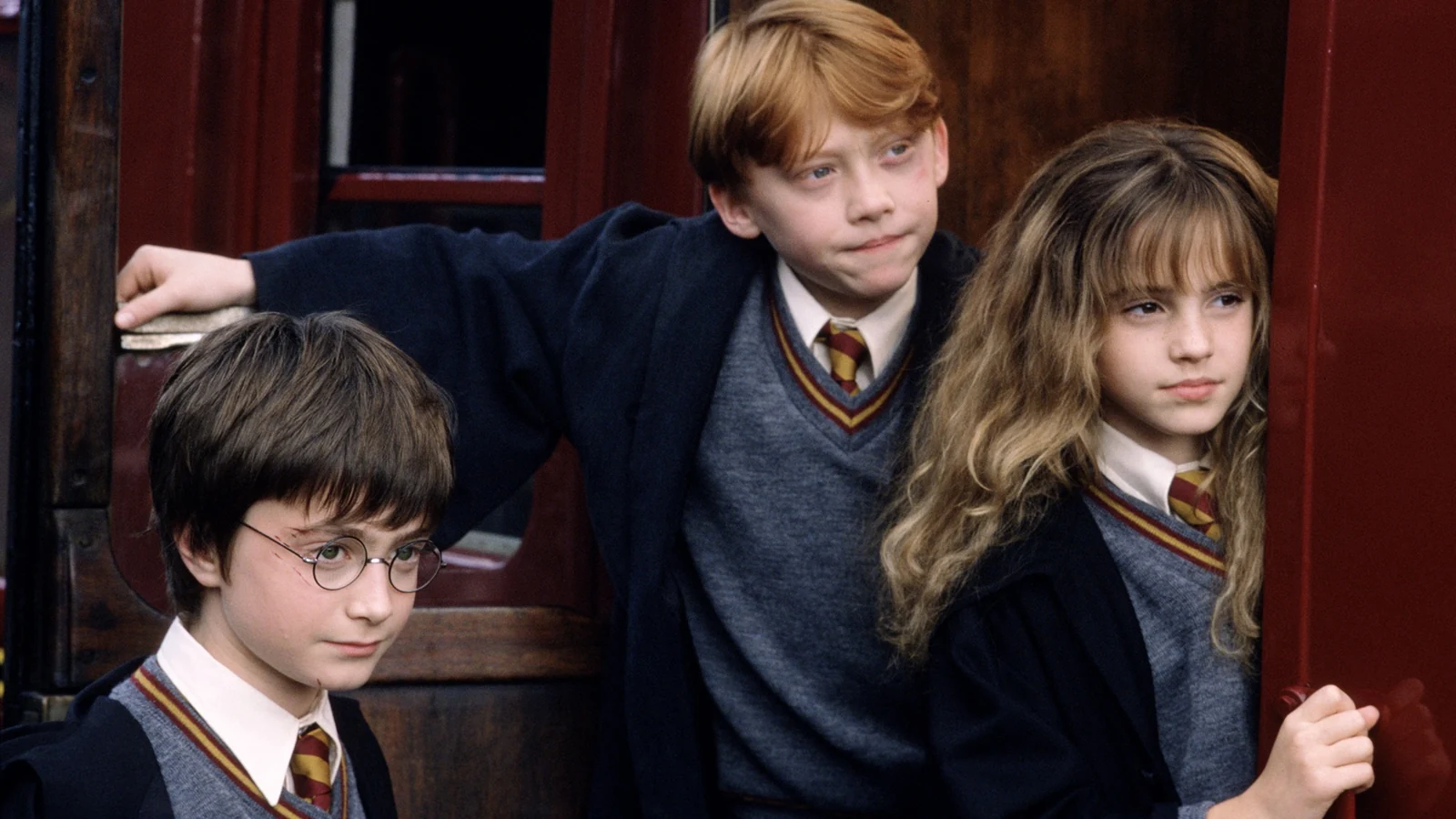
Directed by Chris Columbus and adapted from J.K. Rowling’s book, Harry Potter and the Philosopher’s Stone introduced Daniel Radcliffe, Rupert Grint and Emma Watson on screen as Harry, Ron and Hermione.
Beyond the nostalgia lies a compelling filmmaking story: cinematographer John Seale had to make an imagined world feel tangible while working with motion-picture film, difficult locations and hundreds of young performers.
A Hogwarts that felt like a real place
Cinematographer John Seale and production designer Stuart Craig worked from the start on a visual world that could sustain an entire film series. The first instalment was not meant to begin in darkness: Seale chose a warm, bright, almost storybook tone, allowing more threatening visual notes to emerge gradually.
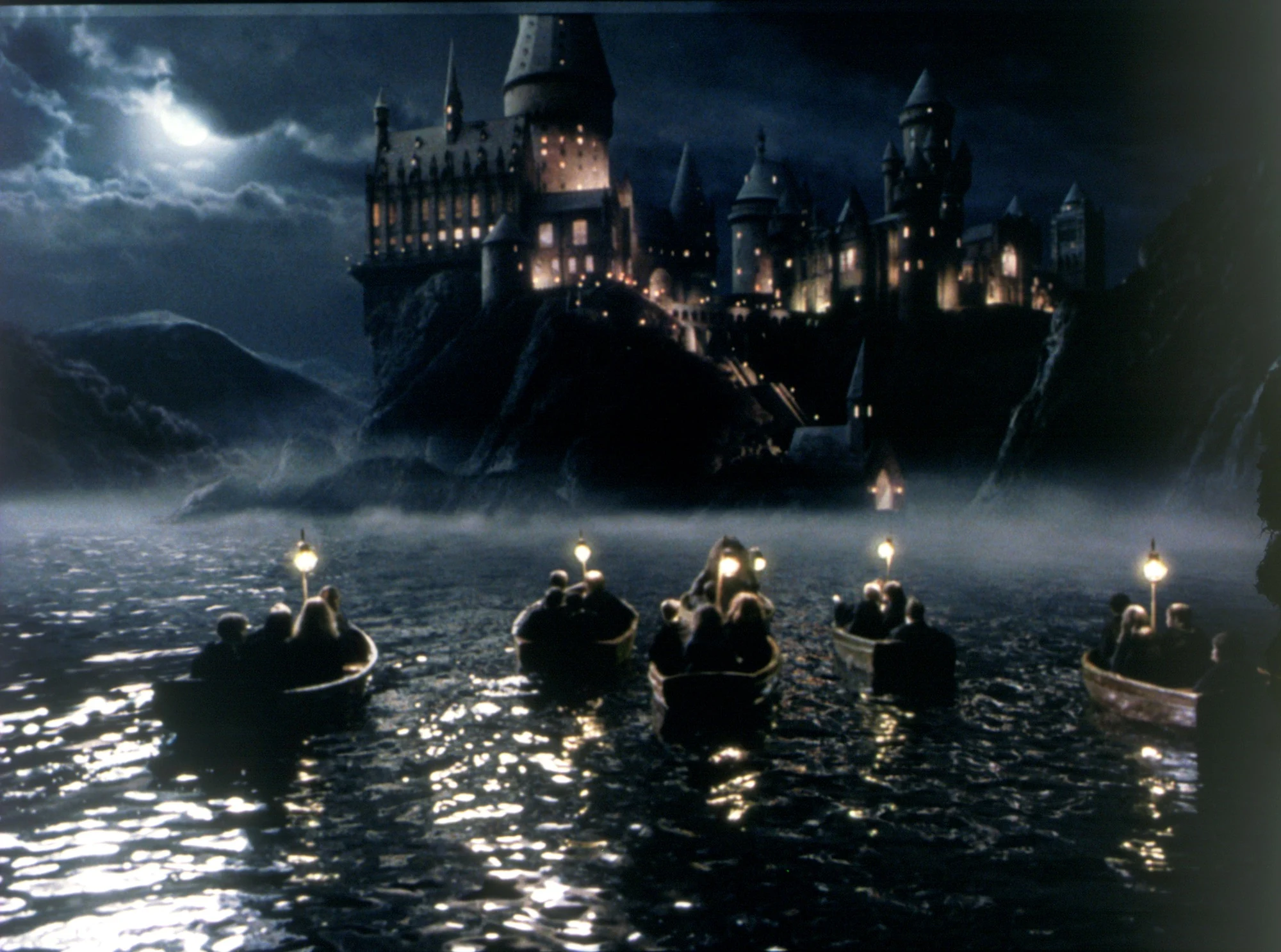
The students’ arrival by boat captures that approach. The warmly illuminated castle stands against a cold night sky and reflections on the lake. That contrast makes Hogwarts mysterious yet welcoming before a line of dialogue has to explain the feeling.
Lighting historic rooms without touching the walls
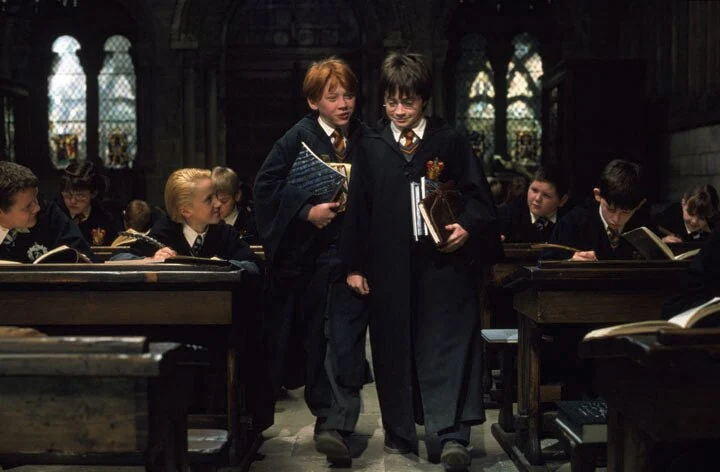
Some scenes were filmed in real English castles and chapels. In certain protected interiors, the crew could not fasten lighting fixtures or rigging to the walls. Seale often lit from outside the windows, adding only limited supplementary light inside the location.
Even ND filters and coloured gels were placed on frames outside windows because they could not be attached directly. The rooms were designed to feel lit by sources such as candles and torches, but the apparent naturalness of the images depended on carefully controlled cinematography.
Up to six cameras for scenes with hundreds of children
The scale of the film posed a practical challenge: how do you capture spontaneous performances by children in large scenes without endless retakes? Seale recalled that the Great Hall, with roughly 600 children, was sometimes covered with as many as six cameras at once, frequently mounted on hydraulic heads.
Panavision Panaflex Platinum and Millennium cameras were used. Seale liked keeping zoom lenses consistent across camera bodies so different angles would have a matching photographic character. Smaller scenes generally used two or four cameras, depending on their needs.
Photochemical finishing at the dawn of the digital era
Digital visual effects were already important to major fantasy productions in 2001, but the first film did not go through a digital intermediate for its overall colour finishing. Seale explained that the process existed but was considered too expensive for this production. The photographic finishing route therefore relied on film negatives and positives through to the release print.
That does not mean the film had no digital visual effects. It means the overall photographic look and release print were not finished using the digital grading workflow familiar today. With so much post-production time devoted to visual effects, Seale had only a few days for final colour work.
The 25th anniversary and a return to cinemas
The official 2026 celebration included cinema screenings of the original film between 27 August and 3 September across several regions, accompanied by ten additional minutes of behind-the-scenes material not previously shown in theatres. Anniversary activities also spanned themed experiences, studio tours and limited-edition merchandise.
The Harry Potter universe continues to be reimagined. The first look at the new Harry Potter television adaptation offers a chance to compare production design and lighting approaches while revisiting the film that established the original look in 2001.
What we think
Rewatching the first film with a cinematographer’s eye, the most impressive element is not necessarily an effect. It is how quickly we accept that the castle exists. Warm windows, dark stone rooms and the human scale of the children make Hogwarts feel familiar long before the main adventure unfolds.
Seale’s work illustrates something practical for every shoot: location restrictions are not always solved by adding more lights. Sometimes you have to reconsider where the light can come from and what you want the viewer to feel. And with hundreds of children in a scene, multi-camera coverage is not about showing off equipment; it is about preserving the moment.
Twenty-five years later, digital tools can deliver far more complex images. But this first film shows how the relationship between cinematography, sets, performances and light creates a believable world that holds up across generations.
Frequently asked questions
Was the first Harry Potter film shot digitally?
No. Principal photography was captured on motion-picture film with Panaflex Platinum and Millennium cameras. The movie also used digital visual effects, but its photochemical finishing did not include a digital intermediate.
Why were as many as six cameras used in some scenes?
To capture the reactions of large groups of children simultaneously and reduce the need for repeated takes. Six-camera coverage was used mainly for large scenes, not throughout the entire movie.