Summary
- Film reels shot by Giannis Simiriotis were found in the Tositsa building.
- The footage documents the first anniversary of the Athens Polytechnic uprising in 1974.
- The reels were conserved and digitised with help from the ERT Archive.
- The NTUA School of Architecture has published a nine-minute selection.
A forgotten 1974 film brings us back to the first anniversary of the Athens Polytechnic uprising, through footage preserved from reels shot by Giannis Simiriotis.
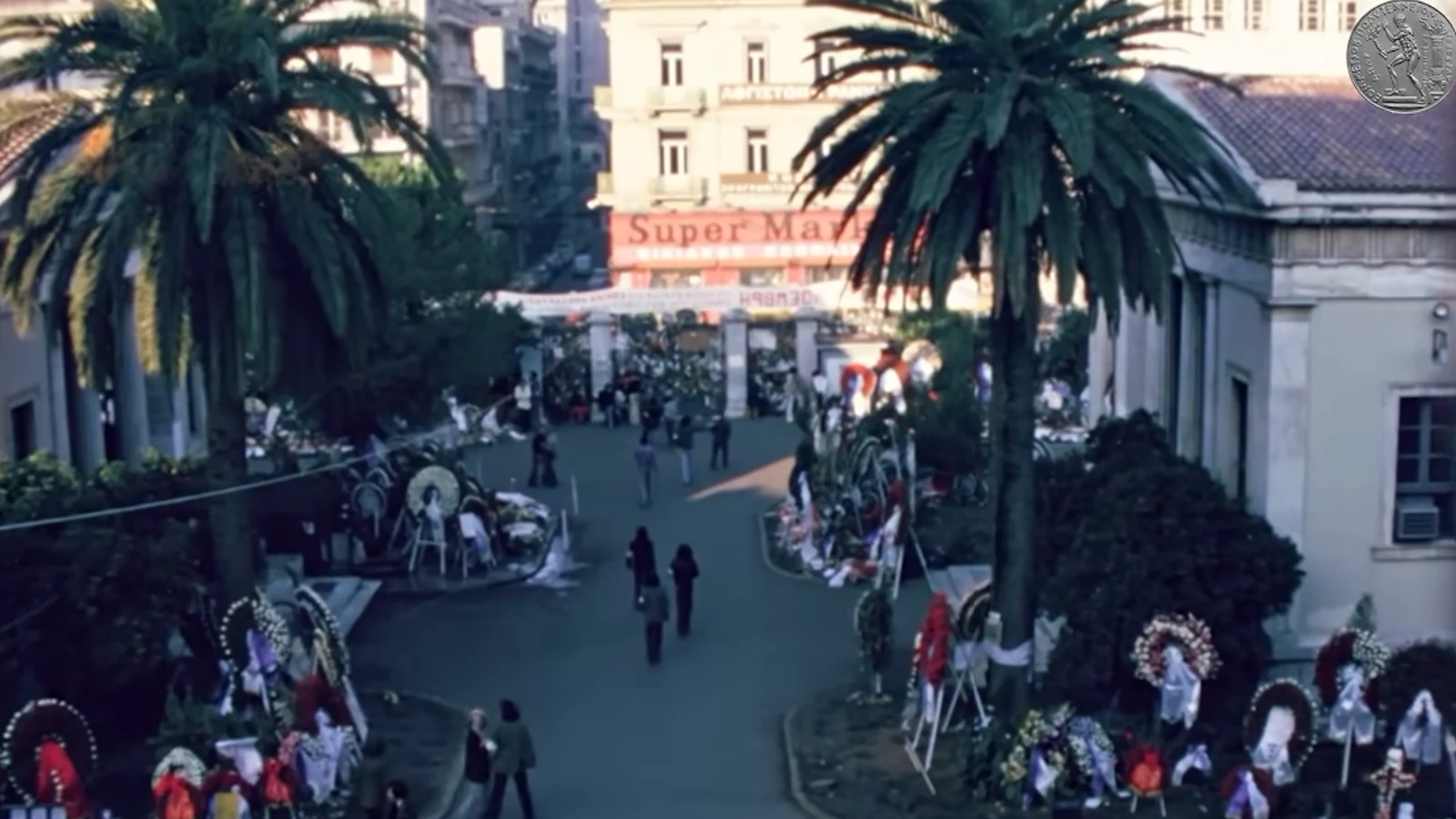
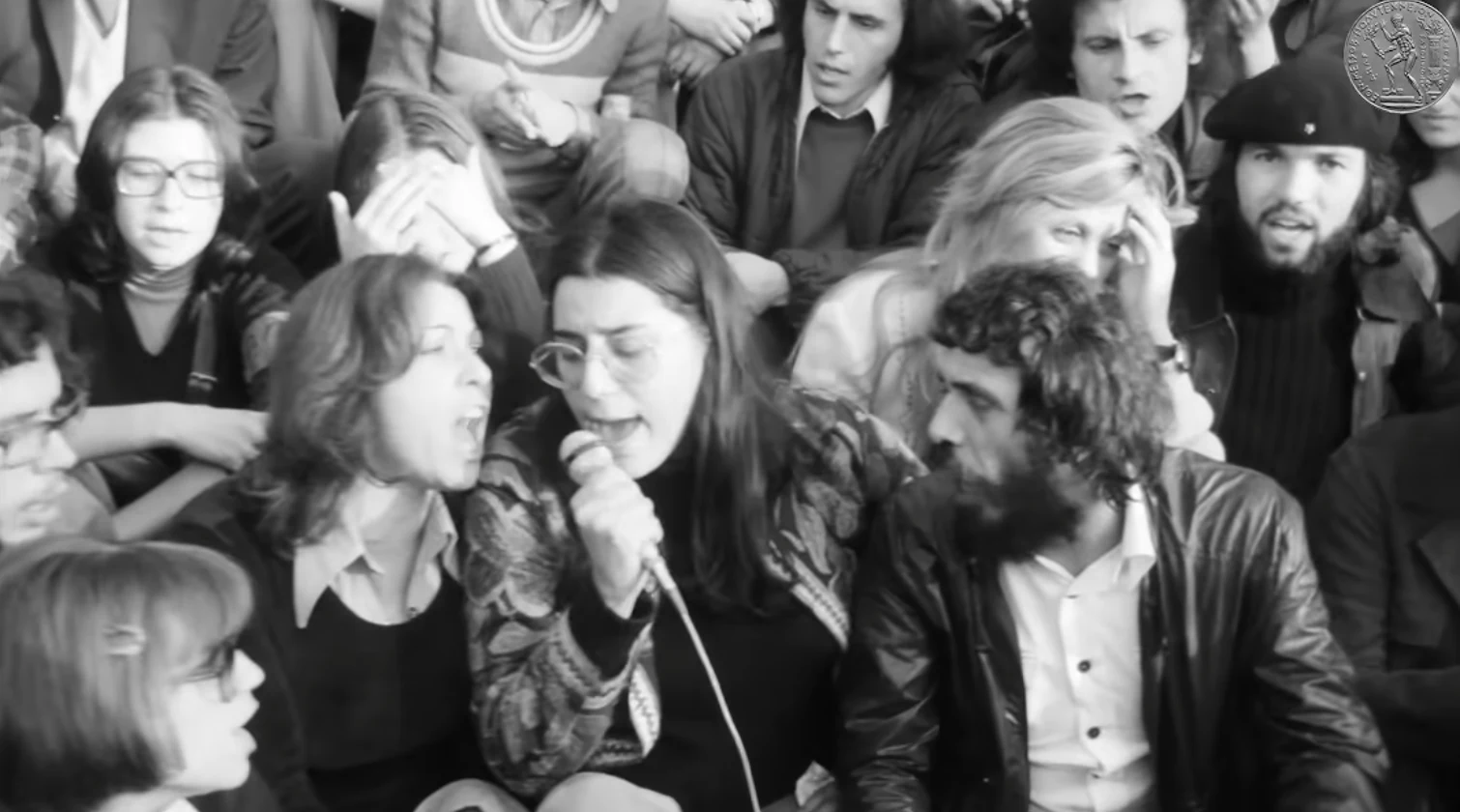
Just days before November 17, 2026, the NTUA School of Architecture released nine minutes of this historical material. We see the Polytechnic grounds filled with wreaths, people singing together, relatives of victims giving interviews and crowds joining commemorative gatherings.
The reels discovered in the Tositsa building
The film reels were found in the basement of the Tositsa building. They had been shot by Giannis Simiriotis, then an employee of the NTUA School of Architecture photography laboratory. One reel preserved credits naming him and his collaborators, alongside footage of the first anniversary in 1974.
This is a different historical record from the colour footage of the November 1973 uprising. Here, the camera captures what happened a year later, when people returned to the site to honour those killed and the resistance to the dictatorship.
Nine minutes from the first anniversary
The excerpts show the Polytechnic courtyard, an exhibition in the Averof building, interviews with victims’ relatives and a visit by Spyros Moustaklis. They also include people singing together at the entrance and scenes from the commemorative marches.
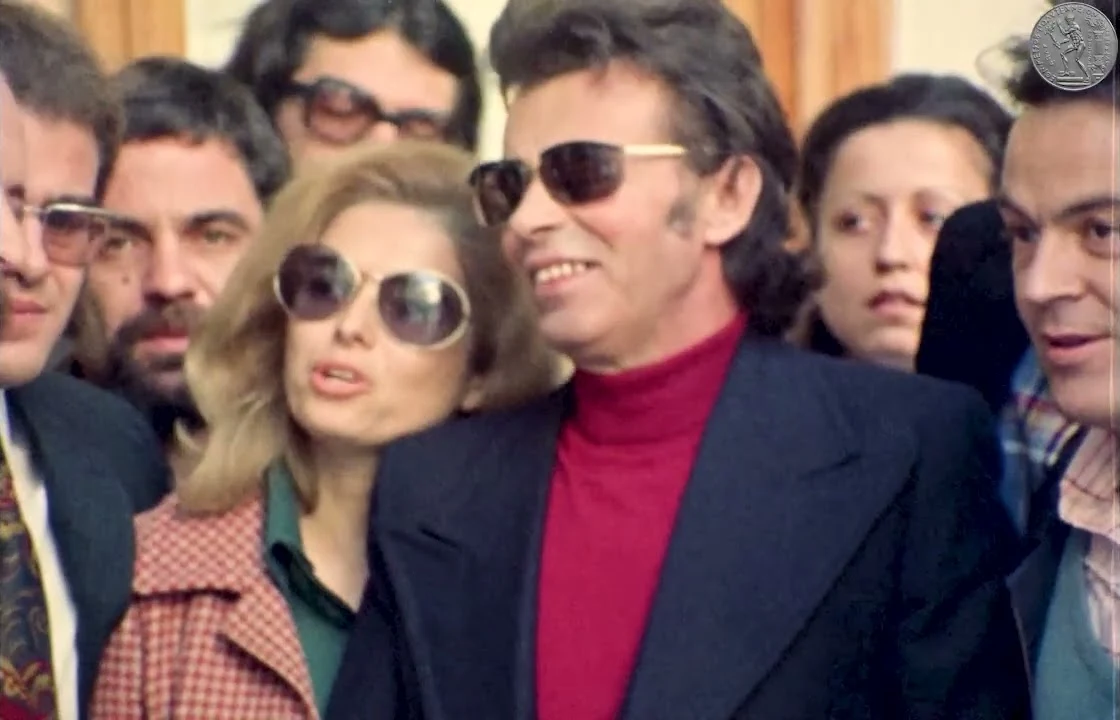
The expressions and interactions give the footage particular force. This is not simply a record of an official anniversary: it shows people meeting, singing and turning the Polytechnic site into a place of shared remembrance.
How the footage was preserved
Staff at the ERT Archive helped conserve and digitise the film reels. Babis Louizidis and Dimitris Papaioannou processed the material at the NTUA School of Architecture Documentation Laboratory, while Eleftheria Varouchaki and Afroditi Oikonomou worked to identify scenes and people.
Giannis Simiriotis was responsible for the original production and cinematography. Nikos Kanakis handled editing, Dimitris Kontos provided narration, Mai Nassi created the graphic artwork and Dimitris Dallas was credited with laboratory work. These names survive through the original information accompanying the film.
From documenting the uprising to preserving its memory
The Polytechnic films remind us of two different roles a camera can play: documenting history as it unfolds, and preserving the ways people remember it. The 1973 footage of the tank breaching the Polytechnic gate belongs to the first. Simiriotis’s film of the commemorations a year later belongs to the second.
What we think
These images deserve to be watched in full. They contain something a single photograph cannot hold: glances, movement through a crowd, voices and song. The camera is not reconstructing events from a distance. It is among people for whom the events of 1973 were still painfully recent.
For photographers and filmmakers, the story of these reels is also a reminder of the responsibility to preserve our work. An image has value not only when it is recorded, but when it is catalogued, cared for and made accessible decades later.
Every November 17, we honour those who resisted the dictatorship and those who lost their lives to its violent repression. The 1974 footage shows how quickly that remembrance became a collective act — and why it must not be allowed to fade.