Summary
- Nikon has announced its industrial Dual Vision Camera with two 8.1MP sensors.
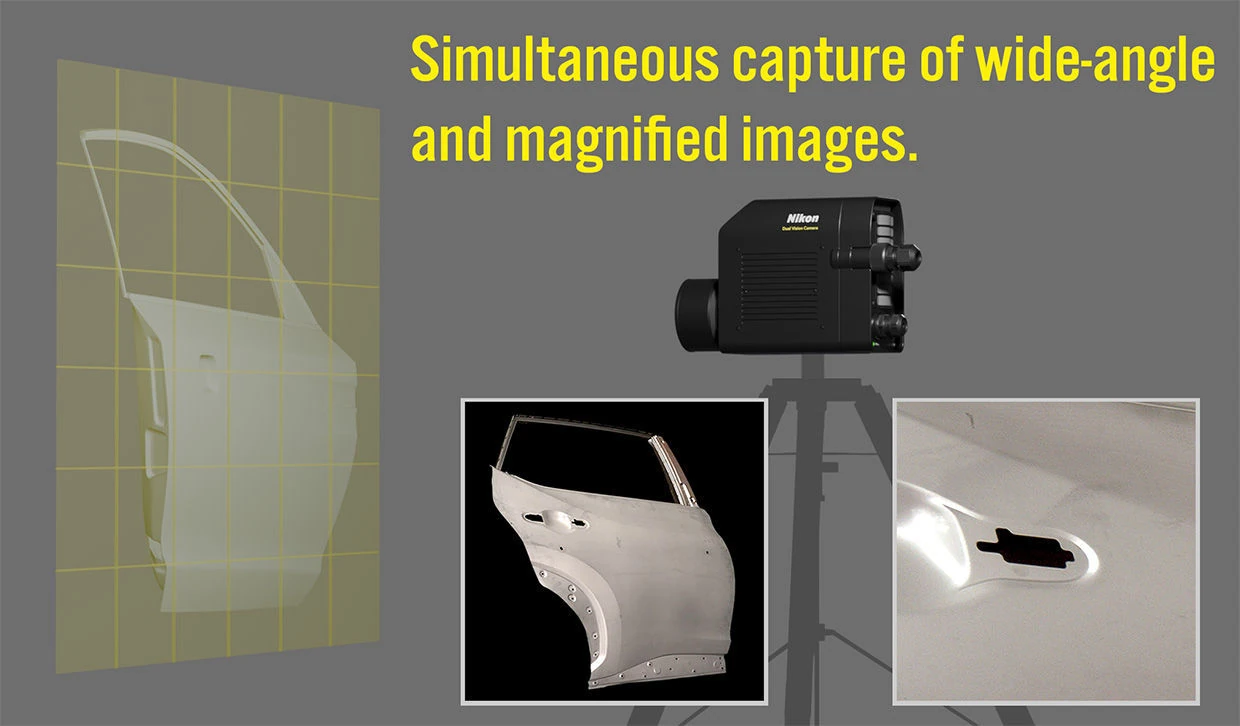
- It simultaneously captures wide-angle and optically magnified 6× images.
- Sequential captures gather up to 288MP-equivalent image information.
- Release is scheduled for January 2027.
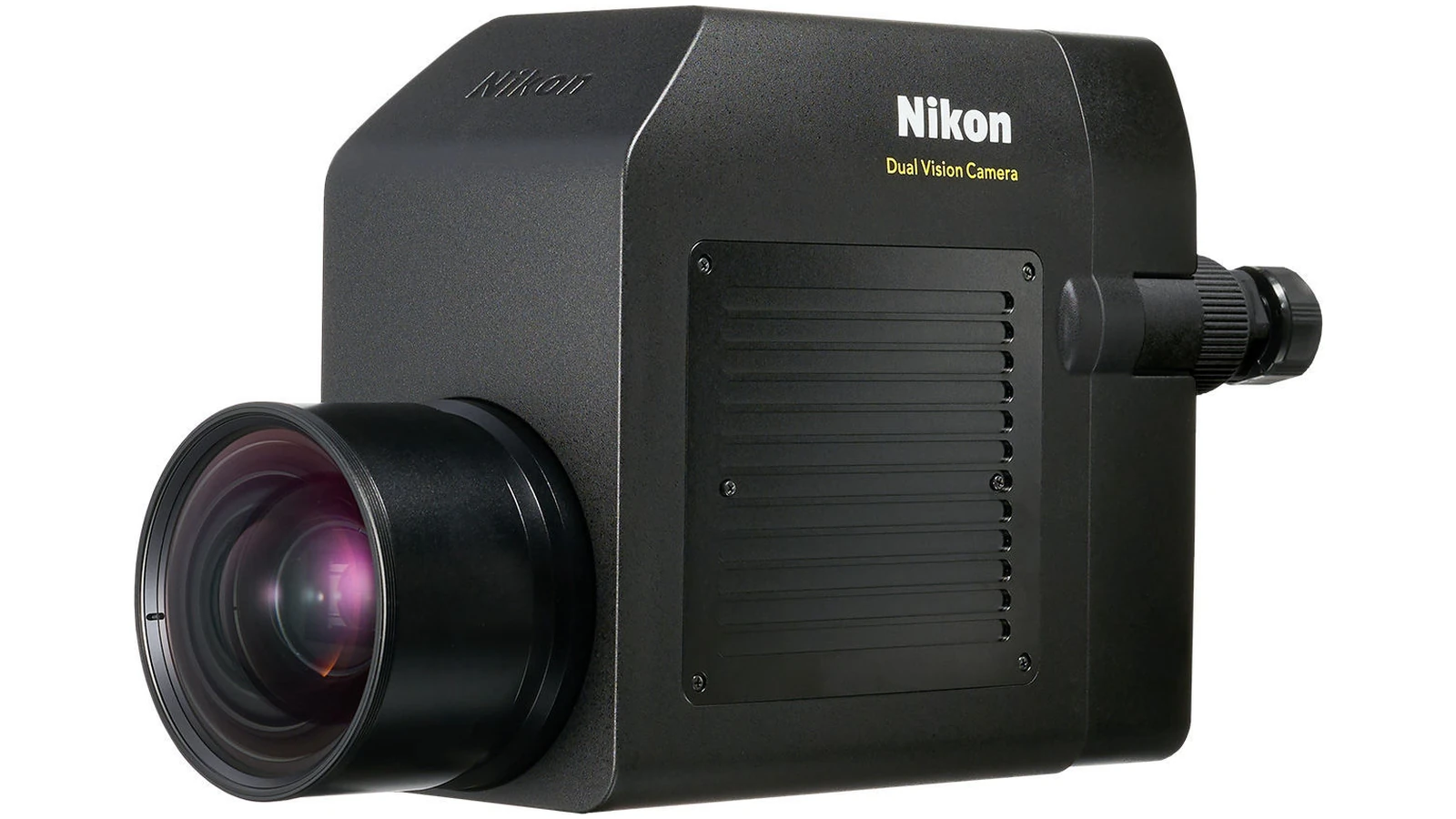
A Nikon camera with two 8.1MP sensors and 6× optical magnification can capture an entire object and its tiny imperfections at the same time, while sequential recording gathers the equivalent of up to 288MP of image information.
Announced on November 16, 2026, the Nikon Dual Vision Camera (NDV-6M8DC) is a specialist machine-vision system for factories and automated quality inspection. It is not a new Z-series mirrorless camera: it is designed to find scratches, defects and small variations in manufactured components without requiring a separate camera for every level of detail.
Two sensors and genuine optical magnification
Inside are two 8.1MP color CMOS sensors, one for the wide-angle view and the other for the magnified image. Nikon’s proprietary coaxial optical design allows simultaneous capture of the overall scene and a selected detail, with 6× optical magnification. The extra detail therefore does not simply come from digitally enlarging the same pixels.
The wide-angle lens has a 6.4mm focal length, approximately 25mm in full-frame terms, and an 82-degree diagonal field of view. The camera uses a global shutter and motorized focus. Nikon specifies spatial resolution as fine as 12 µm per pixel on the subject at a 120mm working distance, describing the level of object detail in a particular inspection setup rather than the physical sensor pixel pitch.
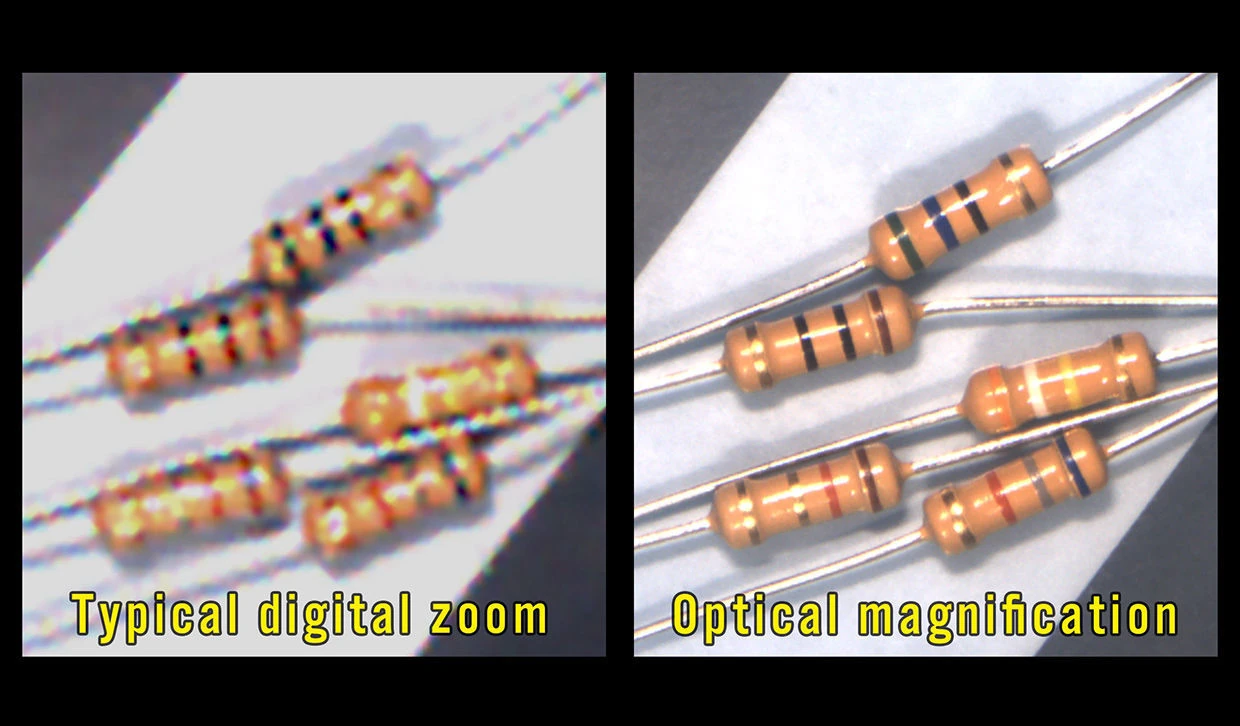
How two 8.1MP sensors can produce 288MP-equivalent information
The headline-grabbing 288MP figure needs context. The Dual Vision Camera does not use a 288MP sensor and does not take a single 288MP photograph. Its Image Driving function quickly repositions the internal magnification optics to selected points within the wide-angle scene. The accumulated effective recording area can contain information equivalent to roughly 36 separate 8MP-class images.
The benefit is not just finer detail, but how that detail is gathered. An operator or inspection system identifies areas of interest in the wide-angle image, and the camera records them through its magnified optical path. Nikon says that, under its own evaluation conditions, robot or slider repositioning operations were reduced to one-ninth or less compared with using a 32MP camera to cover an equivalent field of view. This is not a guaranteed result for every production line.
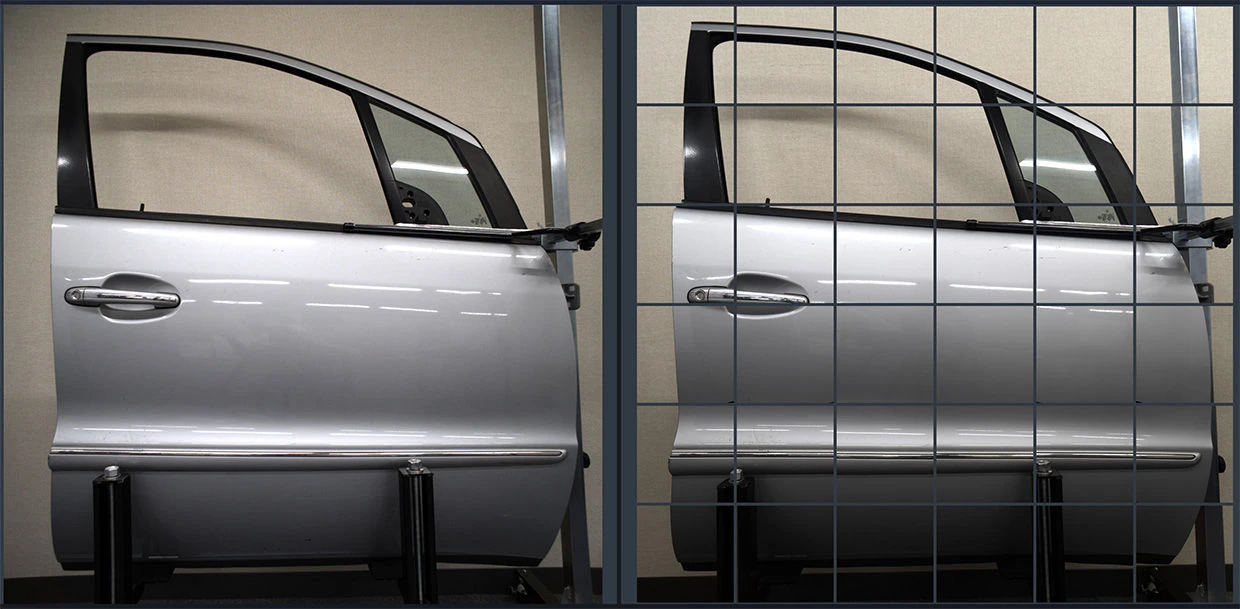
Why this matters for imaging technology
Applications range from inspecting small electronic components to larger surfaces such as car doors and automotive parts. A system can monitor the full item while examining suspicious areas, preserving the relationship between each detail and its position in the wider frame. Depending on the application, Nikon expects one unit could replace systems using numerous dedicated magnification cameras.
This approach differs from the modular CHC5 machine-vision camera, which emphasizes interchangeable sensors and open architecture, and from the OPTOWL industrial metalens, which focuses on reducing optical-system size. Nikon’s priority here is selecting and magnifying different parts of the field within one unit, reducing the need for mechanical movement elsewhere in the inspection setup.
More information here.
Price and availability
The Dual Vision Camera is scheduled for release in January 2027. No official European price was found. A separate control PC, lighting and other equipment are required depending on the installation.
What we think
It is fascinating to see Nikon apply its optical know-how to a place where photography becomes a tool for measurement and inspection. As image-makers, we are familiar with wanting to see both the whole frame and one small detail. In a factory, though, composition is not the priority: what matters is knowing exactly where a defect is and being able to capture it consistently.
The optical solution is what stands out to us. Rather than relying entirely on higher megapixel counts or digital zoom, this camera optically changes which area it examines while preserving the link between the close-up and the overall view. Reducing the number of cameras and mechanical movements could make a significant difference in a factory, provided the system performs at the necessary speed and under the lighting conditions of the actual production line.
Frequently asked questions
Does the Nikon Dual Vision Camera have a 288MP sensor?
No. It uses two 8.1MP sensors. The approximate 288MP figure refers to the equivalent amount of image information collected through successive optically magnified captures of selected areas.
Is this a consumer Nikon Z mirrorless camera?
No. It is an industrial machine-vision camera designed for automated inspection systems. It requires a separate control computer and suitable lighting.
What does Nikon’s 12 µm specification mean?
It describes the spatial detail that can be resolved on the object under specific conditions, at a 120mm working distance. It is not the size of pixels on the image sensor.