Summary
- OPTOWL has developed a metalens prototype for industrial machine vision.
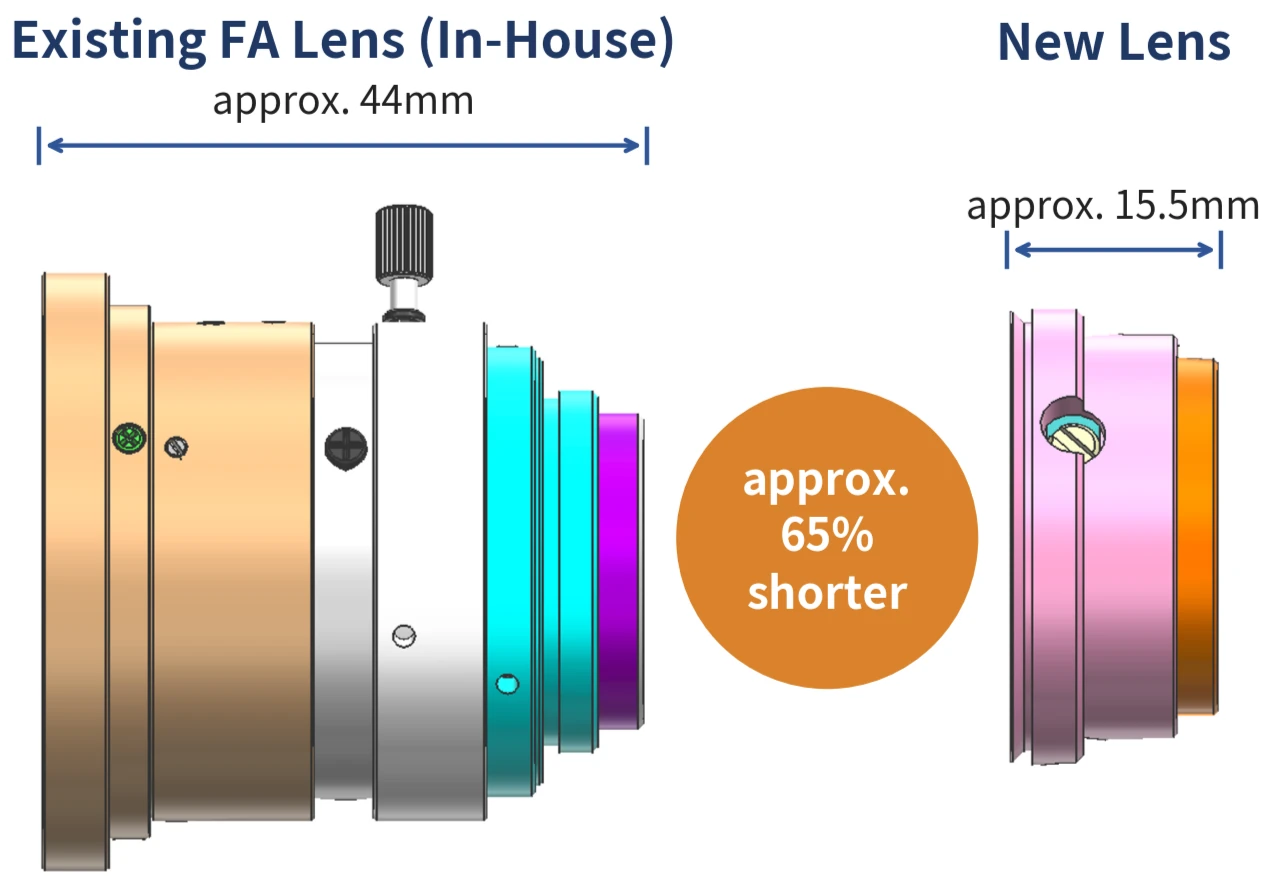
- The optical system shrinks from 44 mm to 15.5 mm.
- It operates in infrared rather than being a lens for current photographic cameras.
- The company targets sales during fiscal 2027.
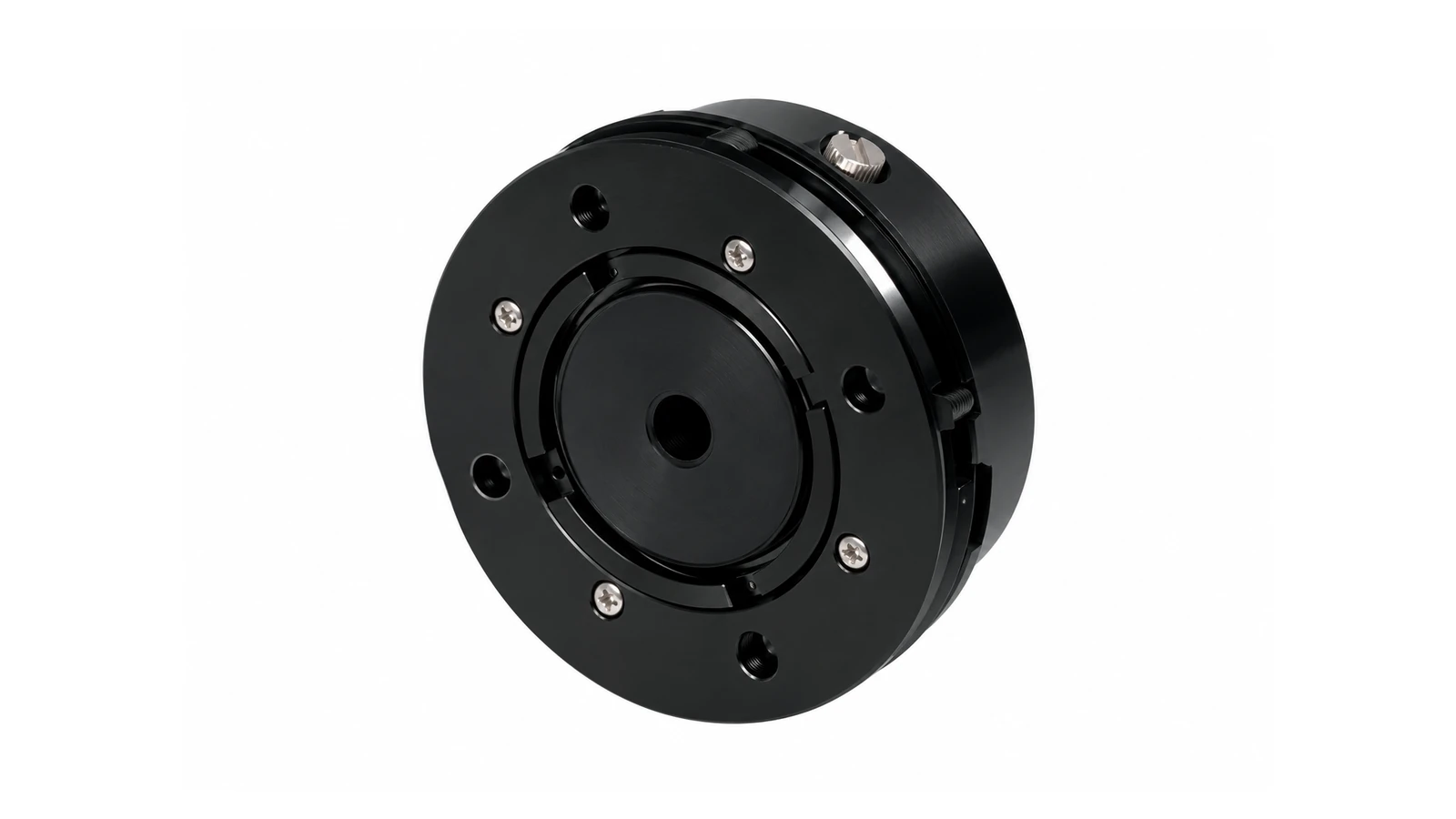
A lens module just 15.5 mm long where a conventional design required 44 mm: Japan’s OPTOWL is using a metalens to show how much smaller certain camera systems could become.
Announced on September 11, 2026, and scheduled for demonstration at VISION Stuttgart on October 6–8, the prototype is not a photographic lens you can buy today. It is an infrared machine-vision optical module designed for extremely confined mounting spaces.
Replacing 8–10 optical elements with a single metalens
Conventional lenses combine several glass elements to direct and focus light. A metalens instead uses a thin engineered surface with structures smaller than the wavelength of light to control its propagation, potentially doing away with a bulky sequence of optical elements.
OPTOWL says its single metasurface element performs an optical function previously handled by 8–10 elements in this particular industrial design. The length falls by roughly 65%, from 44 mm to 15.5 mm. That is a comparison between two specific machine-vision optical systems, not a claim that every photographic lens can shrink to this size.
Why zero lens protrusion matters
The company’s other diagram highlights a practical benefit: its previous lens protruded roughly 36 mm from the industrial camera body, whereas the metalens configuration is shown with no equivalent protrusion. That can matter when a camera needs to fit on the end of a robotic arm or inside industrial inspection equipment.
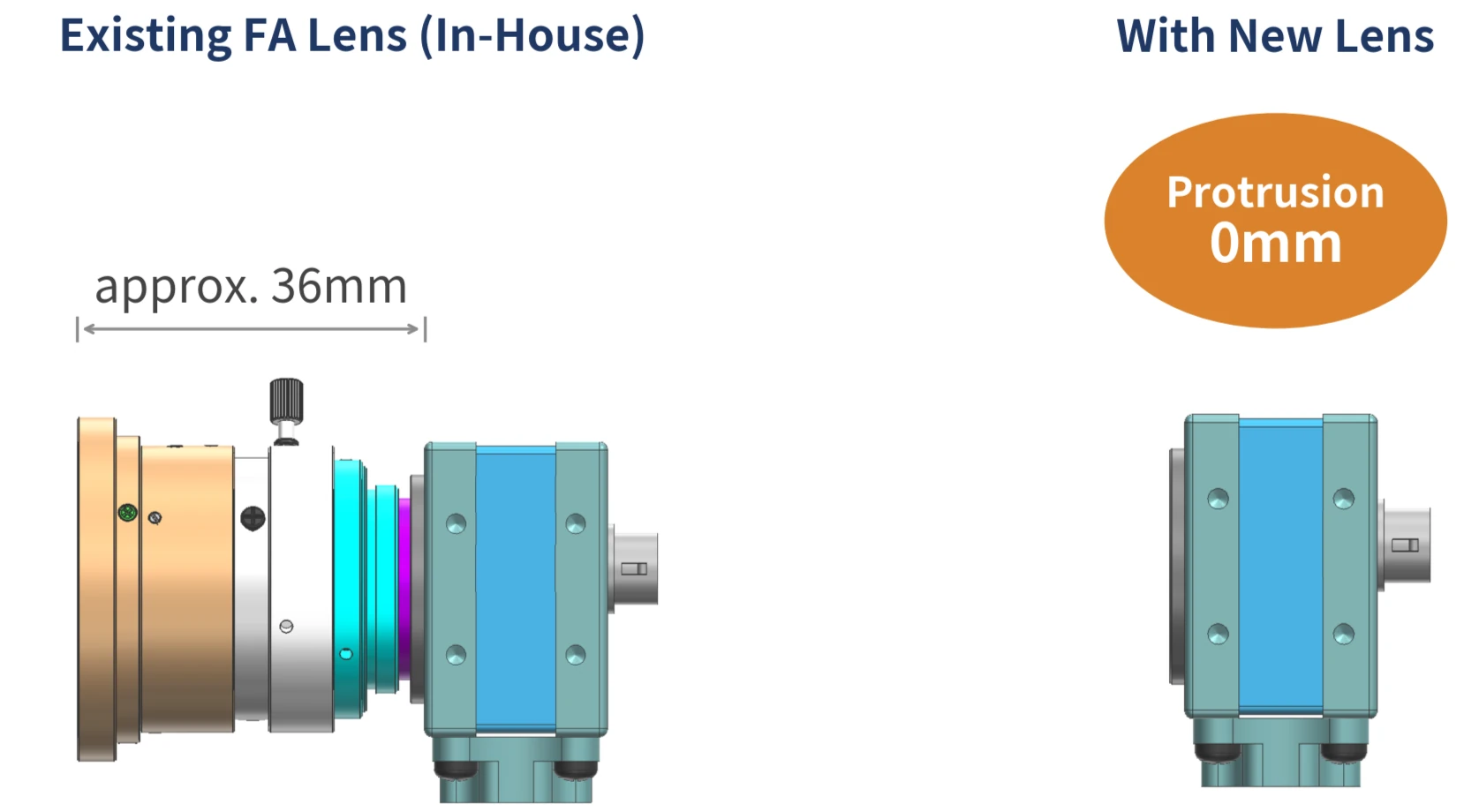
OPTOWL identifies robot vision, compact factory-automation cameras, embedded vision and multi-view inspection systems as potential markets. In those applications, even a few millimeters can determine where a sensor can be installed and how freely its host mechanism can move.
The essential limitation: infrared only
The announced operating band is infrared (IR). The company does not provide measurements establishing equivalent performance across the visible spectrum, or specifications demonstrating compatibility with full-frame sensors, photographic apertures or the demanding image-quality requirements of contemporary camera lenses.
Making an optical module smaller does not automatically guarantee color correction, edge-to-edge sharpness or versatility across shooting conditions. The distinctions become clearer when considering the fundamental optical properties of photographic lenses.
A concept targeting sales in fiscal 2027
OPTOWL describes the unit as a pre-production concept model. Its roadmap involves testing with equipment and camera makers, custom configurations and initially small production runs, with sales targeted during fiscal 2027. The published figures are reference values from internal material dated August 2026 and could change before mass production.
More information here.
What we think
The striking part of OPTOWL’s demonstration is not simply that the lens has become smaller. The optics are being treated as part of the camera’s mechanical design: remove a substantial protrusion and you change where the whole camera can be installed. For machine vision, that is a specific, measurable advantage.
Photography is a different challenge. Our cameras must handle colors, detail and contrast under a wide range of lighting conditions. An infrared prototype does not establish that those demands can already be met with one flat element. It is too early to declare the end of large photographic lenses.
Still, an optical technology capable of reclaiming this much space is worth watching. If future designs extend the usable wavelength range and demonstrate strong imaging performance, specialized miniature cameras may benefit before anything comparable arrives in mainstream interchangeable-lens systems.
Frequently asked questions
Can this metalens be mounted on a Sony, Canon or Nikon camera?
Not on the basis of the announced information. This particular module was developed for infrared industrial machine vision and has not been announced as an interchangeable photographic lens.
When will it be available?
OPTOWL targets sales during fiscal 2027, following testing and development with equipment manufacturers. No consumer version or retail price has been announced.