

Summary
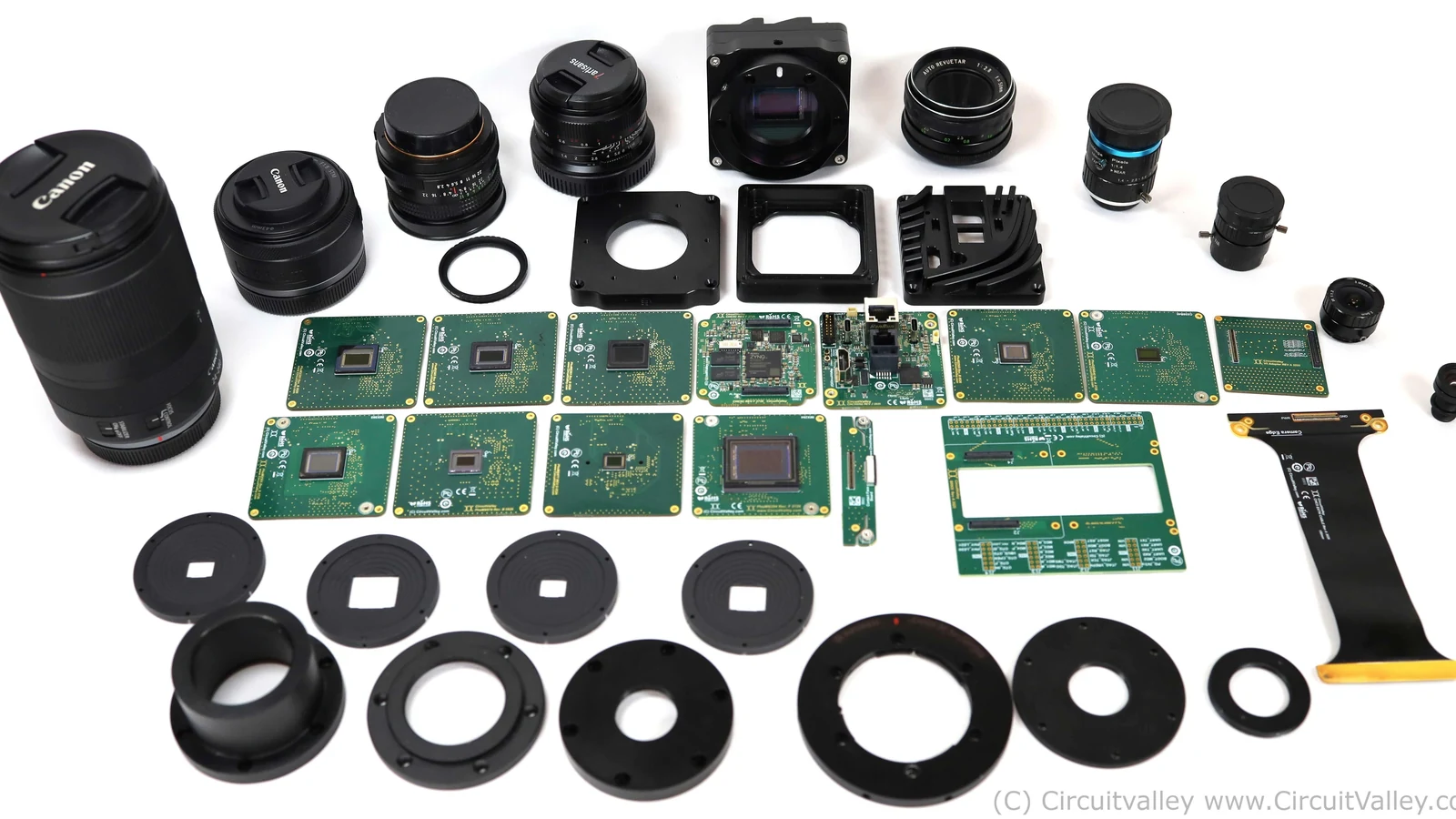
- CHC5 combines interchangeable sensors, multiple lens mounts and programmable FPGA processing.
- It supports up to eight data lanes, RAW and PWL HDR, with simultaneous USB 3, Gigabit Ethernet and HDMI output.
- The base complete configuration starts at €589 on Kickstarter, with estimated delivery in January 2027.
CircuitValley’s CHC5 is an open, programmable machine-vision camera system designed to let users swap not only the lens, but also the sensor, mount and software.
The German developer brought CHC5 to Kickstarter after four years of work, describing it as the first commercially available modular machine-vision camera with open software. It is aimed primarily at researchers, developers, industrial-vision applications, robotics and specialised builds rather than buyers seeking a ready-to-use consumer mirrorless camera.
CHC5 matters because of its architecture. Instead of treating the sensor, image processing and connectivity as a closed unit, different boards can be combined to suit the application. That could lower the cost of experimentation for laboratories and small teams that would otherwise need several separate cameras.
What CHC5 is and who it is for
The system is built around modular boards for the sensor, processing and interfaces inside a metal enclosure. An FPGA handles the image-processing pipeline and allows the platform to adapt to different sensors and protocols.
CHC5 can be used for machine vision, scientific imaging, automation, robotics, astrophotography rigs and the development of new capture algorithms. Its flexibility comes with a trade-off: it demands more technical knowledge than a finished stills or cinema camera.
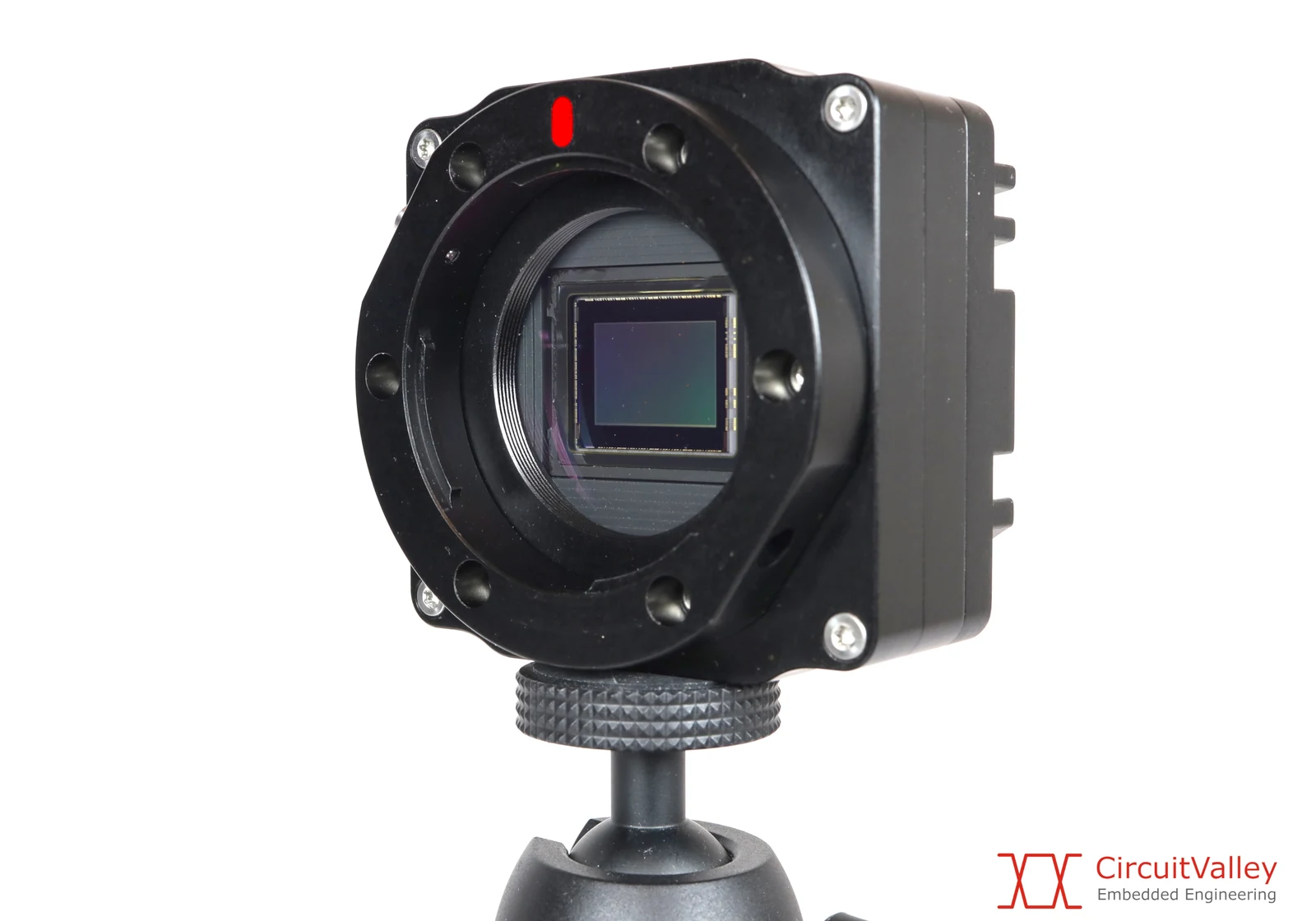
Sensors up to approximately 128 megapixels
The platform supports MIPI D-PHY, LVDS, Sub-LVDS, Low Voltage LVDS and SLVS sensors, with up to eight data lanes and a total rate of up to 10Gbps. It accepts rolling- or global-shutter devices and RAW8, RAW12, RAW14 and PWL HDR formats.
The current list includes Sony IMX477, IMX485, IMX678, IMX585, IMX283 and IMX294 sensors, the OmniVision OX08B40 with 140dB dynamic range, plus the global-shutter Sony IMX568 and IMX565. Present choices span 5.1 to 20.3 megapixels, while the architecture is designed for compatible sensors up to roughly 128 megapixels.
Users can also change the internal infrared-cut filter, and there is an external 43mm filter thread. That matters in scientific or night-imaging work, where a fixed filter could restrict the experiment.
Speed, RAW and the ISP limits
CircuitValley quotes an image-signal-processor throughput of 600 megapixels per second. Its published theoretical maxima are approximately 2,000fps at 640×480, 170fps at 1080p and 40fps at 4K.
Those figures are not guaranteed for every sensor and output combination. Real speed depends on the sensor, data-lane count, bit depth and available streaming interface. CHC5 is a development platform more than a product with one fixed specification sheet.
Mounts from C and CS to RF, E and Micro Four Thirds
A minimum flange distance of 8.75mm permits many optical systems to be adapted. The official list includes C, CS, S and M42, plus manual Canon RF and Sony E mounts. Micro Four Thirds and custom mounts are also supported.
The references to RF and E do not imply electronic autofocus or aperture control. CircuitValley explicitly labels them as manual mounts, an important limitation for anyone considering modern lenses that depend on electronic communication with the camera body.
Three outputs operating simultaneously
CHC5 offers 5Gbps USB 3 with UVC and USB3 Vision, Gigabit Ethernet with GigE Vision, and 1080p HDMI. The developer says all three can operate simultaneously, enabling local HDMI monitoring while data is sent in parallel to a computer or network.
There is also one electrically isolated input and one isolated output, both user-programmable. That is a key detail for laboratory and industrial installations where the camera must synchronise with lighting, sensors or mechanical systems.
Availability and price
The CHC5 campaign is live on Kickstarter, with a complete base camera kit starting at €589. The Developer Edition Kit Pro is priced at €2,999, shipping to European countries is listed at €20, and rewards are estimated to ship in January 2027.
More information, available configurations and funding terms are on the official CHC5 Kickstarter campaign. As with any crowdfunding project, backing is not the same as buying a finished retail product, and schedules can change.
What we think
CHC5 is interesting because it brings the logic of open, modular computers into the capture pipeline itself. Swapping sensor, mount and interface within one enclosure could be genuinely valuable for research and specialised work. The licences need careful reading, however: the repository describes the project as open, but displays a CC BY-NC-ND 4.0 licence for the posted material, restricting commercial use and derivatives. Developers should verify the component-specific software, firmware and hardware licences before building a product around the platform.
Frequently asked questions
Is CHC5 a conventional mirrorless camera?
No. It is primarily a programmable machine-vision and development platform, with more setup requirements than a consumer camera.
Which sensors does it support?
The current list includes several Sony IMX sensors and the OmniVision OX08B40, while the platform is designed for compatible sensors up to approximately 128 megapixels.
Can it record 4K?
The ISP is rated at approximately 4K at 40fps, but actual performance depends on the sensor and streaming interface.
When is delivery expected?
The campaign estimates reward shipping in January 2027.