

Summary
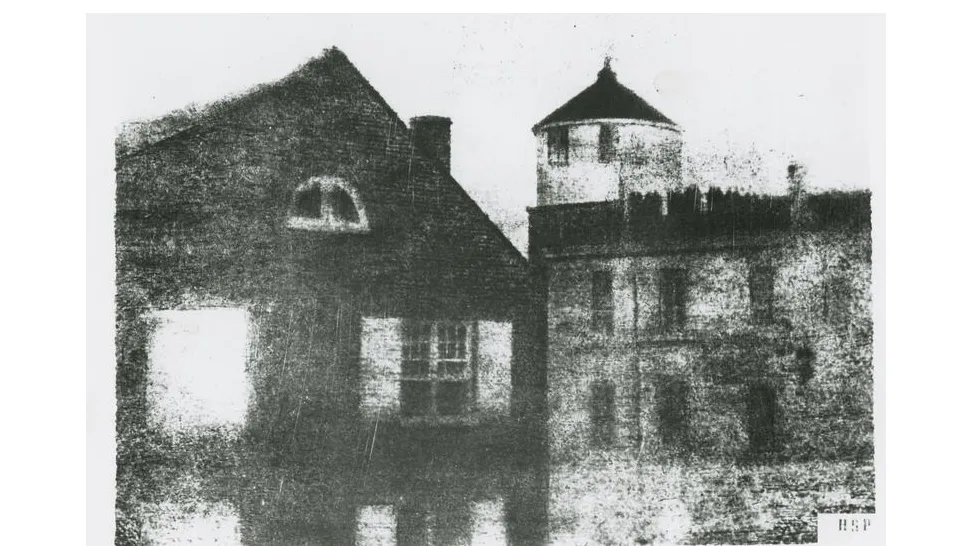
- The oldest known surviving American photograph was made in 1839
- It was created by Joseph Saxon in Philadelphia
- The image was made with a cigar box and a crude lens
- It shows Pennsylvania’s Central High School
- The daguerreotype required an exposure of about ten minutes
The oldest known surviving American photograph was made in 1839 in Philadelphia, using a surprisingly improvised method.
In 1839, inventor Joseph Saxon, who was working at the United States Mint in Philadelphia, experimented with the then-new daguerreotype process and captured the nearby Central High School in Pennsylvania from a window. The small image, measuring about two inches, required an exposure of ten minutes.
The photograph is significant because it is considered the oldest surviving image made in the United States, only a few months after Louis Daguerre publicly introduced the daguerreotype in France. What makes it even more interesting is that Saxon did not use a conventional camera, but a cigar box fitted with a crude lens.
An image before the camera became established
The daguerreotype was one of the first practical photographic processes and used a silver-coated copper plate. The method produced unique images with fine detail, but it required long exposure times and great care in preserving the final result.
In Saxon’s case, the image was made with an improvised device: a cigar box acting as a light-tight chamber, combined with a crude lens. Although it was not a camera in the modern sense, the basic principle was similar: light passed through the lens and was recorded on the sensitized daguerreotype surface.
The school that became a historic frame
The subject of the image was Central High School in Philadelphia. The photograph was taken from a window of the United States Mint, where Saxon worked, preserving an urban view from a time when photography was still in its earliest stage.
The process had none of the immediacy we take for granted today. To capture the image, the plate had to remain exposed to light for about ten minutes. That made moving subjects extremely difficult to record, which explains why early photographic subjects were often buildings, streets and static objects.
Daguerreotype and the beginning of photography in the United States
Saxon’s image was created only a few months after Louis Daguerre announced the daguerreotype in 1839. Although Joseph Nicéphore Niépce had already produced the first permanent photograph in 1826, Daguerre’s method made photography more practical and widely known.
Shortly afterward, in the same year, Robert Cornelius made what is widely considered the first American photographic portrait and one of the earliest self-portraits in photographic history. His image also required several minutes of exposure, showing how demanding the process was for photography’s early pioneers.
Why it is rarely displayed
Saxon’s historic daguerreotype is now owned by the Historical Society of Pennsylvania. However, it is not often displayed to the public, because daguerreotypes are highly sensitive to light.
Prolonged exposure can damage the image, leaving the surface looking more like a mirror. For this reason, such objects are kept under controlled conditions and shown only rarely, so they can be preserved for future generations.
What we think
The story of the first surviving American photograph shows how experimental and fragile the birth of the medium really was. The fact that such an important image was created with a cigar box and a crude lens is a reminder that photography began more as an invention and curiosity than as an everyday tool.
Frequently asked questions
What is considered the oldest surviving American photograph?
Joseph Saxon’s 1839 daguerreotype, showing Central High School in Philadelphia, is considered the oldest known surviving photograph made in the United States.
What was the photograph made with?
It was not made with a conventional camera, but with an improvised cigar box fitted with a crude lens.
How long did the exposure take?
The exposure lasted about ten minutes, which was typical for early daguerreotypes.
Where is the historic photograph today?
The daguerreotype is held by the Historical Society of Pennsylvania.
Why is it not often displayed to the public?
Daguerreotypes are sensitive to light and can deteriorate if exposed for long periods.