

Summary
- The Vera C.
- Rubin Observatory has officially begun the Legacy Survey of Space and Time
- The survey will run for ten years and repeatedly cover the southern sky every few nights
- Rubin’s 3,200-megapixel camera captures a new image approximately every 40 seconds
- The system will collect about 10 terabytes of data every night
- Rubin can generate up to 7 million alerts for changes in the night sky
- Early optimization surveys already discovered more than 11,000 previously unknown asteroids
The NSF–DOE Vera C. Rubin Observatory has officially begun the ten-year Legacy Survey of Space and Time, aiming to create the most detailed time-domain record of the dynamic Universe.
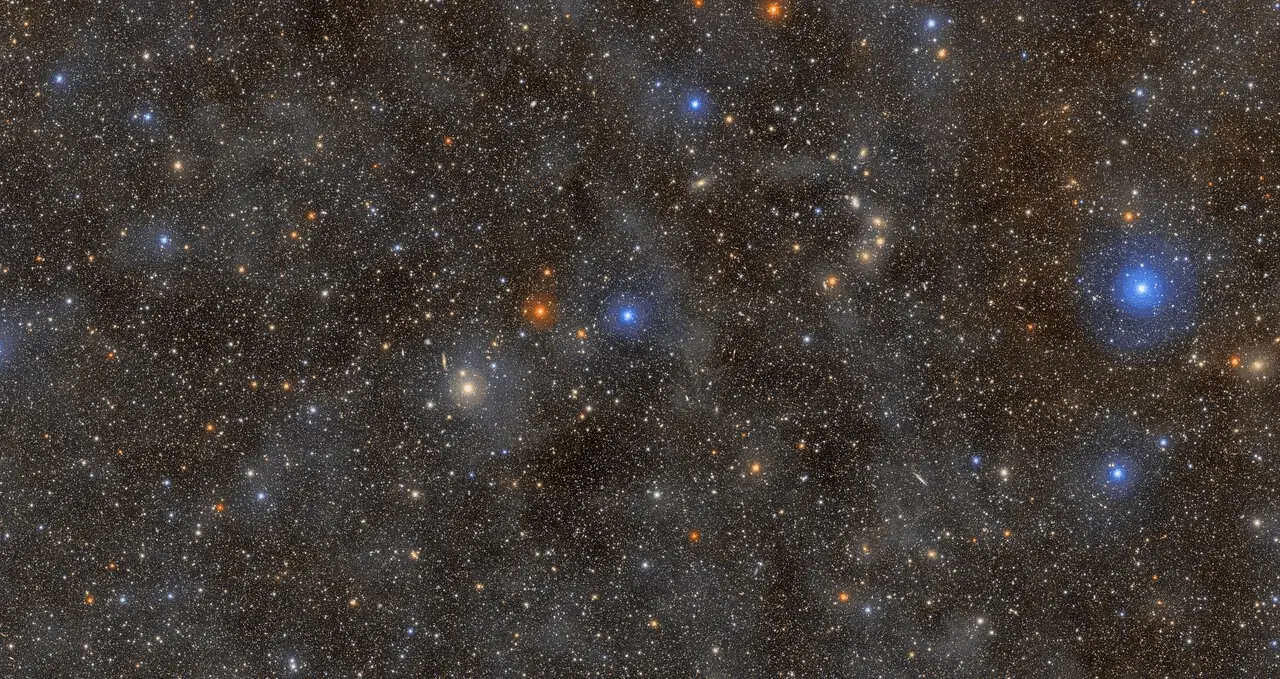
From the summit of Cerro Pachón in Chile, the Vera C. Rubin Observatory has started its main scientific mission, the Legacy Survey of Space and Time, known as LSST. It is a ten-year survey during which the observatory will repeatedly scan the entire southern sky, recording changes, motions, and transient phenomena at an unprecedented pace.
The importance of the project is enormous, because Rubin will not simply provide static images of the sky, but a continuous time-lapse of the Universe. Its data is expected to help scientists study asteroids, comets, supernova explosions, active black holes, distant galaxies, dark matter, and dark energy.
A Ten-Year Time-Lapse of the Sky
LSST is the core mission of Rubin Observatory and will run for ten years. Its goal is to create the most complete cinematic record of the Universe ever produced, observing the southern sky every few nights.
Over the course of a decade, each area of the sky will be observed about 800 times. This will allow scientists to detect moving objects, rapidly changing events, and processes that evolve slowly or occur rarely.
The World’s Largest Digital Camera
At the heart of Rubin is a 3,200-megapixel camera, the largest digital camera ever built. The system can capture a new detailed image approximately every 40 seconds, combining a wide field of view, high sensitivity, and rapid pointing.
This combination allows the observatory to detect faint objects and short-lived phenomena consistently. The official start of LSST followed a period of system optimization and technical evaluation, including checks of image quality, system reliability, survey speed, and calibration accuracy.
Millions of Alerts Every Night
Rubin will collect approximately 10 terabytes of data every night and can generate up to 7 million alerts for changes in the night sky. These alerts will be sent to automated classification systems so scientists can respond quickly to important events.
This capability is particularly important for multi-messenger astronomy, where different signals, such as light, gravitational waves, and cosmic rays, are combined to study violent cosmic phenomena. Rubin will be able to direct other telescopes toward transient events such as stellar explosions, active black holes, and collisions between compact objects.
A Discovery Machine for the Solar System
Rubin is expected to become one of the most powerful tools for discovering objects in the Solar System. With about 1,000 images every night, it will build an extremely detailed catalog of asteroids and comets.
Already, during early optimization surveys, the observatory detected more than 11,000 previously unknown asteroids. These include 33 near-Earth objects and 380 trans-Neptunian objects.
Billions of Objects and Trillions of Measurements
When LSST is complete, the final archive will include billions of objects and trillions of measurements. The data will be made available through regular releases, giving the scientific community access to one of the largest astronomical datasets ever created.
The observatory is a joint initiative of the U.S. National Science Foundation and the Department of Energy. Its operations are supported by NSF NOIRLab and SLAC National Accelerator Laboratory, while its mission honors astronomer Vera Rubin, who made a major contribution to the understanding of dark matter.
What We Think
Rubin Observatory is not just another large telescope. It is an infrastructure that changes the way astronomy observes time. If LSST meets its goals, it will become one of the most important scientific archives of our era, with impact ranging from planetary defense to cosmology.
Frequently Asked Questions
What is LSST?
The Legacy Survey of Space and Time is the ten-year survey of Rubin Observatory, during which the southern sky will be repeatedly scanned to record changes and motions in the Universe.
Where is Rubin Observatory located?
The observatory is located on Cerro Pachón in Chile, an area with clear and dark skies suitable for astronomical observations.
Why is Rubin’s camera important?
The 3,200-megapixel camera is the largest digital camera ever built and allows the telescope to capture huge areas of the sky in high detail.
What kinds of discoveries are expected?
Rubin is expected to detect asteroids, comets, supernova explosions, variable stars, active black holes, and clues related to dark matter and dark energy.
Will the data be available?
LSST data will be released regularly, giving scientists and research teams access to a vast archive of observations.