

Summary
- Sam Haskins treated the photobook as a complete visual work.
- Five Girls, Cowboy Kate and his commercial practice reveal a career far broader than the label of nude photographer.
- Five Girls: the book that revealed his visual language
- Cowboy Kate: grain, contrast and narrative
- The studio as a place for experimentation
- November Girl, African Image and a much broader career
- Pentax and commercial photography
- From Haskins Posters to Photo Graphics
- Why Sam Haskins is worth revisiting today
- What we think
- Frequently asked questions
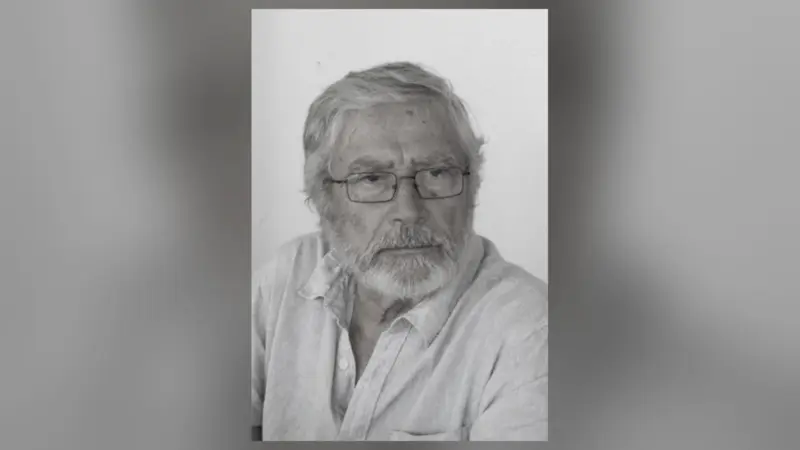
Sam Haskins was one of the most distinctive photographic voices of the second half of the twentieth century, combining shooting, editing, sequencing and graphic design into a unified visual language.
Born in South Africa in 1926, he began his professional career in Johannesburg and worked across several areas of applied photography, from advertising and fashion to industrial and aerial work. In 1968 he moved to London, where his international profile expanded.
Renewed interest in his archive and the appearance of important prints on the market offer a reason to look again at his work. For photographers today, however, the key point remains his approach to the book not as a container for pictures, but as an independent photographic work.
Five Girls: the book that revealed his visual language
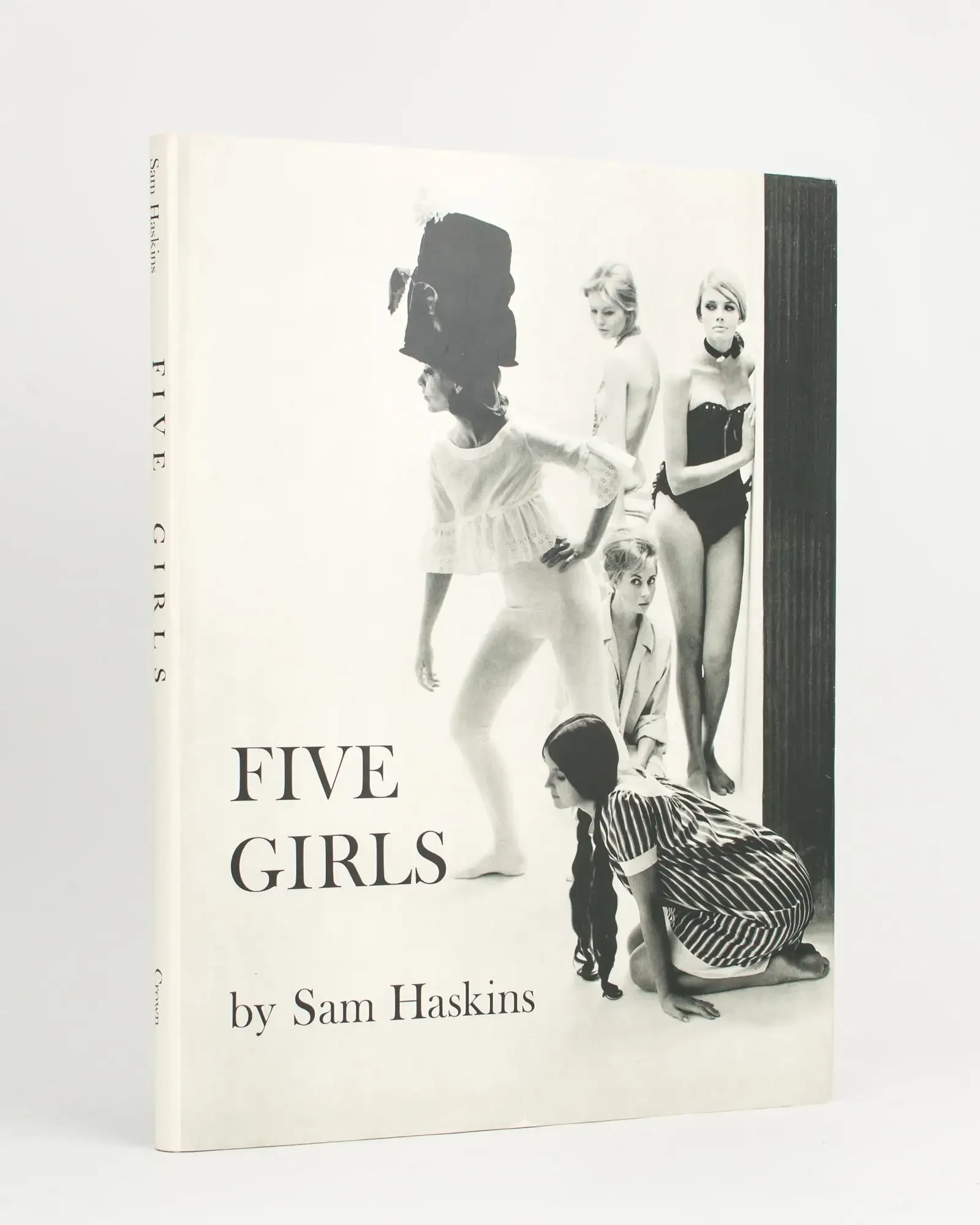
Five Girls, published in 1962, was Haskins’s first major international statement. He approached the female figure through movement, unusual framing, strong tonal contrast and an energy that departed from the static conventions of period glamour photography.
Just as important as the individual photographs was their organisation within the book. Haskins gave close attention to sequencing, visual juxtapositions and page design, moving part of the creative decision-making from the instant of exposure into the final photobook.
Cowboy Kate: grain, contrast and narrative
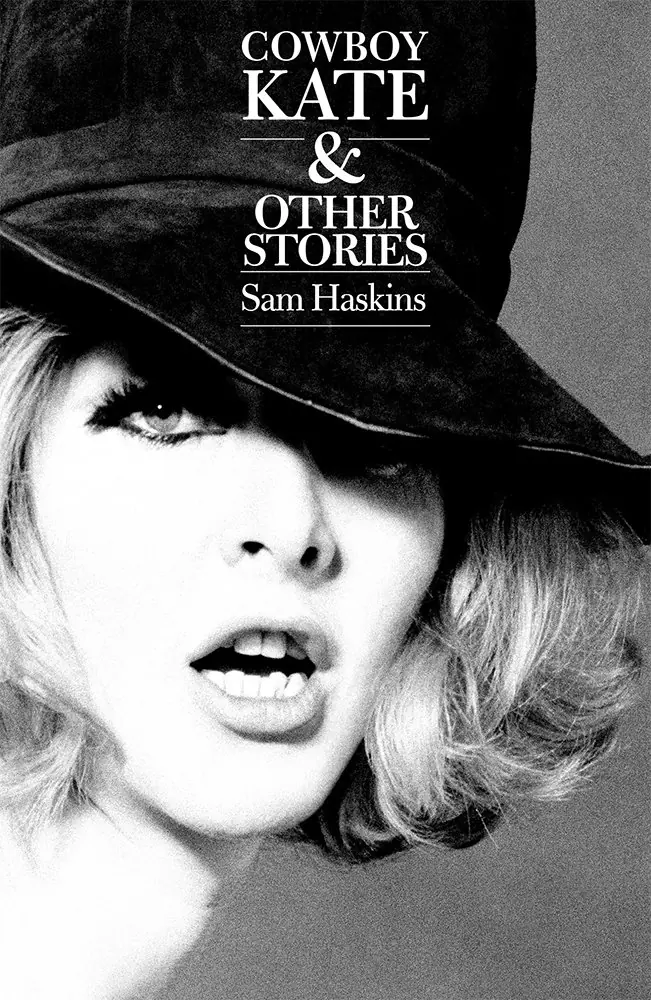
Two years later, Cowboy Kate & Other Stories pushed this approach further. With Audrey Kate as its central figure, Haskins used pronounced black-and-white grain, hard contrast, staged movement and sequences with an almost cinematic rhythm.
The book became his best-known work, received the Prix Nadar and, according to figures cited by Amateur Photographer, its various editions sold more than one million copies. Its importance lies not only in its subject matter, but in the way photographs acquire pace and narrative through the structure of the book itself.
The studio as a place for experimentation
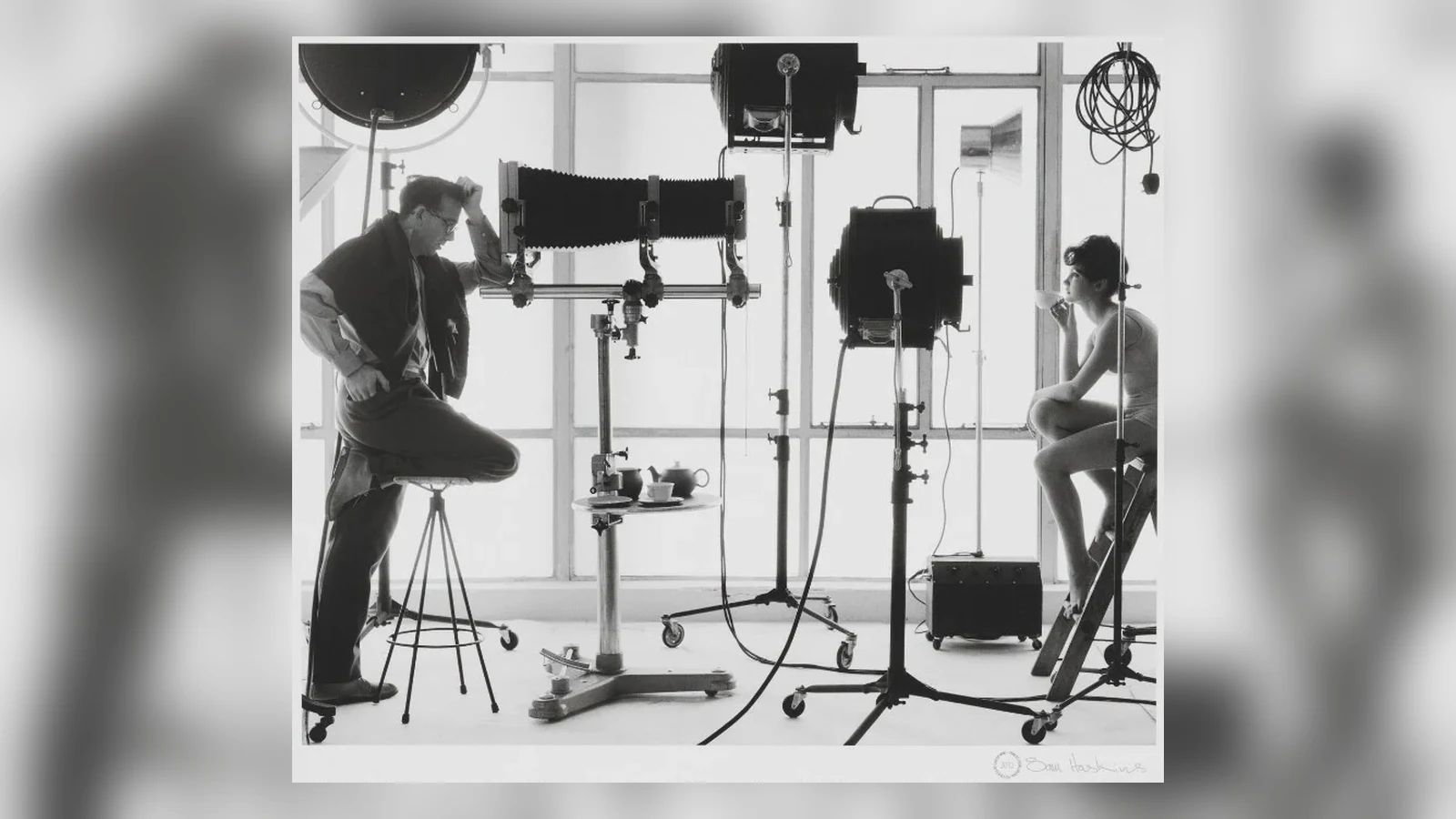
The portrait of Haskins in the studio, circa 1975, reveals another side of his practice. Behind the apparently free and spontaneous results was a highly technical working environment in which large-format equipment, lighting and studio structures coexisted with experiments in movement, pose and composition.
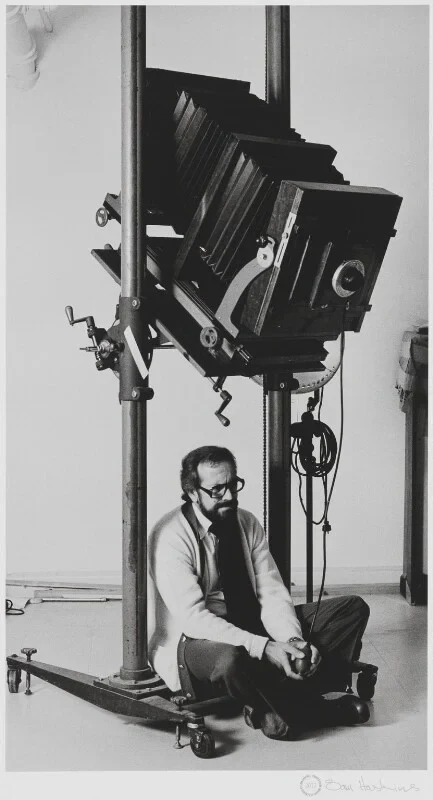
That technical fluency helps explain how Haskins could move between personal books and demanding commercial assignments without losing his recognisable visual identity.
November Girl, African Image and a much broader career
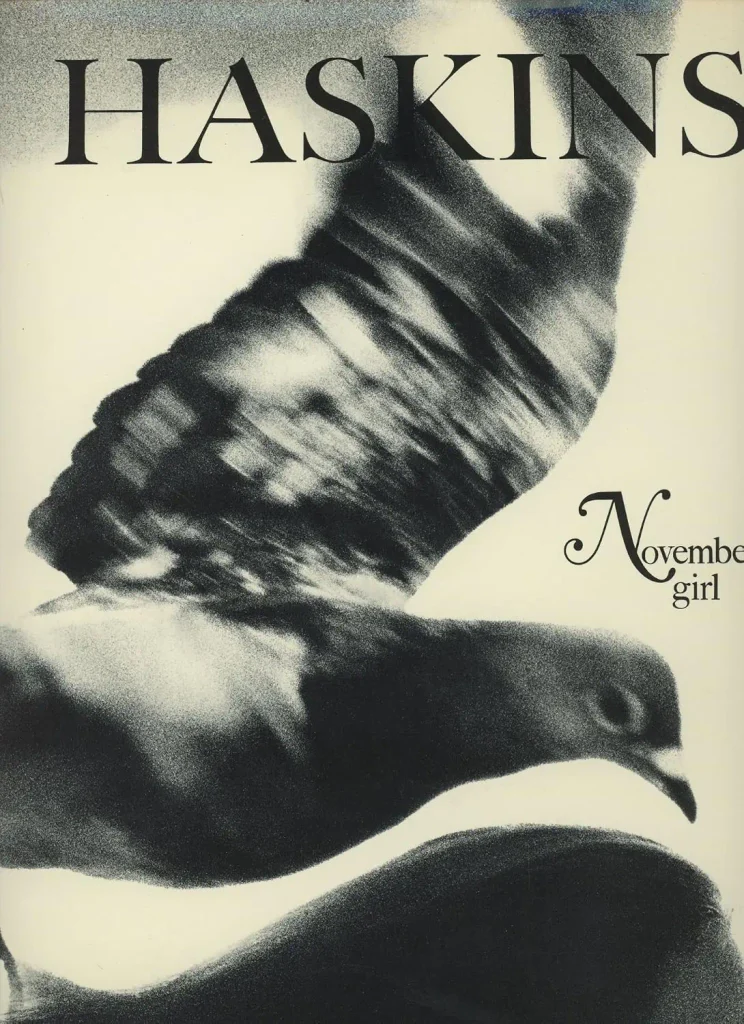
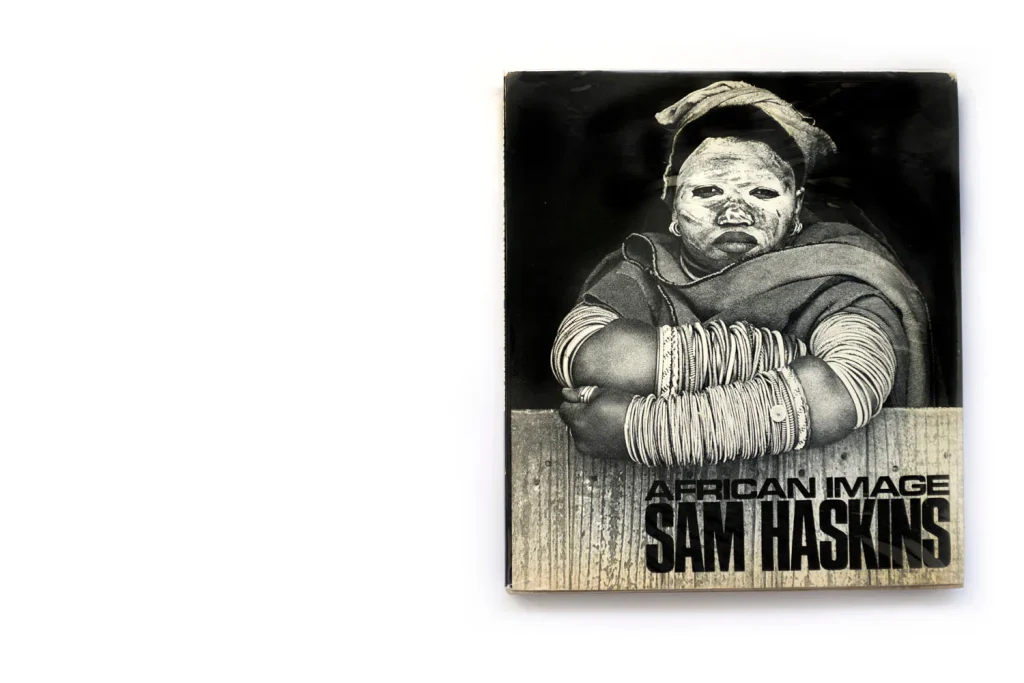
Two books published in 1967 show why Haskins cannot easily be confined to one category. November Girl continued his experiments with collage, montage and graphic design, while African Image turned to sub-Saharan Africa, including people, landscapes, wildlife and craft traditions.
This second strand of his work is important because it moves the discussion beyond the convenient label of nude photographer. Haskins was interested in how an image operates within a system: what comes before it, what follows it and how its meaning changes through placement in a sequence.
Pentax and commercial photography
After moving to London, Haskins worked for international companies and maintained a long relationship with Pentax. His son Ludwig Haskins has said that his father photographed around 15 annual calendars for the company in a collaboration spanning decades.
The Pentax 67 became one of the systems closely associated with him. More important than the specific camera, however, is the continuity between his commercial and personal work: the daily need to solve lighting, composition and production problems fed directly into his personal projects.
From Haskins Posters to Photo Graphics
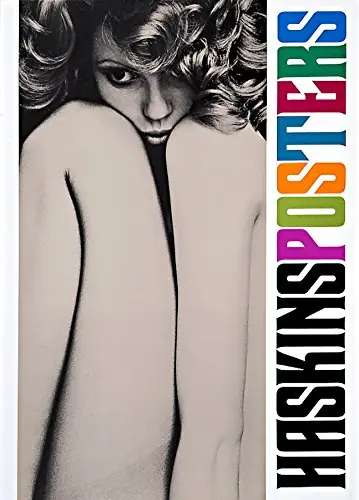
In the early 1970s Haskins moved more decisively into colour. Haskins Posters was designed so that its large pages could also function as standalone posters, blurring the boundaries between photobook, exhibition and graphic object.
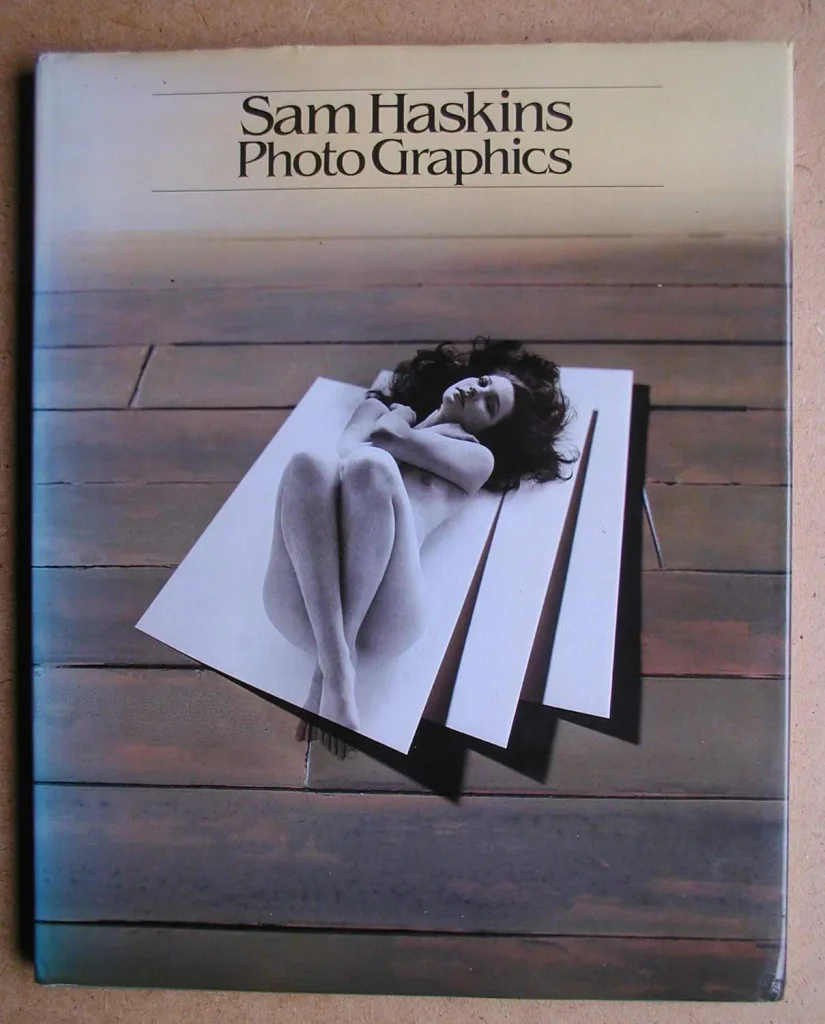
Photo Graphics, published in 1980, brought together many of the techniques and visual ideas that interested him: multiple exposures, montage, optical illusion and the belief that photography does not end when the shutter is released, but is completed through selection, composition and final presentation.
Why Sam Haskins is worth revisiting today
Many elements associated with his work — visible grain, hard contrast, free cropping, staged fashion narrative and the treatment of the page as a composition — later became familiar across fashion, advertising and editorial photobooks.
That makes his work particularly interesting to revisit today: not because every image should be read under the same terms as in the 1960s, but because his working method remains recognisable in contemporary forms of visual storytelling.
What we think
Haskins’s most useful legacy for contemporary image-makers is the idea that a project does not end with the individual frame. Editing, sequencing, typography and presentation can radically alter how a photographic series is read. Five Girls and Cowboy Kate remain strong examples of that integrated way of thinking.
Frequently asked questions
Who was Sam Haskins?
He was a South African photographer and photographer, born in 1926, with a major career in fashion, advertising and photobooks.
What is Five Girls?
It is Haskins’s 1962 photobook, which brought him wider international recognition and established his distinctive connection between photography and page design.
Why is Cowboy Kate important?
Cowboy Kate & Other Stories, published in 1964, became his best-known book and a landmark example of narrative, high-contrast black-and-white photography.
Which camera system was particularly associated with Haskins?
In the mature phase of his career he was closely associated with the Pentax 67 system, although it was not the only equipment he used.