Summary
- Ahmed Benmezroua was gravely injured while photographing a Paris protest on October 17, 2026.
- His complaint alleges that a police grenade severed his femoral artery.
- France’s IGPN is investigating the case.
- Reporters Without Borders has documented numerous assaults and obstructions affecting journalists during the protests.
Photographer Ahmed Benmezroua came close to death while covering a protest in Paris, in another deeply troubling incident that puts police violence against journalists and photojournalists back in the spotlight.
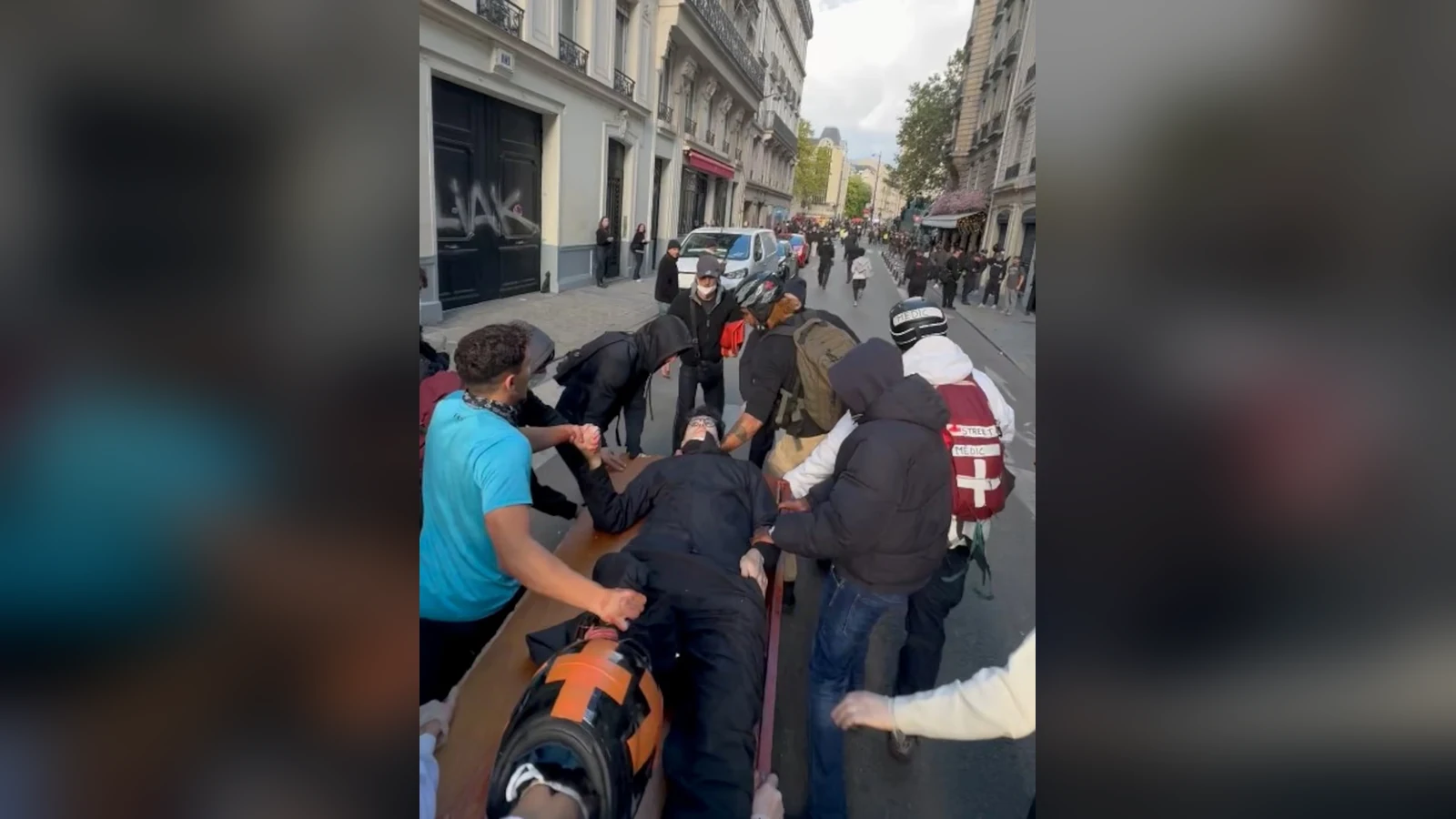
On October 17, 2026, the 25-year-old freelance photographer sustained a devastating injury to his right thigh near Place de la République. According to his complaint and the reporting surrounding the case, shrapnel from an explosive grenade fired by police severed his femoral artery. Footage of his emergency evacuation shows how critical the following minutes were.
Bystanders and volunteer street medics gave him first aid and applied a tourniquet. Protesters helped transport him to an ambulance, which took him to Pitié-Salpêtrière hospital, where he underwent lengthy emergency surgery.
The grenade allegation and the police investigation
His lawyer, Arié Alimi, filed a complaint on October 22 alleging attempted intentional homicide. Alimi says Ahmed lost more than a litre of blood and that police officers did not come to his aid. These are serious allegations to be investigated, not findings already established by a court.
On October 24, the Paris prosecutor announced an investigation assigned to the IGPN, France’s police internal affairs inspectorate, into violence by a person holding public authority resulting in mutilation or permanent disability during a public demonstration. That legal basis differs from the attempted-homicide allegation put forward by Ahmed’s lawyer.
According to the complaint details made public on October 24, the photographer remained in intensive care and it was still unclear whether he would fully regain the use of his leg. The circumstances of the projectile’s launch and the responsibility of individual officers remain under investigation.
Far from an isolated case: RSF’s findings
Reporters Without Borders (RSF) recorded around 30 journalists assaulted or obstructed during recent protests in France, including approximately 15 cases on October 17 alone. RSF documented incidents involving police officers, protesters and other individuals alike. Allegations of police violence and interference with newsgathering, however, raise specific questions about institutional accountability.
Among the cases detailed by RSF, photojournalist Ricardo Parreira was struck in the leg by an LBD police projectile in Montpellier, while reporter Mathias Enthoven was hospitalised after being hit in the abdomen by a disencirclement grenade. Sipa Press photographer Adrien Pittore was also confronted by a police officer aiming an LBD launcher at him, despite reportedly making his press status clear.
RSF points out that France’s national public-order guidelines allow journalists to wear protective equipment and, under specified conditions, continue reporting even as crowds are dispersed. Yet a formal right offers little protection if a person holding a camera can suffer life-threatening injuries while exercising it.
Police violence against photojournalists is also a Greek issue
In Greece, photojournalist Orestis Panagiotou suffered a serious head injury from a stun grenade while covering a protest in Athens over the Tempi rail disaster in February 2025. The Union of Photojournalists of Greece condemned injuries suffered by both Panagiotou and fellow photographer Alexandros Beltes.
These incidents need not share identical technical or legal circumstances to reveal a recurring danger: the people documenting police operations are exposed to crowd-control weapons capable of causing catastrophic injury. Without independent investigations and meaningful consequences for wrongdoing, promises to protect the press remain largely theoretical.
What we think
A photographer went to a demonstration to do his job and ended up in emergency surgery with a severed femoral artery. That should never be accepted as a normal occupational hazard of photojournalism. Freedom of the press means very little when the people documenting police operations risk disability or death from weapons deployed by the police themselves.
Police violence and repression against journalists and photojournalists are a direct threat to everyone’s right to know what happens in public spaces. If cameras are not protected in practice, our ability to obtain independent pictures, evidence and public scrutiny is diminished. This is particularly serious when the alleged violence comes from state agents entrusted with protecting the public.
Announcing yet another internal investigation is not enough. Investigators must establish who fired the weapon, under whose orders, whether operational rules were respected and why, as alleged, police officers failed to provide immediate help. Responsibility may extend beyond the individual who launched the grenade to how crowd-control tactics are authorised, supervised and reviewed.
Nobody working behind a camera should have to choose between showing what happened and getting home safely. Photojournalists are not targets. A thorough investigation into Ahmed’s case and accountability for every proven violation are the minimum the French state owes him and the wider public.