


Summary
- New 16.6-megapixel fully stacked full-frame sensor
- Internal 16-bit X-OCN RAW recording
- 3:2 Open Gate capture using the entire sensor
- 5K recording at up to 60p and 4K at up to 120p
- Three base ISO settings at 800, 4000 and 12800
- Dual CFexpress Type A and UHS-II SD card slots
- Waveform, vectorscope and false color monitoring
- Tri-band Wi-Fi with 6 GHz support
- No built-in electronic ND filter
- US price of $4,898 for the camera body
- New 16.6-megapixel sensor
- Dual Gain for greater dynamic range
- Open Gate and internal X-OCN RAW
- Resolution and frame rates
- New image-monitoring tools
- Artificial intelligence-assisted autofocus
- Anamorphic lenses and desqueeze
- Five-axis stabilization
- Compact body close to the FX3
- 3.5-inch display and new controls
- Dual CFexpress Type A and SD slots
- Connectivity and wireless networking
- Timecode for multicamera productions
- Optional XLR handle with 32-bit float audio
- Detachable OLED viewfinder
- New battery and recording time
- Cooling for extended recording
- Production and post-production applications
- Price and availability
- Accessibility and environmental design
- What we think
- Frequently asked questions
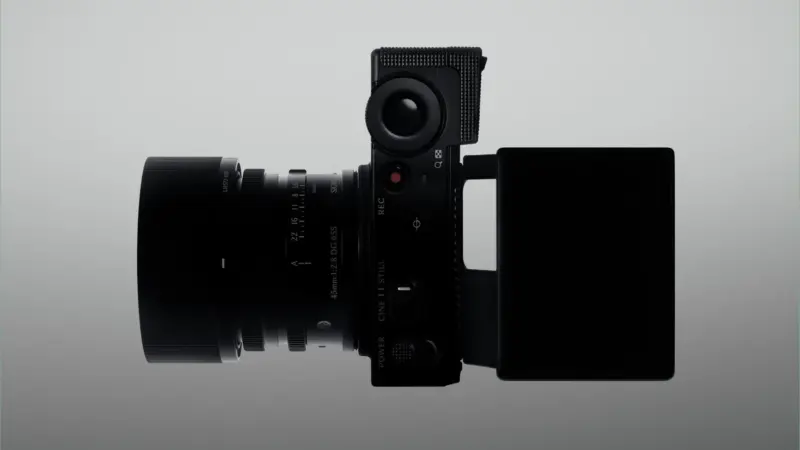
The Sony FX5 combines the compact body of the FX3 with advanced cinema production features, a new 16.6-megapixel sensor and internal RAW recording.
Sony has officially introduced the FX5, a new full-frame Cinema Line camera featuring a fully stacked Exmor RS CMOS sensor, a BIONZ XR2 processor and a dedicated artificial intelligence unit. The camera records 5K video at up to 60 frames per second, 4K at up to 120 frames per second and Full HD at up to 240 frames per second.
The significance of the new release lies in the integration of features that FX-series users have requested for years. The FX5 is the first camera in the family to offer Open Gate capture, internal X-OCN RAW recording, three base ISO settings and Dual Gain operation, while maintaining dimensions close to those of the FX3.
New 16.6-megapixel sensor
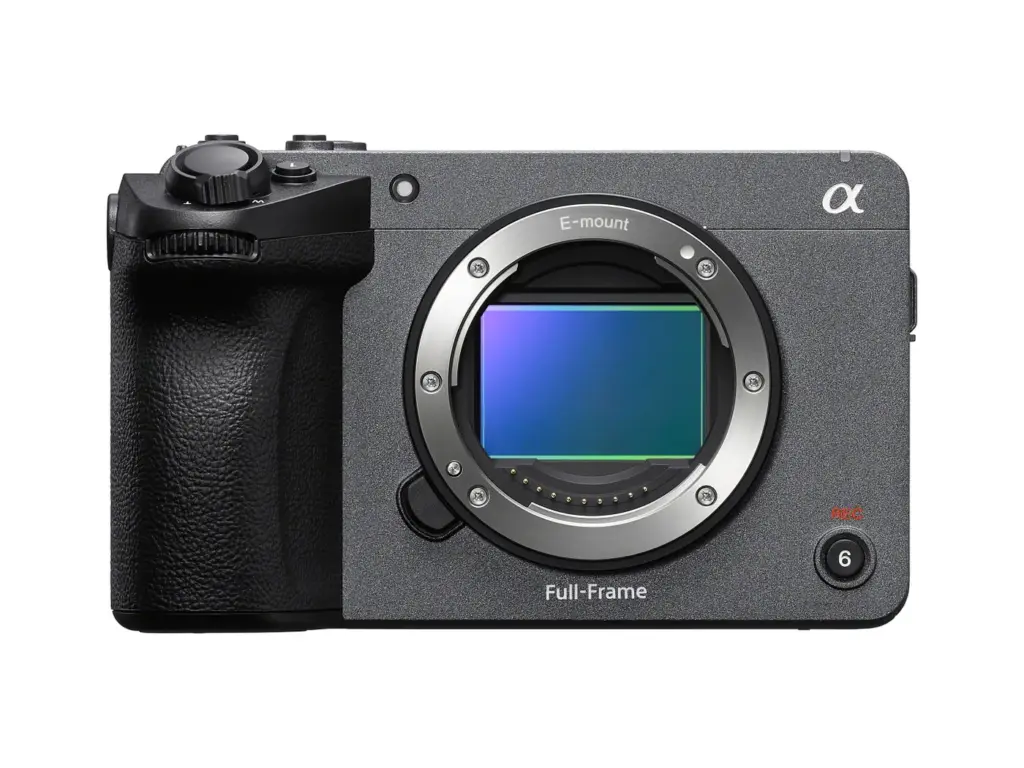
At the heart of the FX5 is a new 16.6-megapixel full-frame fully stacked Exmor RS CMOS sensor. Its resolution is higher than the approximately 12-megapixel sensors used in the FX3 and FX6 and enables 5K video recording.
The sensor works alongside the BIONZ XR2, Sony’s latest image processor, which includes a dedicated AI unit for autofocus, subject recognition and advanced video functions.
When recording in S-Log3, Sony claims a dynamic range of more than 15 stops. The camera offers three base ISO settings at ISO 800, ISO 4000 and ISO 12800, aiming to deliver cleaner shadows and greater flexibility across different lighting conditions.
Dual Gain for greater dynamic range
Dual Gain Shooting appears in an FX-series camera for the first time. It uses two sensor gain levels to provide smoother tonal gradations, wider latitude and reduced noise in shadow areas.
Enabling the function may affect sensor readout speed, meaning filmmakers may need to choose between maximum dynamic range and higher performance depending on the requirements of the shot.
Open Gate and internal X-OCN RAW
The Sony FX5 supports full-pixel sensor readout in a 3:2 aspect ratio, providing Open Gate capture when recording in X-OCN. Additional scan modes include 17:9, 16:9 and Super 35mm.
Using the entire sensor area provides greater freedom for reframing, stabilization and exporting multiple aspect ratios from the same recording. This can be especially useful for productions intended for cinema, television and vertical social media platforms.
The camera records X-OCN internally, Sony’s 16-bit scene-linear RAW format, without requiring an external recorder. In addition to X-OCN LT, the FX5 supports the new X-OCN C1 and X-OCN C2 formats, which reduce file size and simplify footage transfer and processing.
VPG400-certified memory cards are required to guarantee performance when recording the most demanding X-OCN formats.
Resolution and frame rates
The Sony FX5 records 5K at up to 60p and 4K at up to 120p, while Full HD recording reaches up to 240p for extreme slow motion.
The higher-resolution sensor also enables approximately 4.5K recording at 120 frames per second, providing more detail than a conventional high-frame-rate 4K file.
Sony has scheduled a version 2.0 firmware update for August 2027 or later. Planned additions include high-frame-rate X-OCN recording, 3:2 XAVC S-I Open Gate capture, a vertical-shooting interface and still-frame extraction from video clips.
New image-monitoring tools
The FX5 introduces a new interface to the FX series, inspired by Sony’s professional CineAlta and Venice cinema cameras.
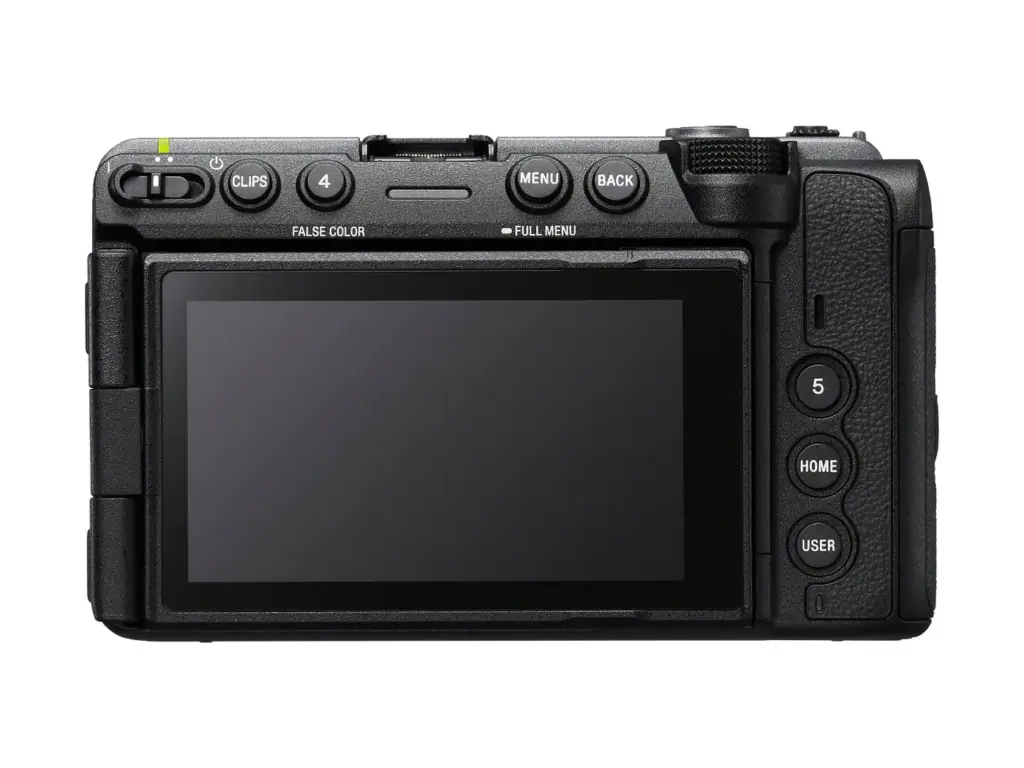
In addition to zebra, peaking and histogram tools, the camera provides false color, waveform and vectorscope monitoring. These functions allow more accurate control of exposure, brightness and color signals during production.
The BIG6 home screen groups essential settings, including frame rate, exposure, ISO, white balance and LUTs, reducing the need to navigate multiple menus.
Artificial intelligence-assisted autofocus
The AI unit uses human pose estimation technology to recognize not only a subject’s eyes but also the position of the head and body.
The system supports Real-time Tracking and is designed to maintain focus even when a person’s face is temporarily obscured or when shooting in low light.
In Auto Tracing White Balance mode, the FX5 combines data from visible-light and infrared sensors with machine-learning-based light-source recognition. The goal is to provide more natural white balance in mixed lighting, indoor locations and shaded areas.
Anamorphic lenses and desqueeze
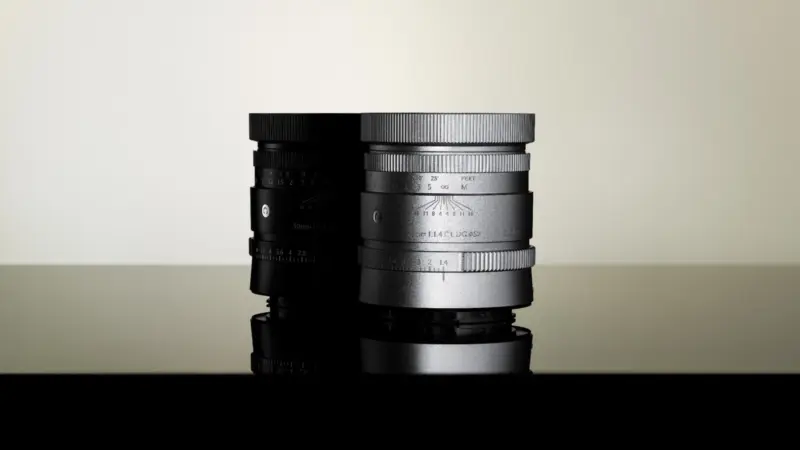
Open Gate capture makes the FX5 more suitable for anamorphic lenses because it uses more of the sensor’s vertical area.
The built-in desqueeze function supports 1.3x, 1.5x, 1.6x, 1.8x and 2.0x anamorphic lenses, allowing the image to be displayed with the correct proportions during recording.
Five-axis stabilization
The FX5 features five-axis in-body optical image stabilization. According to Sony, the new unit offers approximately twice the correction range for rotational movements compared with the previous system.
In addition to optical stabilization and Active Mode, the camera offers Dynamic Active Mode for smoother handheld footage.
This mode applies an additional crop, is available at frame rates of up to 60 fps and cannot be used together with Clear Image Zoom.
Compact body close to the FX3
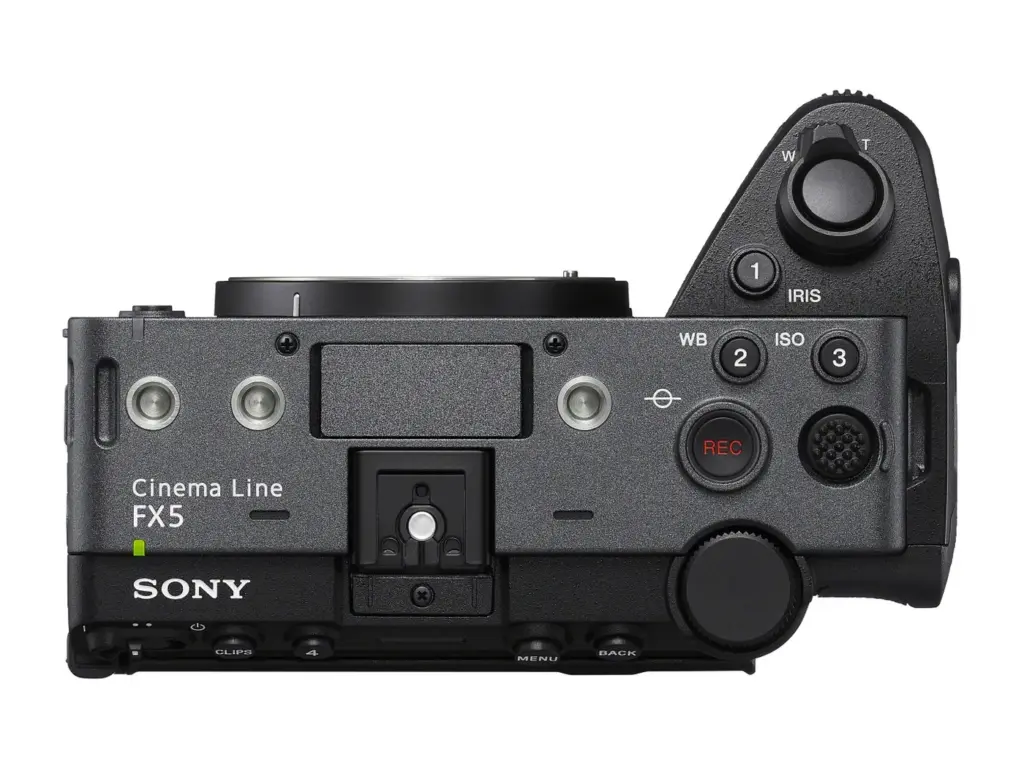
The FX5 follows the FX3’s flat-top design, with multiple mounting threads for attaching accessories directly without necessarily requiring a cage.
The body measures approximately 132 x 79 x 87 millimeters and weighs around 734 grams. Despite its major additions, it is only about 5% heavier than the FX3.
The camera can be used on a gimbal, drone or rig and in confined spaces. Sony has also added more tally lamps to improve the visibility of the recording status.
Unlike the FX6, the FX5 does not include a built-in electronic neutral density filter.
3.5-inch display and new controls
The new 3.5-inch touchscreen has approximately 2.76 million dots, a 16:9 aspect ratio and a four-axis articulating mechanism.
It can tilt approximately 98 degrees upward and 40 degrees downward, while opening approximately 180 degrees to the side. Brightness can be adjusted across 15 levels.
The FX5 also inherits a multifunction dial from Sony’s professional cinema cameras. It can be used both for quickly changing settings and navigating the menus.
The body additionally includes six assignable function buttons and workflow-oriented controls.
Dual CFexpress Type A and SD slots
The FX5 features two hybrid memory-card slots compatible with both CFexpress Type A and UHS-II SD cards.
The dual slots allow relay recording, simultaneous backup or separation of different file types, depending on the production settings.
Connectivity and wireless networking
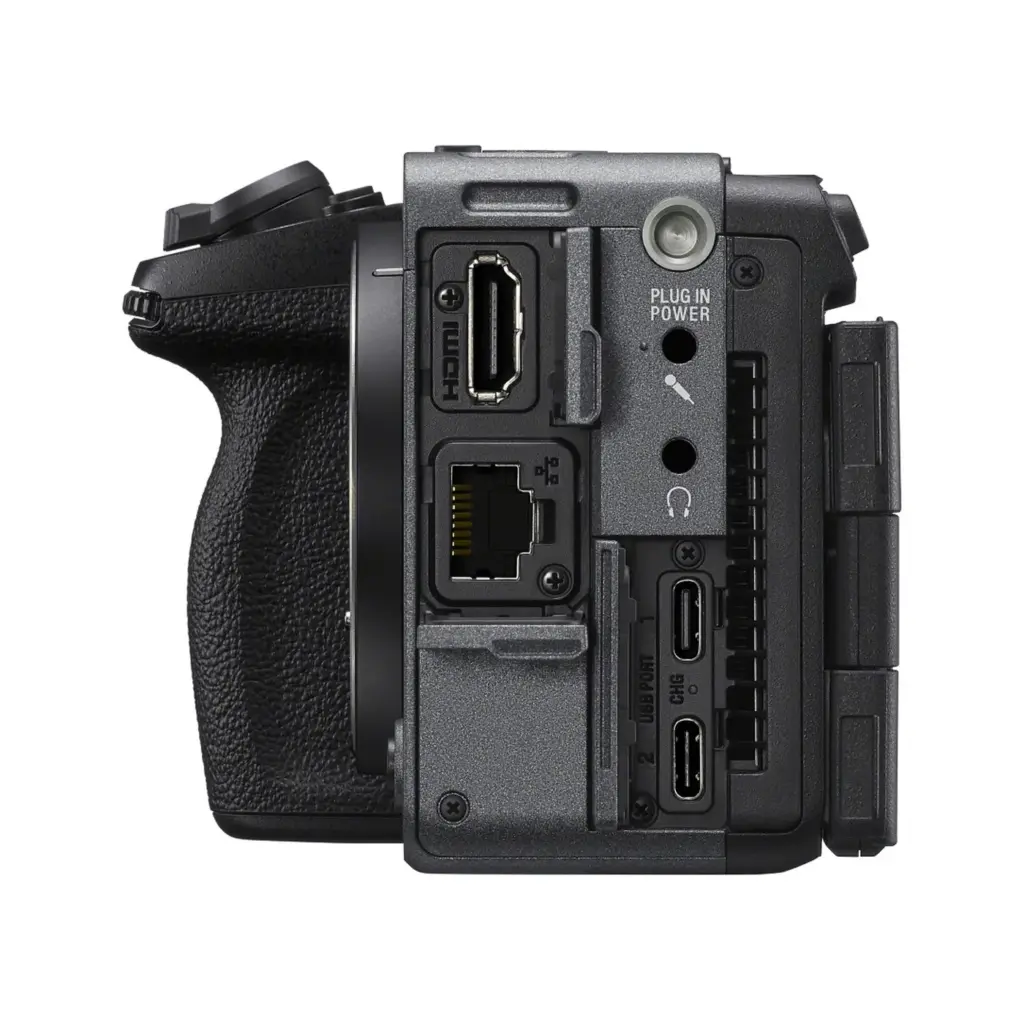
The body includes two USB Type-C ports, a full-size HDMI Type A output, wired LAN, separate microphone and headphone connectors and multiple accessory mounting points.
The wireless connection supports tri-band Wi-Fi at 2.4 GHz, 5 GHz and 6 GHz, unlike the FX3 and FX6, which are limited to the first two bands. Bluetooth is also supported.
Through the Monitor & Control application, users can monitor the image and operate the camera from a smartphone, tablet or Mac.
The HDMI output can display different information on the built-in and external displays, or the same information on both.
Timecode for multicamera productions
Using the optional VMC-BNCU1 USB-C-to-BNC adapter cable, the FX5 can receive external timecode.
The function allows precise synchronization with additional cameras and external audio devices, supporting cinema productions, broadcasts and multicamera shoots.
Optional XLR handle with 32-bit float audio
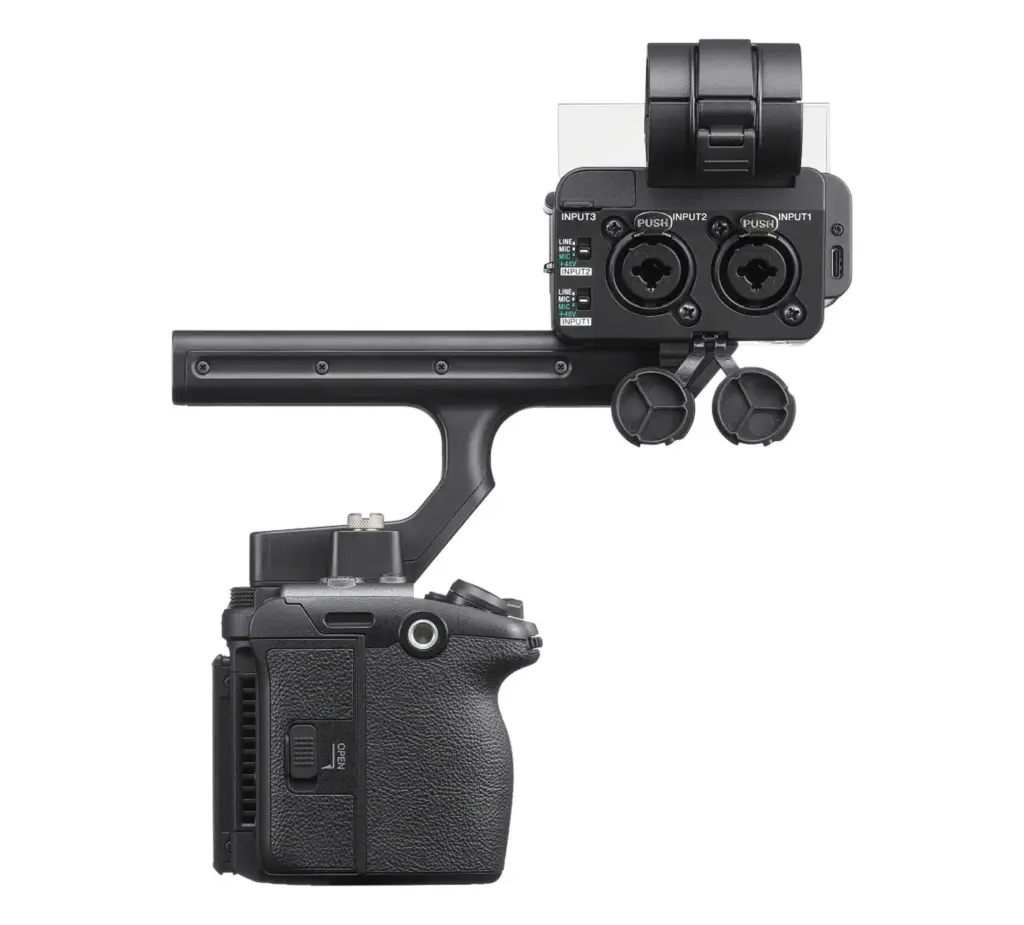
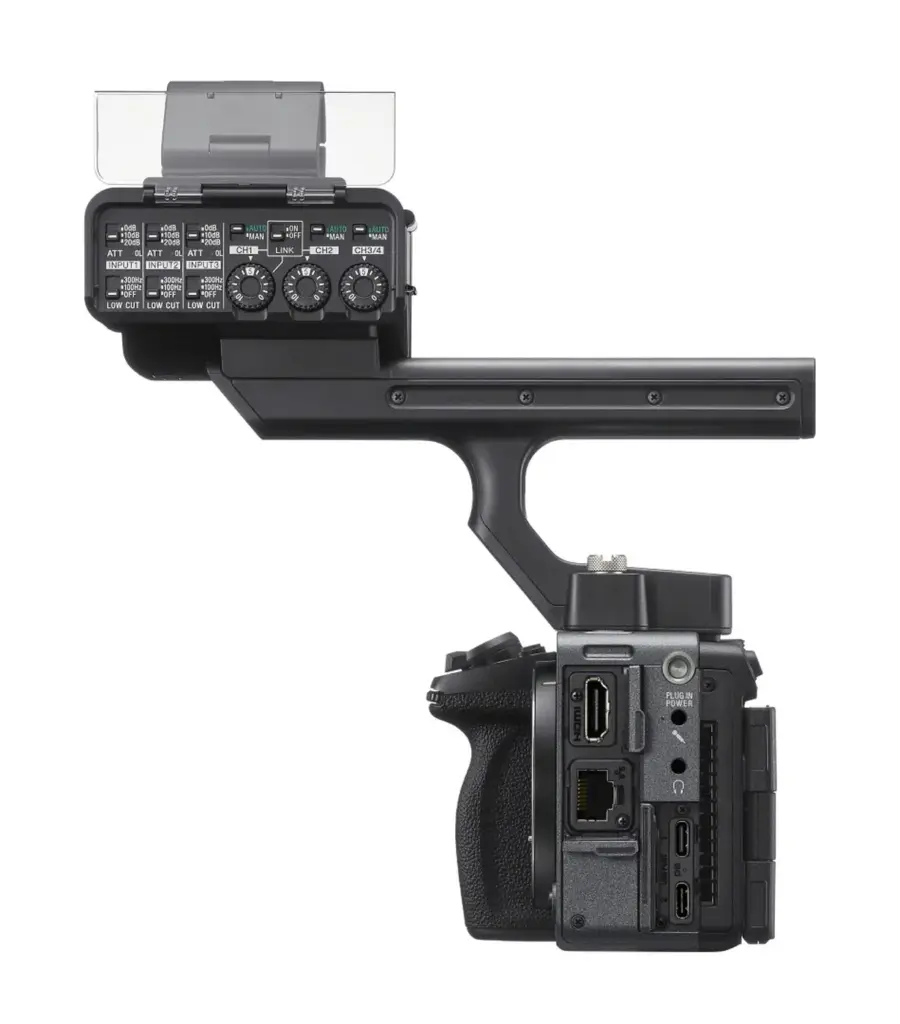
The new XLR-H2 handle features two XLR/TRS combination inputs and supports up to four channels of audio at 96 kHz and 32-bit float.
It connects directly through the Multi Interface Shoe and transfers the digital audio signal to the camera without a separate cable.
The handle is not included with the body-only version and is available either as an optional accessory or as part of a separate FX5 kit.
Detachable OLED viewfinder
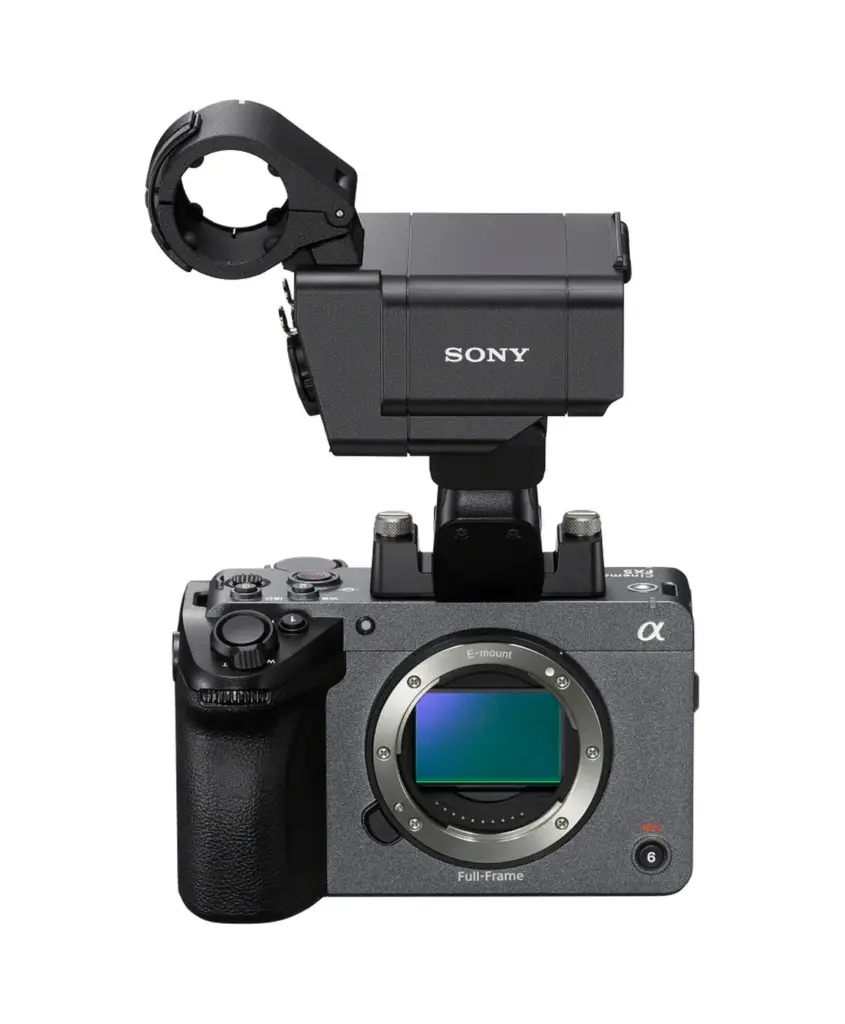
The optional DVF-EL1 is a tilting OLED viewfinder with HDR support, 10-bit gradation and a color gamut equivalent to DCI-P3.
It provides approximately 0.9x magnification and can tilt upward by approximately 90 degrees, making low- and high-angle shooting easier.
Using the viewfinder prevents the simultaneous installation of an accessory on the Multi Interface Shoe. It therefore cannot be used at the same time as the XLR handle.
New battery and recording time
The FX5 uses the new 2,670 mAh NP-SA100 battery, which provides approximately 1.3 times the capacity of the NP-FZ100.
Available figures indicate a recording time of around 130 minutes, compared with approximately 113 minutes for the FX3A.
The camera can also display the battery’s degradation status and supports continuous external power through USB Power Delivery.
Cooling for extended recording
The FX5 features an active cooling system with a fan housed in an independent air chamber.
The fan and optimized heat-dissipation design are intended to support extended video recording without thermal shutdowns.
The body also features dust- and moisture-resistant construction, although this does not mean it is completely waterproof.
Production and post-production applications
Monitor & Control 3.0 is scheduled to become available in July 2026 or later.
The new version expands multicamera control, vertical-shooting functions and exposure monitoring through EL Zone.
Catalyst Prepare 3.0 is expected in August 2026 or later. It will provide playback, stabilization, color processing and metadata viewing for X-OCN C1 and X-OCN C2 files.
Price and availability
The Sony FX5 is scheduled to be released in the United States in mid-August 2026, priced at $4,898 for the body.
The kit including the XLR handle will cost $5,498. Pricing for the optional OLED viewfinder and timecode cable had not been announced at launch.
In Europe, the ILME-FX5 with the XLR handle and the body-only ILME-FX5B are available for pre-order from July 22, with release scheduled for August. Official pricing for Greece is not included in the press release.
Accessibility and environmental design
The FX5 includes a screen-reader function and an option to enlarge menu text. Selected controls use different shapes or tactile characteristics so that they can be identified without relying exclusively on visual confirmation.
According to Sony, at least 30% of the components used in the camera body are made from recycled plastic.
Production facilities in Thailand and China operate using renewable energy, while plant-based non-woven material is used for packaging bags.
What we think
The 16.6-megapixel sensor, dual CFexpress Type A and SD slots, professional waveform, vectorscope and false-color tools, and support for 6 GHz Wi-Fi significantly expand the FX5’s capabilities. The camera appears to bridge the gap between the flexibility of the FX3 and the professional features of the FX6, although it lacks the latter’s built-in electronic ND filter. The $4,898 price places it in a highly competitive position, but the total system cost increases considerably once the XLR handle, viewfinder, VPG400 memory cards and other accessories are added.
Frequently asked questions
What is the resolution of the Sony FX5 sensor?
The Sony FX5 features a new 16.6-megapixel full-frame fully stacked Exmor RS CMOS sensor.
Does the Sony FX5 support Open Gate?
Yes. The camera records using the full sensor area in a 3:2 aspect ratio when the X-OCN format is selected.
Can it record RAW without an external recorder?
Yes. It supports internal 16-bit scene-linear X-OCN RAW recording in X-OCN LT, X-OCN C1 and X-OCN C2 formats.
Does it have a built-in electronic ND filter?
No. Unlike the FX6, the Sony FX5 does not include a built-in electronic neutral density filter.
How much does the Sony FX5 cost?
In the United States, the camera body is priced at $4,898, while the kit with the XLR handle costs $5,498. Pricing for Greece has not been announced.