

Summary
- Chantal Anderson photographed Brad Pitt for the new Esquire cover story.
- The images use grain, direct flash, mixed lighting and strong color contrasts.
- Esquire does not identify a still camera or film stock, so film use has not been confirmed.
- Anderson has previously said that the first camera she truly fell in love with was a Hasselblad 503cm.
- The 16mm credit belongs to the video portion of the production, not Anderson's still photographs.
Brad Pitt’s new Esquire photo series was shot by Chantal Anderson and has a distinctly analog aesthetic, although there is no confirmation that the still photographs were made exclusively on film.
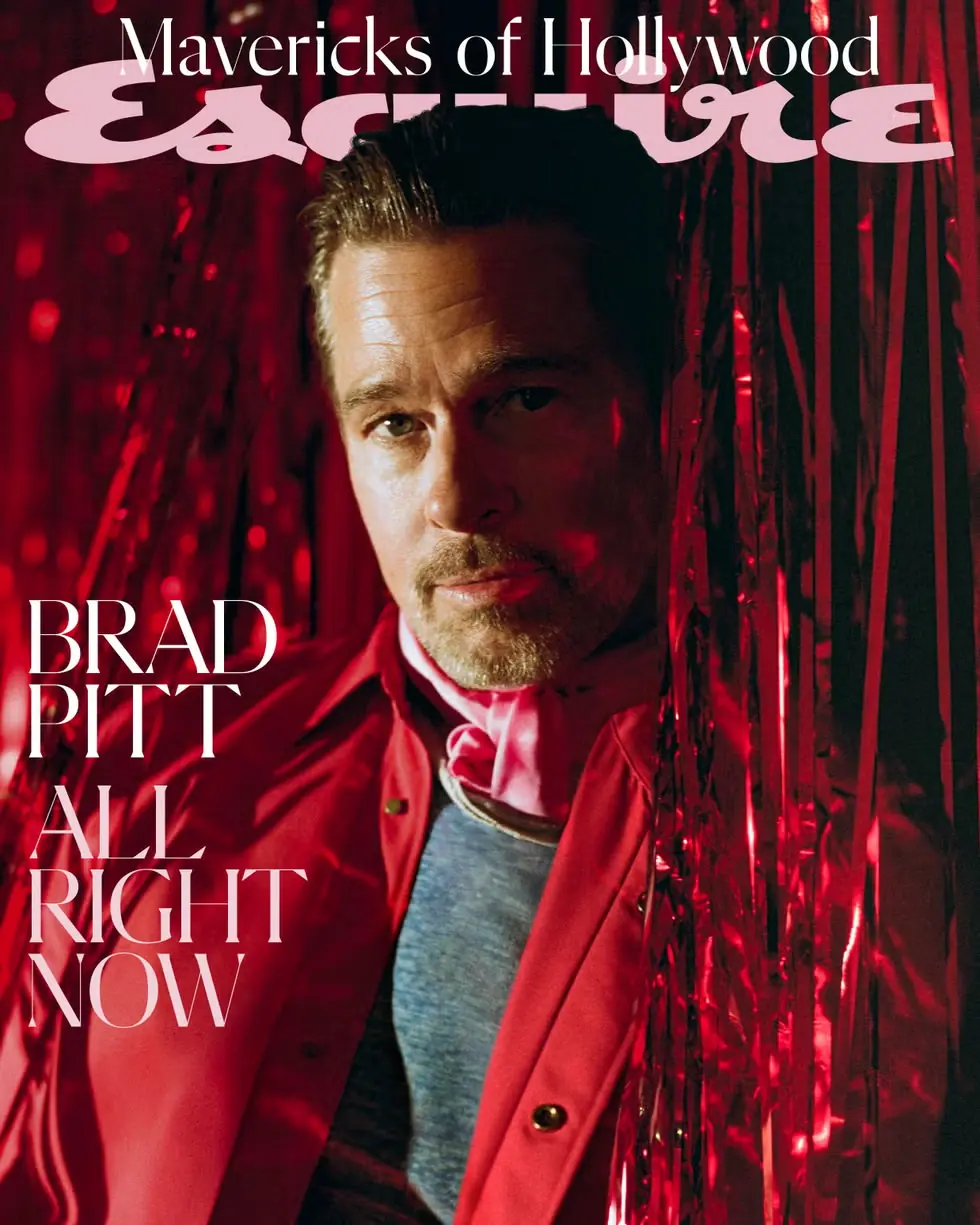
Esquire published its new major Brad Pitt cover story on August 10, 2026, written by Ryan D’Agostino, photographed by Chantal Anderson and styled by George Cortina. The shoot accompanies the September 2026 issue and goes far beyond a conventional studio portrait, moving through settings that evoke an old club, party scenes, backstage moments and strongly colored portraits.
From a photographic perspective, the interesting part is the way the images deliberately sit somewhere between polished editorial photography and spontaneous snapshots. Grain, hard flash, warm practical lights, deep shadows, pronounced color shifts and frames that are not excessively “perfect” create a visual language strongly associated with analog photography.
Who is Chantal Anderson?
Chantal Anderson is a Los Angeles-based photographer and director whose work is described as combining fine-art and documentary approaches. Her photography places considerable emphasis on people, their surroundings and moments that develop naturally in front of the camera instead of relying exclusively on tightly controlled posing.
Anderson has photographed for major publications and has previously spoken about her interest in travel, constantly changing natural light and finding something extraordinary within ordinary situations. Her background in journalism has also influenced the way she treats photography as storytelling rather than simply the construction of an attractive image.
How the shoot is lit
There is no single lighting setup throughout the series. On the cover, Pitt is placed inside an intensely red environment with hard directional illumination and strong contrast between the lit areas of his face and the shadows. The result feels closer to a cinematic still than a conventional neutral celebrity portrait.
In other frames, Anderson allows practical sources such as table and wall lamps to become visible parts of the photograph. In the portrait with the green shirt, for example, warm lamps, wood paneling and deep shadows create the feeling of another era while Pitt’s face remains sufficiently illuminated to separate him from the room.
The technique changes again in the more spontaneous-looking scenes. The party frame shows the characteristic behavior of direct flash: a brightly illuminated subject and foreground, rapid light falloff toward the background and an aesthetic closer to social-event photography than polished editorial work. The overhead image on the floor also makes use of strong color, uneven illumination and visible texture to reinforce the sensation of a real snapshot.
Were the photographs actually shot on film?
The safest answer is that there is currently no public technical information from Esquire or Anderson confirming that the entire still shoot was photographed on film. The published credits identify Anderson as the photographer, but they do not specify a still camera body, film stock, processing lab or scanning workflow.
The images nevertheless contain plenty of visual cues that make the question reasonable. There is obvious texture and grain, the colors avoid the sterile consistency associated with an extremely clean digital workflow, highlights and shadows behave differently from frame to frame and one close portrait is even presented inside a white border reminiscent of an instant photograph. Other publications that reused that particular image described it as “Polaroid-style”, but did not identify it as an actual Polaroid.
None of this proves that film was used. A very similar result can be created with a digital camera, added grain, carefully designed color grading, flash and deliberate control of contrast and saturation. Until camera and film-stock details emerge, the most accurate description is that the series has a strongly analog aesthetic rather than confirmed analog capture.
Anderson’s connection to Hasselblad
There is, however, one detail that helps explain why Anderson’s visual language feels so naturally connected to analog photography. In a 2022 interview, when asked about her equipment, she said that the first camera she really fell in love with was a Hasselblad 503cm.
That statement does not prove that the same camera was used to photograph Pitt. It does show that Anderson has a longstanding connection with the aesthetic and working process associated with classic Hasselblad medium-format cameras. Hasselblad itself describes older V System bodies as classic film cameras that, thanks to their modular design, can even be paired with modern digital backs today.
It would therefore not be surprising if analog material or a hybrid workflow played some part in the production. There is simply not enough evidence to present that as a confirmed fact.
What the “16mm” credit actually means
At the end of the Esquire story there is indeed a credit reading “16mm by Luke Hanlein”. This is the clearest reference to actual motion-picture film in the production credits. Immediately around it, however, are the video directors and director of photography credits, showing that the 16mm work belongs to the motion/video component rather than Chantal Anderson’s still photographs.
That distinction matters because the presence of 16mm should not be used as evidence that the still photography was also shot on film. They are separate parts of the production.
Why the images work so well
Anderson does not present Pitt exclusively as a flawless movie star. In some frames he is centered and almost iconic, in others he appears relatively small within the composition, while elsewhere she uses direct flash or allows people, furniture and lighting fixtures to interfere with a perfectly clean view of the subject.
The result removes some of the glossy celebrity-photography distance and creates the impression that the viewer is looking through photographs from an evening that actually happened. Technical imperfection becomes part of the visual language rather than something that needs to be corrected.
The context of the interview
The photography accompanies a particularly personal conversation between Pitt and Esquire. The actor discusses his age and his desire to continue attempting new things in his performances, seven years of sobriety followed by a return to more limited drinking, as well as grief, family and an extremely difficult period in his life.
He also discusses David Ayer’s Heart of the Beast, his return as Cliff Booth in a film written by Quentin Tarantino and directed by David Fincher, and artificial intelligence in filmmaking. Pitt argues that AI could help make mid-budget movies economically possible while still emphasizing the importance of human choices and genuine performance.
Anderson’s photographic approach fits that material. Instead of creating an entirely controlled portfolio, she builds a sequence that can feel glamorous, dark and unexpectedly ordinary from one image to the next.
What we think
This shoot is a good example of how difficult it has become to identify the capture medium from a finished image alone. The photographs contain many of the visual characteristics viewers have learned to associate with film, but that is not enough to state that they were shot on film.
What is ultimately more interesting than whether Anderson used film stock or a sensor is how deliberately she employs grain, hard flash, mixed lighting, color and imperfect framing to move away from the conventional clean digital celebrity portrait. If camera or film-stock details become available, the question can be answered definitively.
Frequently asked questions
Who photographed Brad Pitt for the new Esquire issue?
The photographs were made by American photographer and director Chantal Anderson.
Were the photographs shot on film?
That has not been confirmed. Esquire does not identify a still camera or film stock, even though the finished images strongly reference analog photography.
Was 16mm film used?
Yes, Luke Hanlein receives a 16mm credit, but it belongs to the video portion of the production rather than Anderson’s still photographs.
What cameras is Chantal Anderson associated with?
Anderson has previously said that the first camera she truly fell in love with was a Hasselblad 503cm. That does not mean it was used for this particular shoot.
How is the analog look created?
The images combine pronounced grain, direct flash, warm practical lights, mixed color temperatures, deep shadows, strong color and deliberately less-than-perfect compositions. These characteristics can be produced using either film or a digital workflow.