

Summary
- Caira is adding generative video editing that starts only from footage captured by the user.
- The first tools are Relight, Reframe, Camera Motion and Set Extension.
- Originals remain untouched and generated files carry SynthID.
- A private beta is opening to 50 working filmmakers.
- Caira Studio is due in autumn 2026 in the US and UK.
Caira is trying to move generative video editing from the computer to the point of capture without turning the camera into a text-to-video machine.
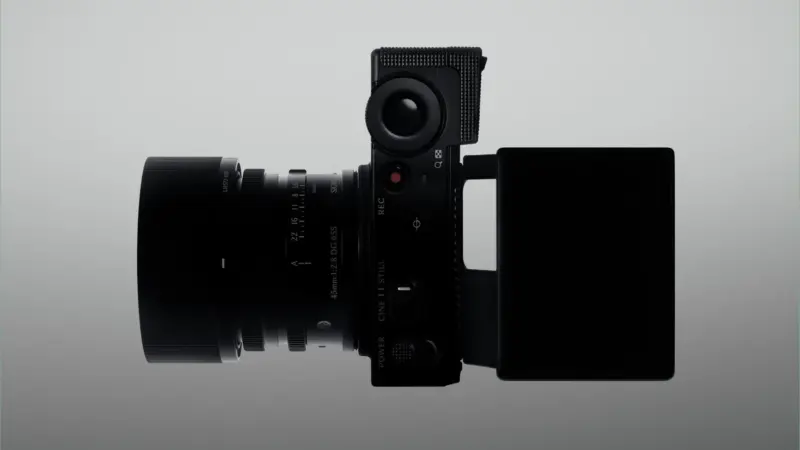
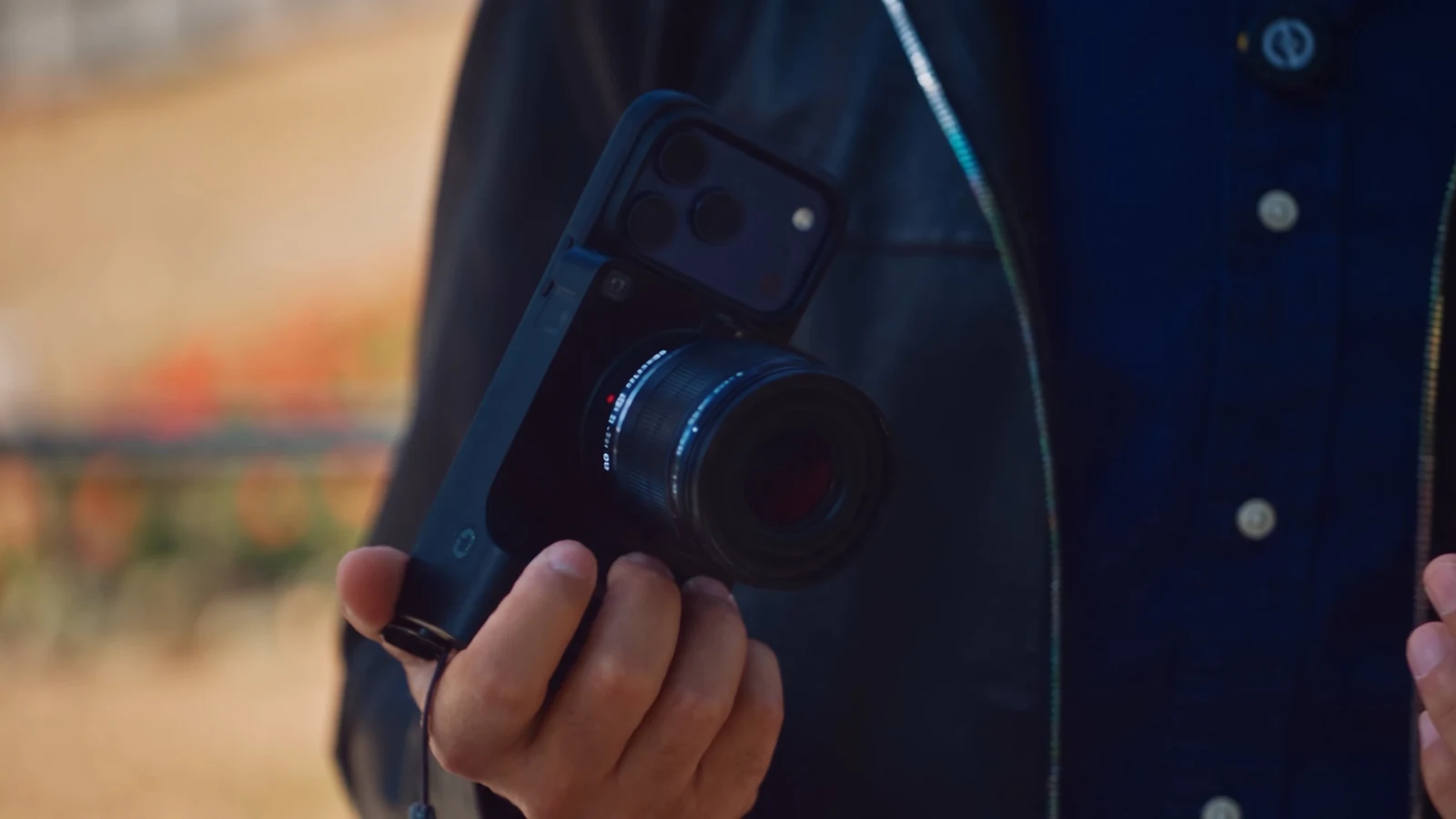
Camera Intelligence announced Generative Video Editing for Caira on September 2, 2026. The modular Micro Four Thirds camera attaches magnetically to an iPhone and will use Google Gemini Omni 1.1 Flash and Runway Aleph 2.0 for relighting, reframing, generated camera motion and set extension.
The announcement matters because this is not merely another filter. The company is building a workflow in which real footage remains the starting point while a creator can quickly test a different photographic treatment or visual direction. It is aimed mainly at solo creators and small teams without immediate access to a complex VFX pipeline.
What Camera Intelligence announced
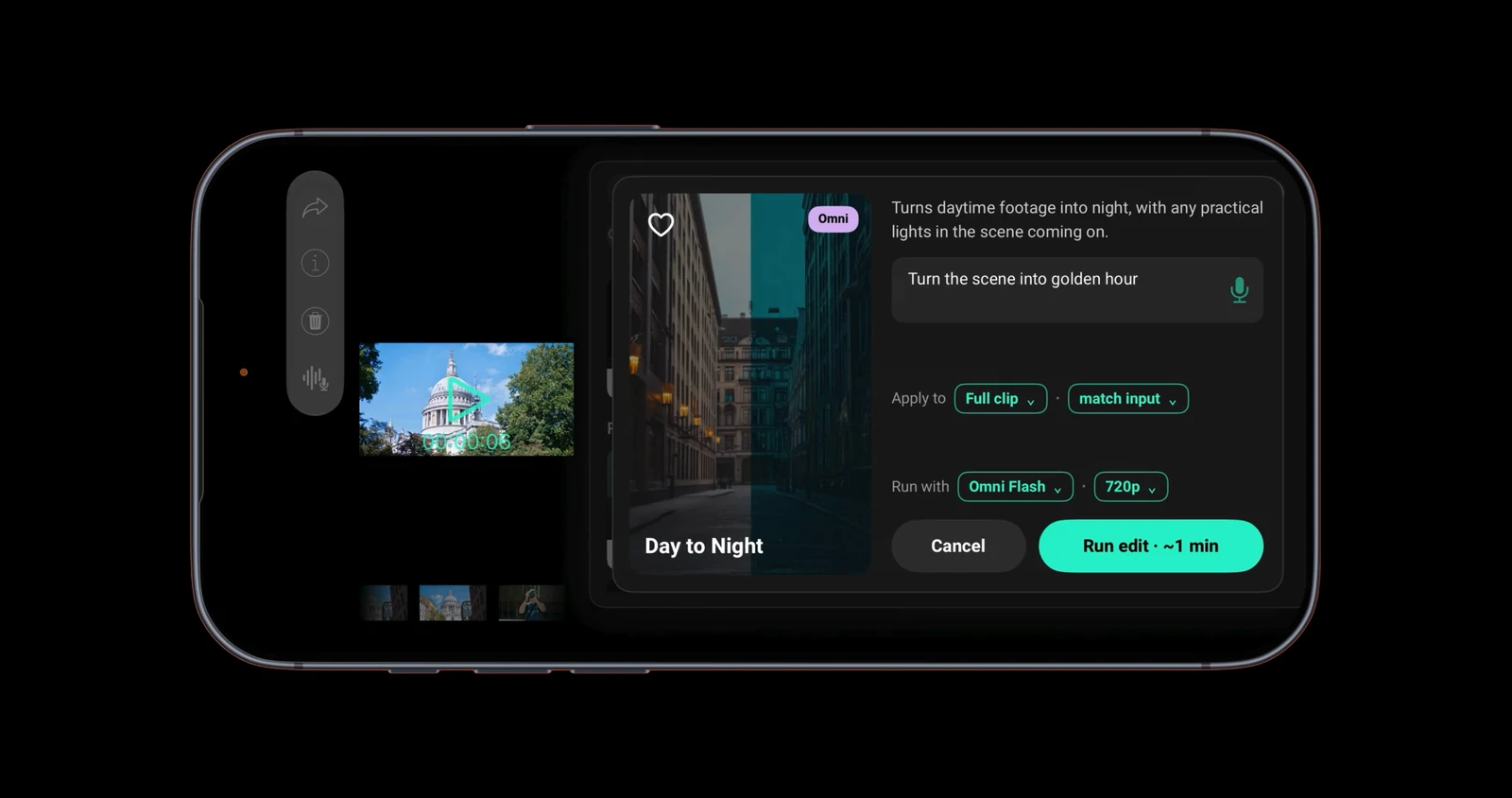
Generative Video Editing will be part of the forthcoming Caira Studio. Instead of sending the user into a conventional editing program, it offers curated templates that can be directed with simple natural-language instructions. Camera Intelligence describes the system as scene-aware, taking geometry, lighting, materials and motion across the whole clip into account.
The goal is not to replace final post-production but to produce a convincing visual treatment quickly. A creator could prepare different versions of a spec sequence on the same day and decide which one is worth shooting properly with a complete crew.
How generative video editing works
Every edit starts with footage captured on Caira. There is no open text field for generating a video and the camera cannot create a scene from nothing. The user chooses a template, directs the desired change and receives the result as a separate file.
World models are intended to preserve temporal consistency. That matters for lighting and camera-motion changes, where frame-by-frame tools can cause flicker, altered objects or inconsistent perspective.
The four tools and their models
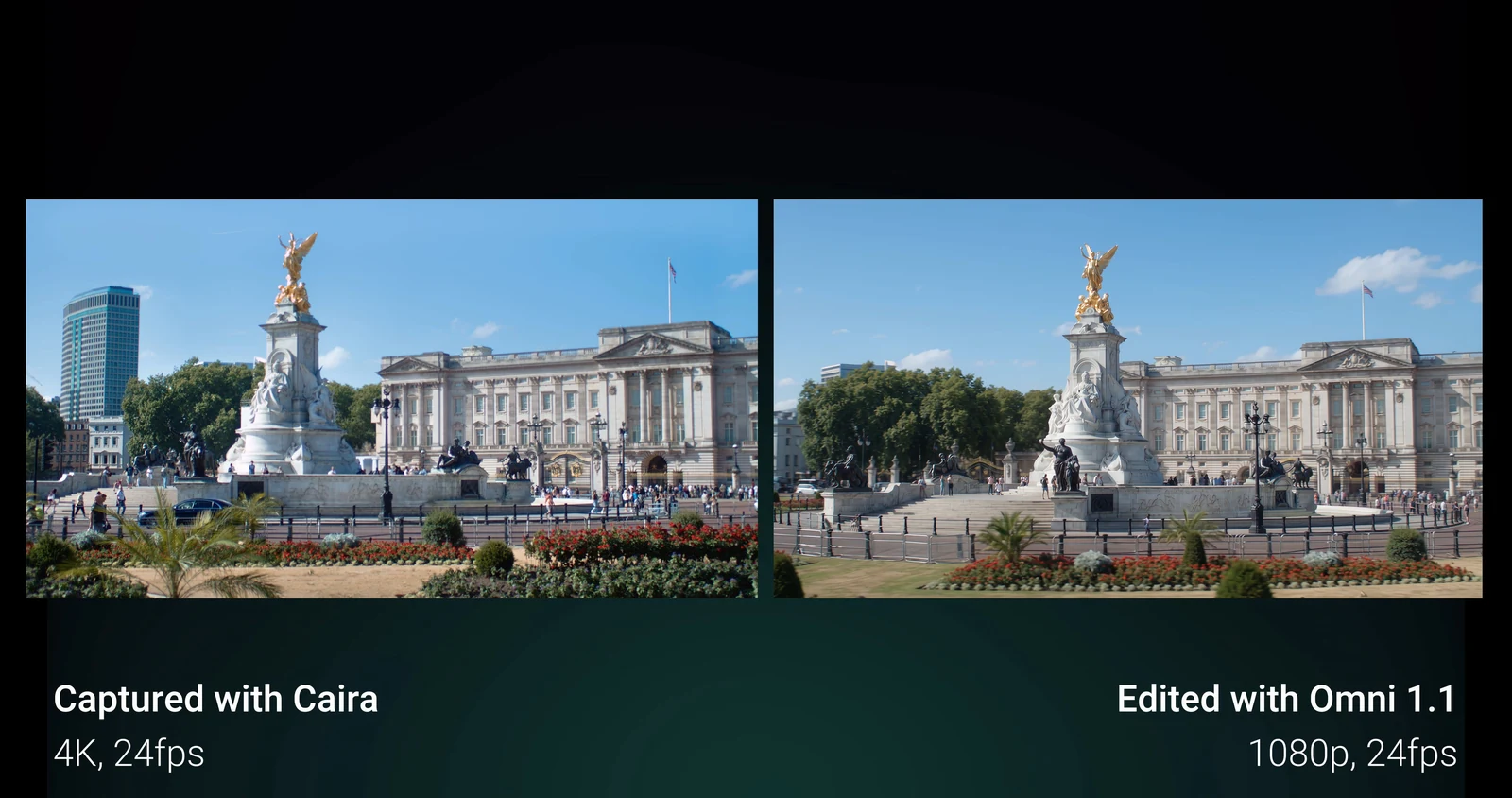
The initial library includes Relight, Reframe, Camera Motion and Set Extension. They are powered by Google Gemini Omni 1.1 Flash and Runway Aleph 2.0.
Camera Intelligence lists 720p and 1080p output with processing times of roughly one to three minutes depending on the template and resolution. Source footage may be captured in 4K, but the generated output in the first version does not retain that resolution.
Original files, privacy and SynthID
Original files are never altered. Every generated result is saved separately with a clear name and includes Google SynthID so it can be identified as generatively edited content.
The company also says user footage will not train models, the on-camera capture pipeline remains non-generative and the feature is entirely optional. Those commitments matter, but professionals will still need clear terms and practical verification before entrusting sensitive production material to the service.
Who it is for and where it is limited
Caira positions the feature for solo creators, small crews and pitching. In a survey of 111 campaign backers, 77% said generative video editing would be useful to their work.
The limitations are just as important: the feature depends on cloud models, maximum announced output is 1080p and the first controls are restricted to curated templates. Final cinema work, a complex colour pipeline or precise 4K delivery will still require a conventional post-production workflow.
Availability and price
The private beta is open to existing customers and 50 working filmmakers. Caira Studio is scheduled for autumn 2026 in the US and UK, with no announced price for Generative Video Editing. More details are available in the official announcement.
The Caira body is available to pre-order for $999, approximately €860.09 using the ECB reference rate of September 3, 2026, when €1 equalled $1.1615. This is a currency conversion, not an official Greek retail price. Batch 5 is listed to ship in September 2026.
What we think
Camera Intelligence made its most interesting choice by keeping real footage as a mandatory foundation. That does not erase creative and ethical objections to generative video, but it draws a clearer boundary than a system able to make any scene from a description alone.
Its value will depend on temporal consistency, control and cost. If results need extensive repair or work only for a pitch, this will remain a previsualisation tool. If it delivers repeatable 1080p results in minutes, it could become practical for small productions.
Frequently asked questions
Can Caira generate video from text alone?
No. Every generative edit must start from real footage captured with the camera.
Which models does it use?
The first version uses Google Gemini Omni 1.1 Flash and Runway Aleph 2.0.
Are original files changed?
No. Originals stay untouched and results are saved separately with SynthID.
When will Caira Studio be available?
Launch is planned for autumn 2026 in the US and UK, while the private beta is already open.