

Summary
- Gris Jordana shot La Bola Negra on 35mm film.
- The three eras are distinguished through lenses and camera movement.
- The film has ten European Film Awards nominations.
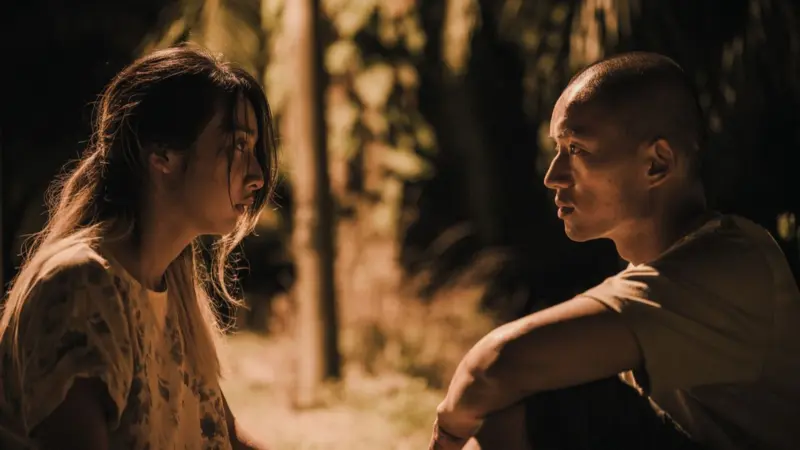
For cinematographer Gris Jordana, choosing 35mm film for La Bola Negra was primarily about how she works with light. In her November 27 interview with What’s on Netflix, she explains that she spent years softening digital images with older lenses. Film allowed her to focus more on the direction of the light than on correcting the image.
The drama by Javier Calvo and Javier Ambrossi, known as Los Javis, connects three stories set in 1932, 1937 and 2017. Inspired by an unfinished work by Federico García Lorca, the film explores desire, oppression and what one generation passes on to the next. It arrives on Netflix in the US and Canada on December 2, 2026.
The official trailer:
The cinematography in Netflix’s official featurette:
From 16mm to 35mm
The team had already worked with 16mm film on La Mesías, a series that involved 23 weeks of shooting. That experience gave Jordana and the directors the confidence to undertake a larger production on 35mm.
For La Bola Negra they chose an Arricam LT with a 3-perf movement, Panavision Primo lenses and a 1.78:1 aspect ratio. In 3-perf, the film advances three perforations per frame rather than four, reducing negative consumption by roughly 25% for the same number of frames. The 1.78:1 ratio makes efficient use of the available frame.
The Augustus Roma laboratory reports that the production used Kodak Vision3 250D 5207 and 500T 5219 colour negatives, as well as Eastman Double-X 5222 for black-and-white material. The 250D is daylight-balanced, while the faster 500T is balanced for tungsten lighting.
Jordana gave the negative an additional two-thirds of a stop of exposure and retained standard processing. Her goal was greater flexibility in colour grading. This is a decision to test with the lab and colourist, rather than a setting that automatically suits every production.
Three eras without three separate looks
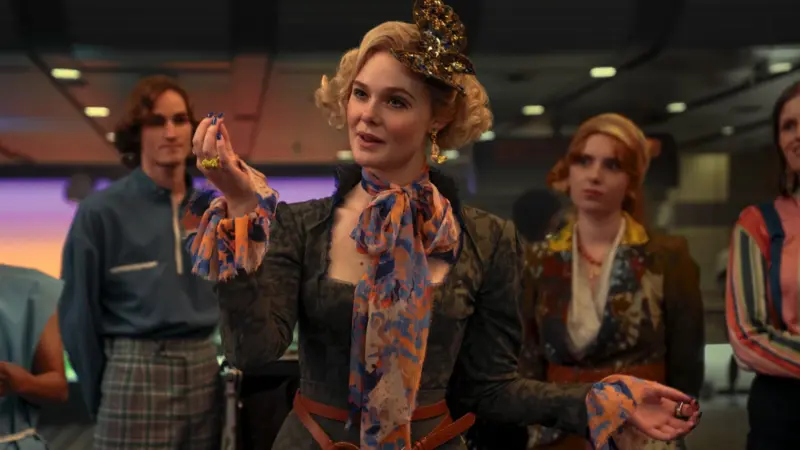
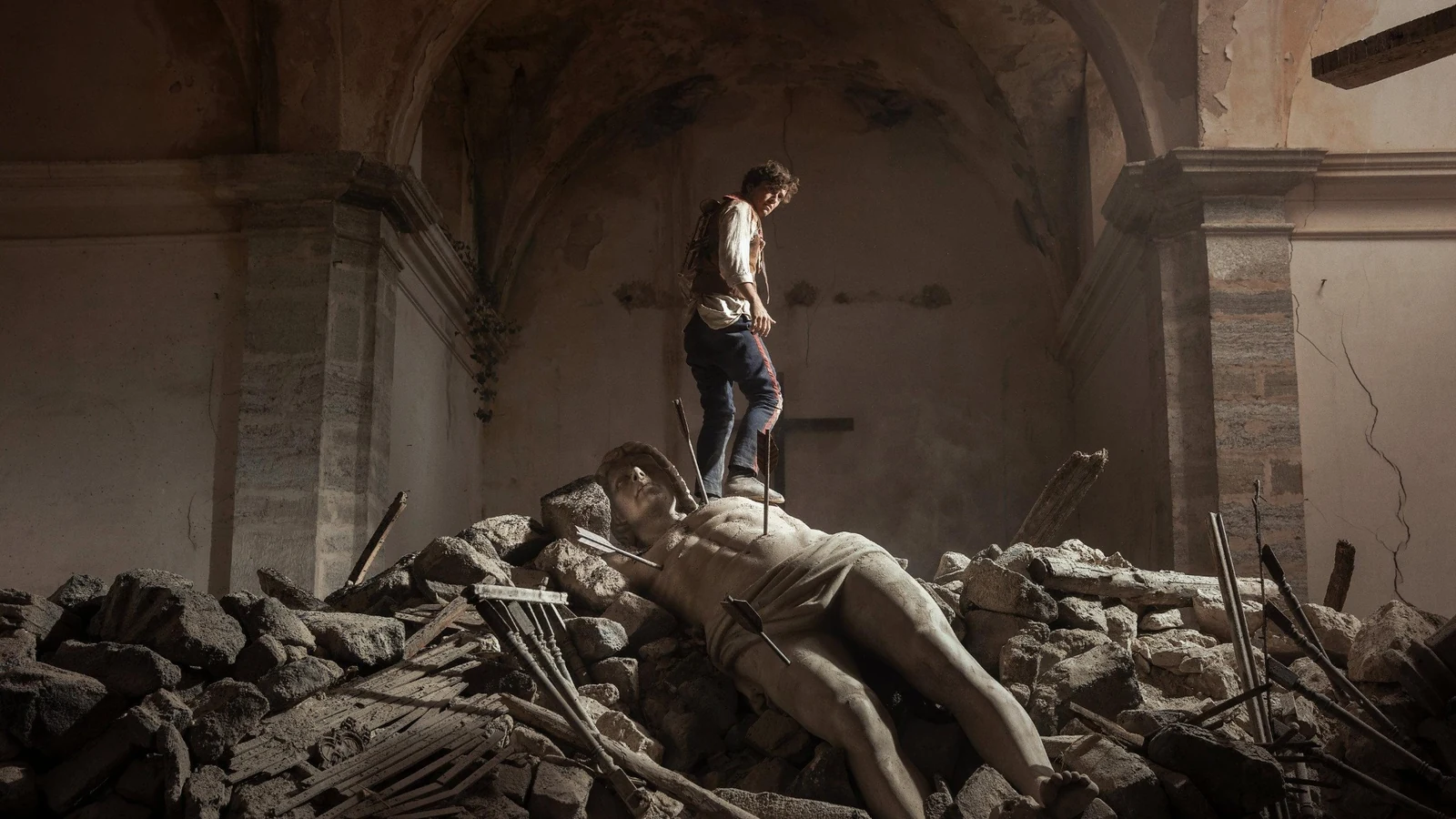
Rather than assigning each era a different format or colour palette, Jordana changed the camera’s relationship with the characters. In 1932, wide-angle lenses and a mobile camera make it an active participant. In 1937, the camera observes more quietly, using 35mm and 40mm lenses and movement motivated by the performers. In 2017, longer lenses let the camera follow people from farther away, giving the actors greater freedom in a documentary-like approach.
Lighting begins with the location
The casino set was built outdoors so that sunlight could provide the foundation for the lighting. The sun’s path even influenced the shooting order: shots facing the windows were scheduled for specific times. The crew supplemented the light with powerful HMI and tungsten fixtures according to the needs of the scene.
For a demanding night scene on a beach, the crew combined real fireworks with powerful lighting from the seaward side. Tests had confirmed that the fireworks supplied enough exposure for 500T. The light visible within the frame could therefore contribute to the actual illumination of the scene.
More than 112 kilometres of film
In an Esquire interview, Jordana said the production used 112,501 metres of film. During pre-production she revisited the study of negative sensitometry and tested different stocks and processing methods.
The exposed negative was flown to the laboratory in Rome. Dailies used a common LUT with basic colour and contrast balancing, and Jordana approved selected frames before footage was delivered to editorial. Photochemical capture therefore worked alongside digital processing, rather than excluding modern post-production tools.
The process of developing and checking motion picture film remains essential even when editing and grading are digital.
The image of memory and the awards season
When Jordana watched the film projected on 35mm, she was initially struck by the flicker and reduced sharpness compared with what we are accustomed to. Soon, however, the physical character of the projection ceased to distract her. In a story that continually returns to the past, that sense of instability takes on particular narrative interest. It concerns the experience of film projection and is not necessarily a feature of Netflix’s digital version.
The film shared the Best Director award at Cannes and won the audience award at the Toronto festival. It is also Spain’s official submission for the International Feature Oscar, not yet a final nominee.
At the European Film Awards it has received ten nominations, including one for Jordana’s cinematography. The ceremony will take place on January 16, 2027, at the Stavros Niarchos Foundation Cultural Center in Athens.
Jordana also appears on the preliminary cinematography shortlist for the 2027 Critics Choice Awards.
What we think
What is worth taking from La Bola Negra is that each era’s distinctive image comes primarily from camera position, lenses and movement, not a filter that tells us we are in the past. Even in a small digital production, we can plan different distances from characters and different rules for movement while retaining a shared colour identity.
Film costs money and requires testing and dependable laboratory infrastructure. We do not need to choose it simply to imitate the image of a successful film. We need to understand why a particular method of capture serves our story and what it allows us to do with light.