Summary
- Drone photogrammetry can estimate the dimensions of animal bodies.
- A new review in Science explains why images cannot reliably distinguish fat from lean mass.
- Complementary physiological measurements improve the interpretation of images.
Has a whale that looks thinner in an aerial photograph lost fat or muscle? On 26 November 2026, the Woods Hole Oceanographic Institution (WHOI) announced a review in Science, led by Michelle Shero, examining how drone photography can be combined with measurements of animal physiology.
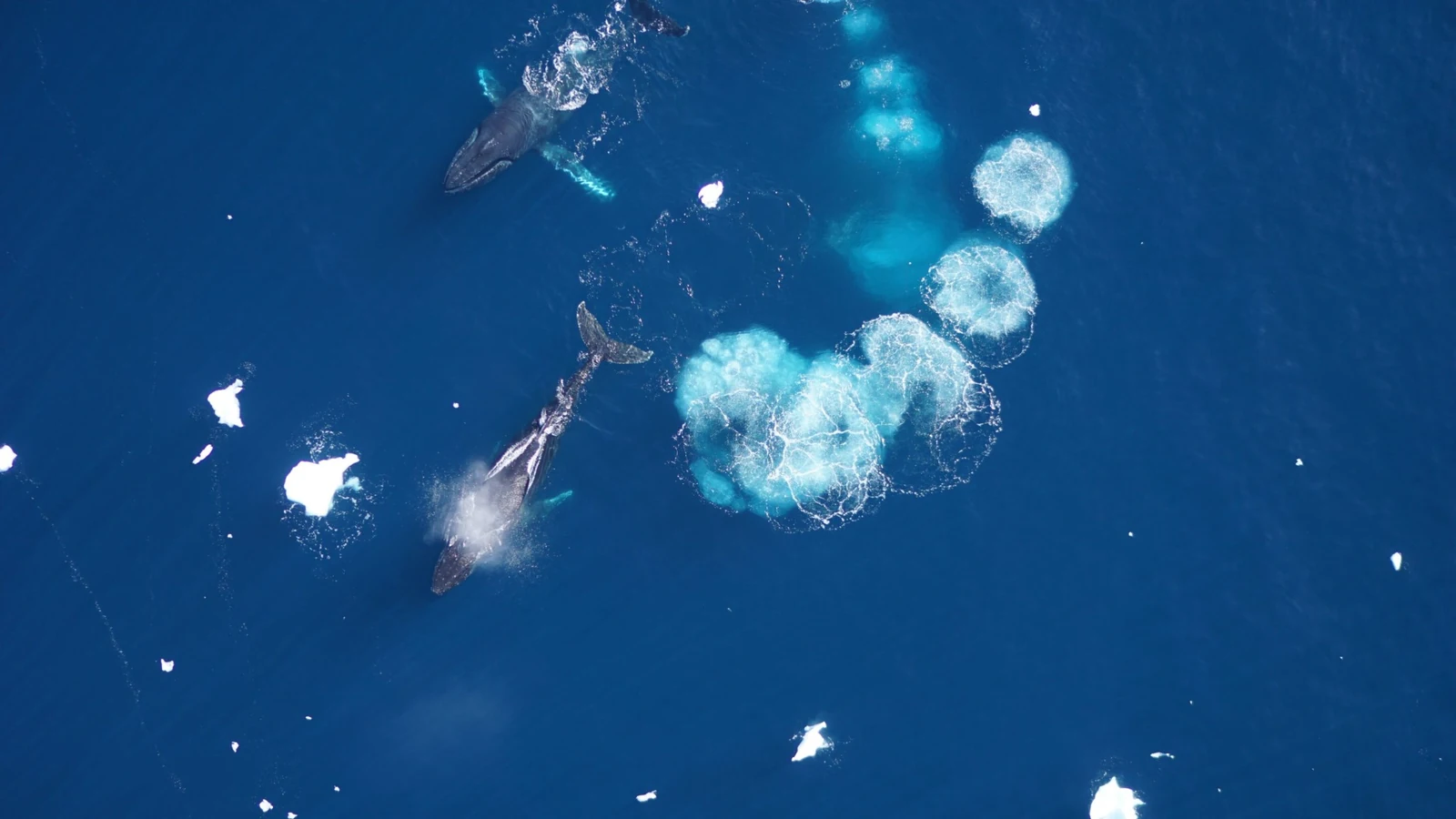
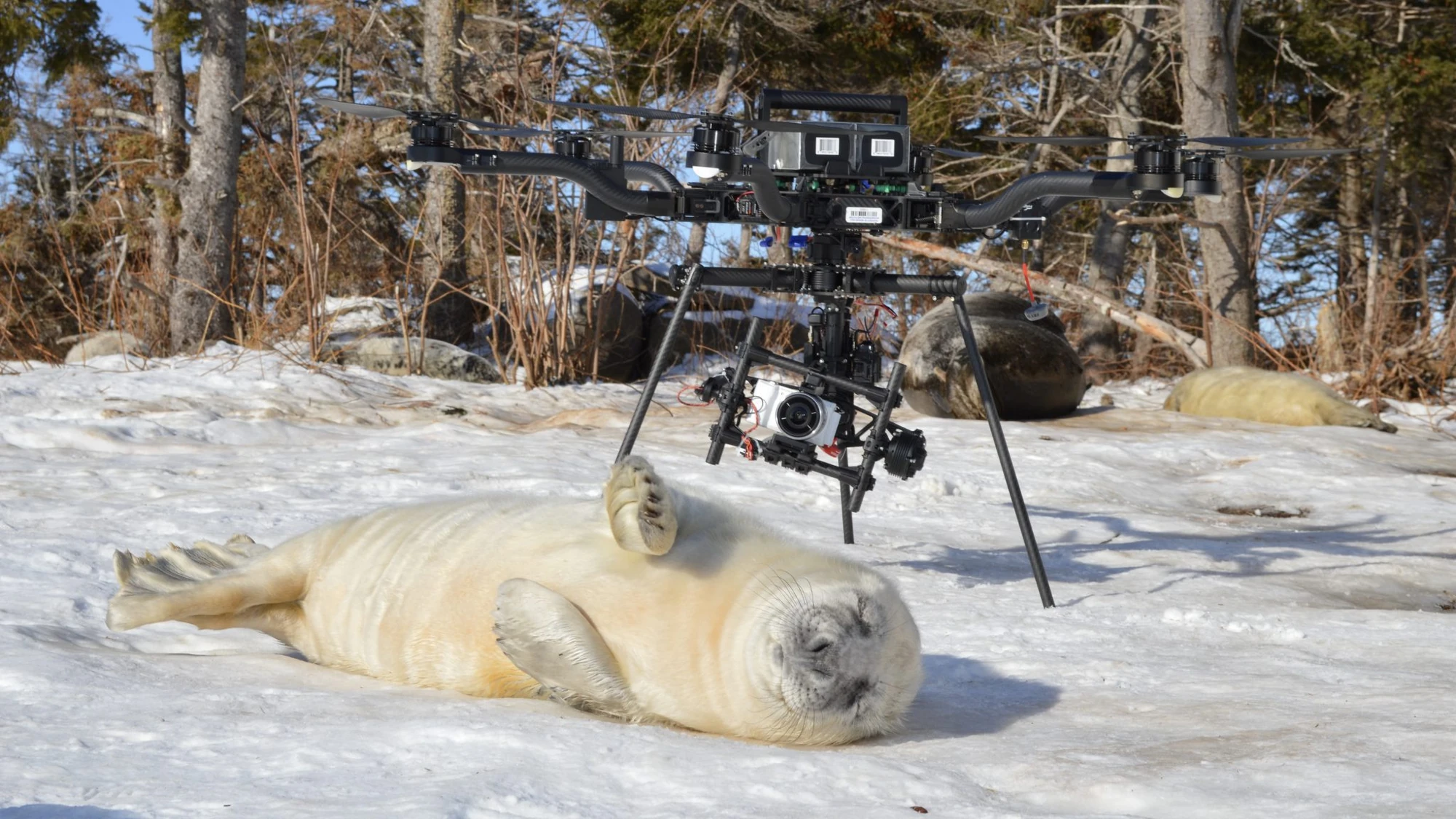
Aerial images can be used to estimate body length, width and volume, and track changes over time without capturing each animal.
From pixels to metres
Photogrammetry converts an object’s size in pixels into physical dimensions. In a nadir image, the scale depends on the camera’s height above the surface, actual focal length, sensor width and image width in pixels. K.C. Bierlich’s team described the process in detail in a 2025 PeerJ paper.
For example, if each pixel represents one centimetre at the water surface, a body spanning 1,200 pixels is 12 metres long. This is a hypothetical example, not a measurement of the whales in the featured photograph. A 5% error in height translates into a 5% scale error if the other parameters remain fixed.
Frame selection also matters: a whale bending its body, diving or showing an indistinct outline is less suitable for measurement than an animal clearly visible at the surface. Glare and refraction from waves introduce uncertainty. Video makes it easier to select the right moment, whereas still images often offer higher resolution.
Why the outline is not enough
The review draws on more than a decade of measurements in Weddell seals. Nursing females lose both fat and lean mass. After weaning, they regain lean mass first. Changes in their external outline do not show which tissues were lost or recovered.
The researchers suggest complementing photographic measurements, depending on the species and question, with weighing, ultrasound, biological samples or indicators such as hormones. A whale with an apparently normal body shape may thus turn out to be experiencing physiological stress.
What this means for conservation
In North Atlantic right whales, long-term aerial measurements help researchers understand the effects of fishing gear entanglement, vessel strikes and changes in prey availability. The aim is to connect individual condition with population survival and reproduction.
Aerial imagery is also valuable for documenting behaviour. A good example is the birth of a humpback whale in Australia, recorded by photographer Alexander Forrest in July 2026. Observing a rare event, however, is different from collecting comparable measurements using a defined protocol.
What we think
For a wildlife photographer, the best frame often captures a unique moment. For a researcher, it may be an apparently ordinary frame with a clear outline, known scale and documented shooting conditions. That difference is a good reason for the two sides to collaborate before an expedition begins.
It is worth preserving original files, flight data and the location and time of capture, without altering the geometry of images intended for measurement. Above all, the capture must respect the animals and required permits. No photograph justifies disturbing an animal to obtain a better angle.