

Summary
- The only Polaroid film factory in the world remains operational.
- The factory is located in Enschede, Netherlands.
- The Impossible Project rescued the technology after the original Polaroid shutdown.
- Film production remains an extremely complex chemical process.
- The company sees analog photography as complementary to the digital age.
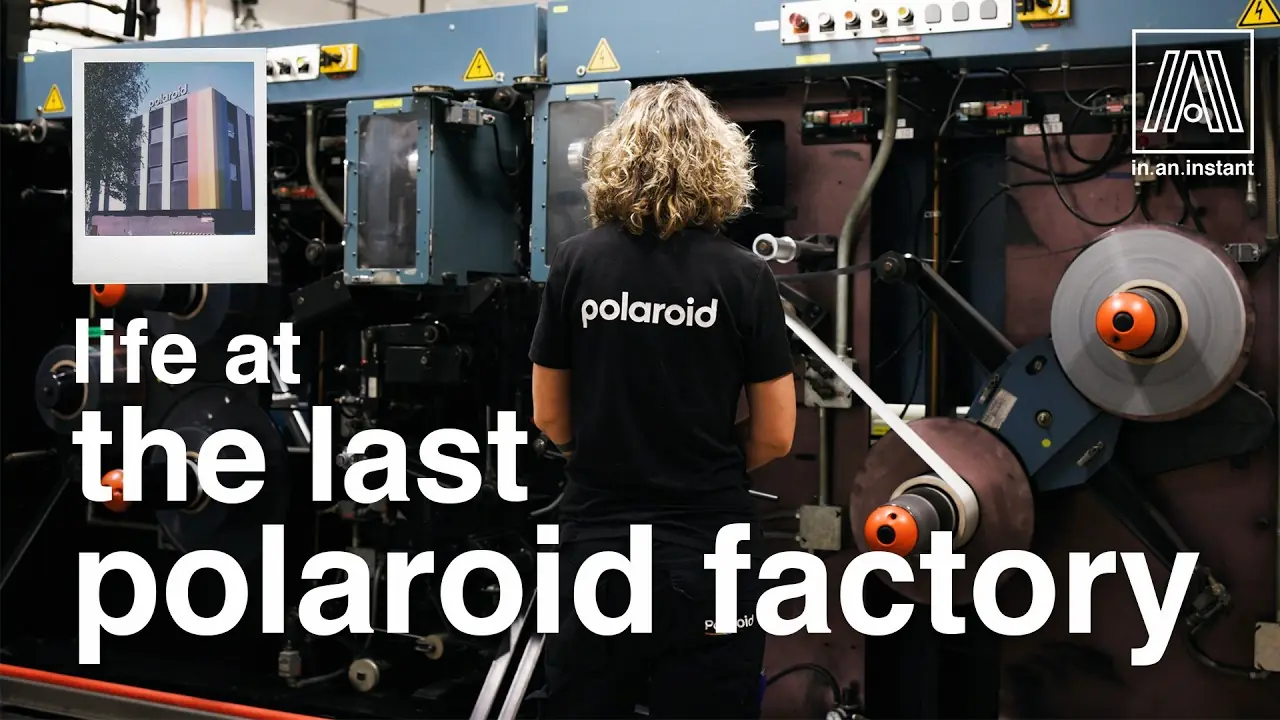
Polaroid continues to produce instant film in a single factory worldwide, which today stands as a symbol of resistance against the complete dominance of digital imaging.
The factory is located in Enschede, Netherlands, near the German border, and is now the last place on Earth where Polaroid film is manufactured. Although the original company effectively abandoned production in the late 2000s, a group of photography enthusiasts and entrepreneurs managed to keep the technology alive and eventually acquire the brand itself.
This story is particularly relevant at a time when photography has become an almost invisible digital process. Millions of images are created every day through smartphones and artificial intelligence systems, yet Polaroid continues to invest in an experience built around physical photography and the uniqueness of every frame.
The Rescue of a Historic Factory
When Polaroid announced the end of film production, the Enschede factory was scheduled for permanent closure. That is when The Impossible Project stepped in and took on the difficult task of recreating instant film from scratch.
Roughly fifteen years later, the project not only survived but also gained full control of the Polaroid brand following its acquisition in 2017. Today, the factory is operated by many of the same people who helped save the technology, alongside employees from the original Polaroid era.
Why Film Production Remains So Difficult
During a recent tour of the facility, film manufacturing head Andrew Billen explained that instant film remains exceptionally challenging to produce.
One of the most important stages involves a special chemical paste that develops the image between the different layers of the film. According to Billen, every batch shows slight variations because temperature, humidity, and raw material behavior all influence the final result.
The coating process is measured in microns, making it almost impossible to achieve complete consistency between all batches. The company’s challenge is to minimize these differences as much as possible.
Analog Photography as a Counterbalance to Digital Life
Billen argues that Polaroid is not opposed to digital technology. Instead, he believes the two worlds can coexist.
As he explains, analog photography offers a different pace of life where image creation requires time, patience, and a stronger connection to the moment. For Polaroid, this experience serves as an antidote to constant connectivity and endless digital content creation.
What We Think
Polaroid’s survival is more than a business success story. It demonstrates that even in the age of artificial intelligence and smartphones, there is still room for technologies that offer a slower, tangible, and more personal photographic experience. The existence of the world’s last instant film factory proves that analog photography continues to have a passionate audience and a unique value.