

Summary
- Leica removed Russian photographer Valery Melnikov from the 2026 Oskar Barnack Award.
- Melnikov had originally been selected among 12 finalists with a project from Mariupol.
- Leica cited a legal and compliance review.
- The framing of the series and his links to Russian state media had drawn criticism.
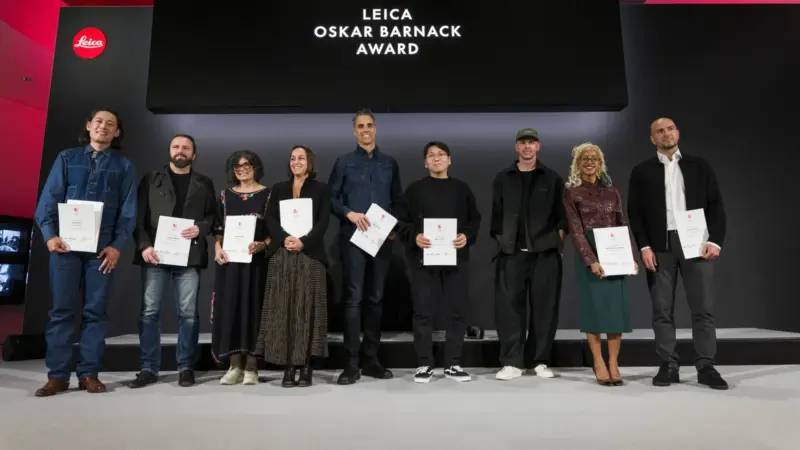
- The award’s official shortlist now contains 11 photographers.
Leica has removed Russian photographer Valery Melnikov from one of the world’s major international photography awards following controversy surrounding his work in Mariupol and his links to Russian state media.
Melnikov had originally been selected among the 12 finalists for the 2026 Leica Oskar Barnack Award with his “Mariupol – Open Wounds” series, but Leica Camera AG said that following a legal and compliance review, his work could no longer remain on the shortlist.
The case goes beyond the boundaries of a photography competition. It concerns the way the war in Ukraine is presented internationally, who is producing images from occupied territories and how important the context behind photographs becomes when they reach a large Western audience.
In July he was still one of the 12 finalists
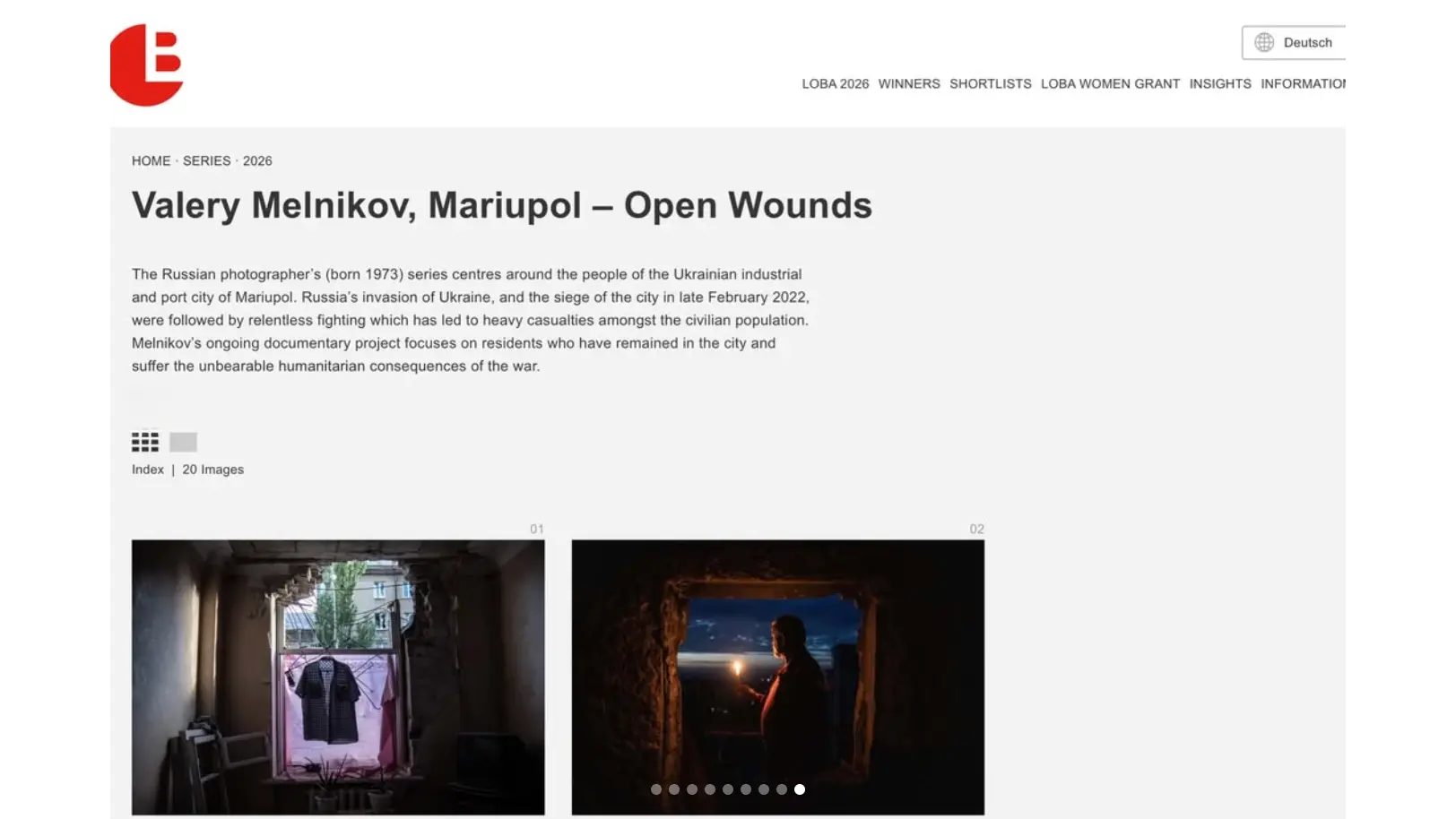
On July 10, pttl.gr published a detailed look at the 12 photographers who had reached the final selection of the Leica Oskar Barnack Award 2026. Among them was Valery Melnikov with “Mariupol – Open Wounds,” a project about Mariupol residents and the consequences of the war.
At the time, Leica officially presented the series as one of the 12 shortlisted projects for the 46th edition. Today, the award’s official website lists only 11 photographic series and Melnikov’s name is no longer among them.
The change therefore came after the selection process had already been completed, publicly announced and covered by international media.
What the controversial photographs show
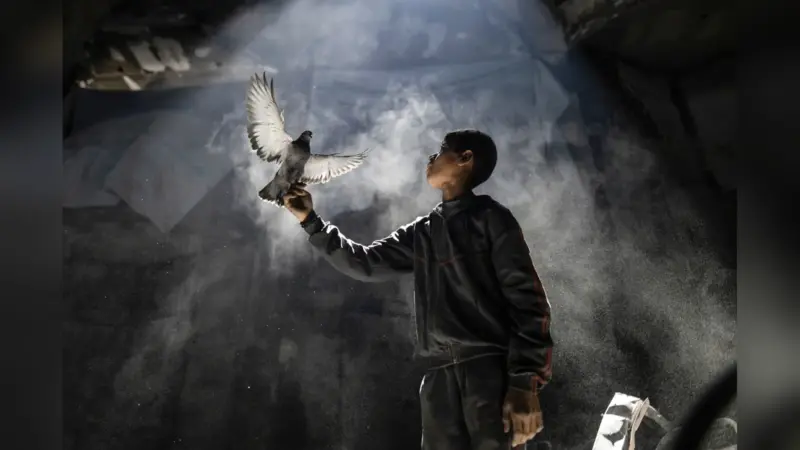
“Mariupol – Open Wounds” focuses on people who remained in Mariupol following Russia’s invasion and the siege of the city in 2022.
Leica itself described the work as an ongoing documentary project about residents who remained in the city and continue to experience the severe humanitarian consequences of the war.
The criticism was not simply about a Russian photographer documenting Mariupol. The central issue was how the images were being placed within the wider context of the war.
Why the project drew criticism
Ukrainian photographers and commentators argued that the presentation of the series did not sufficiently explain Russia’s responsibility for the destruction of Mariupol and did not clearly emphasize that the city remains under Russian occupation.
Ukrainian photographer Serhii Korovainyi had publicly criticized the inclusion as early as July 9, questioning how a series about Mariupol’s “wounds” could be presented without clearly explaining who caused the destruction of the city.
The Kyiv Independent also examined Melnikov’s inclusion in detail, arguing that the framing of his work could influence how audiences unfamiliar with the war understand what happened in Mariupol.
His links to Russian state media
Another major part of the controversy involves Valery Melnikov’s professional background.
According to published biographical information, the photographer has worked since 2009 for Rossiya Segodnya, a Russian state-owned media organization associated with outlets including RIA Novosti and Sputnik.
PetaPixel reports that Leica specifically raised concerns over Melnikov’s association with RIA Novosti. Melnikov himself said some of the photographs in the project were made while he was working for the agency.
The Kyiv Independent also reports that Melnikov’s work has previously been presented by Russian state institutions and media using language aligned with the Russian government’s narrative of the war.
What Leica said
Leica’s official explanation was relatively brief.
Leica Camera AG said that following a legal and compliance review, it decided that Valery Melnikov’s series could no longer remain on the 2026 Leica Oskar Barnack Award shortlist.
The company did not publicly release a detailed breakdown of all the findings it considered before making its final decision.
The photographer criticized his removal
Valery Melnikov publicly objected to the decision.
He argued that his professional relationships had always been publicly known and had not prevented the jury from initially selecting his work.
Melnikov says he has been documenting Mariupol and the surrounding region since 2022 as part of a long-term personal project and that his goal is to document ordinary people and history rather than serve corporations or governments.
He also argued that Leica’s decision was influenced by concerns over possible reputational or other risks.
A few hours ago, representatives of the Leica Oskar Barnack Award removed my project, “Mariupol. Open Wounds,” which had previously been selected by the Leica jury and included on the shortlist.
This followed a series of complaints, apparently from photographers or bloggers.
Their objection was that I had previously worked for the Russian news agency RIA Novosti.
“Kremlin-media-linked photographer” — that was the wording they used.
Apparently, the Leica team became concerned about the possible consequences and cited the fact that some of the photographs in the project had been taken while I was working for RIA Novosti.
It is important to note that this information had always been public, and it did not prevent the jury from initially selecting my series.
Moreover, the competition rules contain no restrictions regarding such circumstances.
Formally, according to Leica, this was the reason my project was removed from the shortlist.
Before the photographs were removed, I received a call from a Vice President of Leica AG, who suggested that I write to them myself and ask for the project to be removed from the list of finalists and from the website — in exchange for the hypothetical possibility of working together in the future.
“Maybe I should apologize as well?” I wanted to ask.
But the connection was lost. The Vice President was calling from a moving car.
When the call resumed, I asked him to put his proposal in writing, either by email or messenger, in case I had misunderstood something.
He categorically refused.
At that point, I understood that my interlocutor did not want to take responsibility for his words and was simply trying to manipulate me into doing it myself.
Of course, I wrote nothing to anyone.
To me, the situation looked as though I was being asked to destroy my own work with my own hands.
Needless to say, I refused.
An artist does not owe anyone proof or justification.
I have been documenting the situation in Mariupol and the surrounding region since 2022.
This is my long-term personal project. I do not do this in the interests of corporations or states, but for ordinary people and for history.
And yet a major corporation, frightened by reputational or other risks, has simply chosen to restrict people’s access to information.
Leica now has 11 finalists
The removal is already reflected on the award’s official website.
Leica now lists 11 photographers for 2026: Saher Alghorra, Todd Antony, Anush Babajanyan, Damir Faizulin, William Keo, Slava Lyu-fa, Benedikt Renč, Elliot Ross, Annie Sakkab, David Sládek and Laila AnnMarie Stevens.
Valery Melnikov, who had been part of the original group of 12 covered by pttl.gr in July, is no longer listed.
What we think
The key issue is not simply whether a photograph is technically strong or whether a photographer has an award-winning résumé. When images come from an occupied city and are presented as documentation of an active war, who created them, under what circumstances and with what context becomes highly relevant.
At the same time, Leica’s decision raises an obvious question: if Melnikov’s professional relationships were already public, why was the issue examined at this depth only after his work had already been announced among the finalists?
The case demonstrates that in documentary photography, an image can rarely be separated entirely from the circumstances in which it was created and presented.
Frequently asked questions
Why did Leica remove Valery Melnikov?
Leica Camera AG said the decision followed a legal and compliance review. Melnikov’s professional links to Russian state media were also central to the controversy.
What was he photographing in Mariupol?
“Mariupol – Open Wounds” documents Mariupol residents and the humanitarian consequences of the war in the city.
Had he already been announced as a finalist?
Yes. Melnikov was one of the 12 finalists announced in July and was included in pttl.gr’s July 10 coverage of the shortlist.