Summary
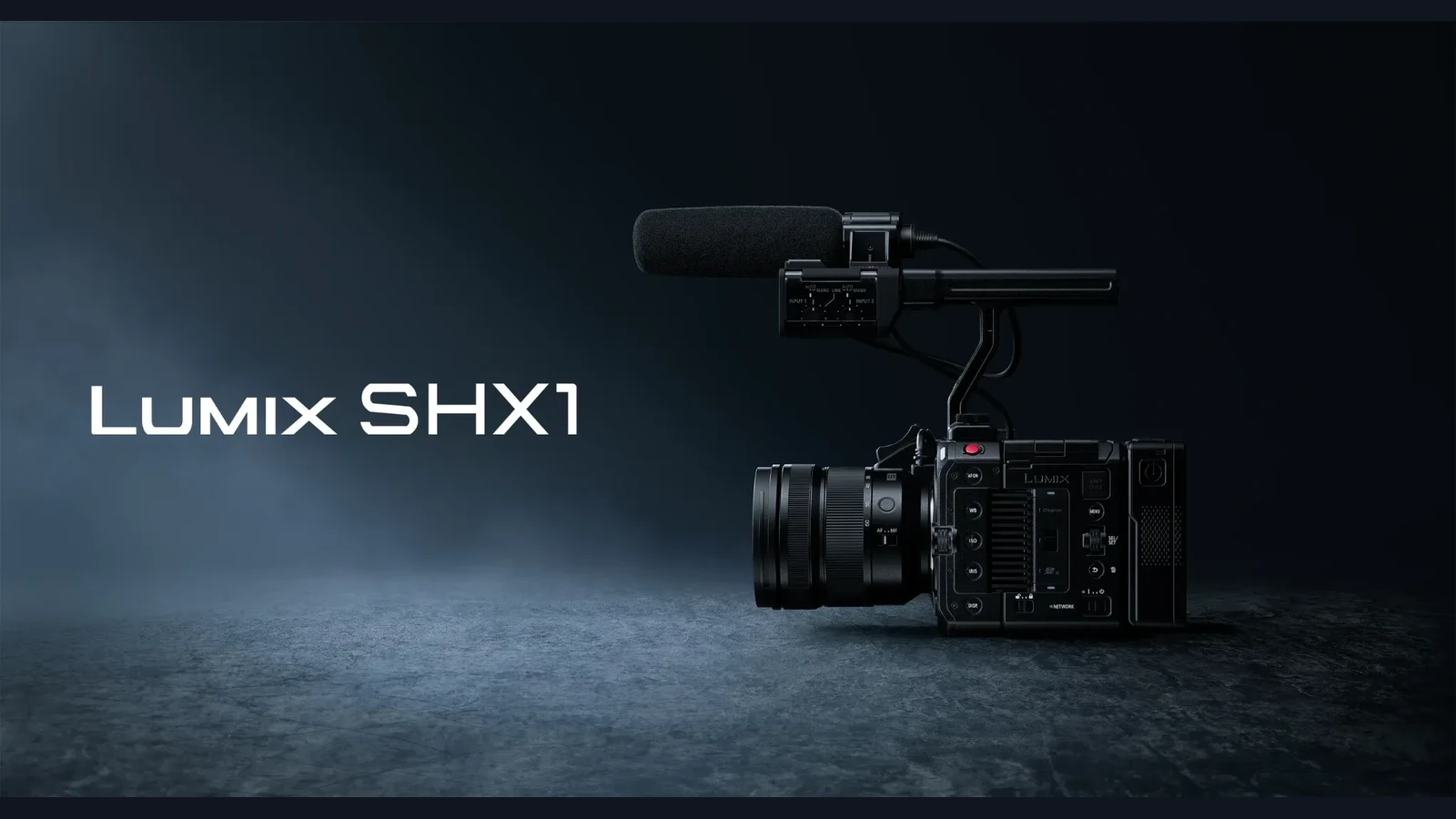
- Panasonic introduced the LUMIX SHX1 with a 24.1MP full-frame 6K sensor.
- It supports ARRI LogC3, internal ProRes RAW and Blackmagic RAW to external SSD.
- Phase Hybrid AF, stabilization and rig-ready connectivity target professional production.
- Availability begins rolling out in December 2026.
Panasonic has unveiled the LUMIX SHX1 (AU-SHX1), the first compact cinema camera in its LUMIX lineup, combining a 6K full-frame sensor with pre-installed ARRI LogC3 and two distinct RAW workflows for professional production.
Announced on November 17, 2026, the camera confirms the direction hinted at by the earlier LUMIX cinema-camera teaser. Rather than another conventional hybrid mirrorless model, the SHX1 is a box-style L-Mount camera designed to adapt to the crew and the production.
The launch was streamed live on the official LUMIX channel, and the full broadcast is available here:
6K sensor and RAW workflows for post-production
At its core is a 24.1MP partially stacked full-frame CMOS sensor with an optical low-pass filter to minimize moiré and false colors in fine detail. Dual Native ISO and Dynamic Range Boost deliver a claimed 15 stops of dynamic range when using V-Log/V-Gamut.
Recording options include 6K 30p and 5.1K 60p Open Gate in 3:2, 10-bit 4:2:0, along with a 3.8K 48p 4:2:2 10-bit mode. Blackmagic RAW can be captured directly to an external USB SSD, including 6K 24p Open Gate. Apple ProRes RAW and ProRes RAW HQ record internally to CFexpress Type B cards, without the need for an external recorder.
ARRI LogC3 comes pre-installed, with ARRI Look Library support helping color grading and camera matching when the SHX1 is used alongside ARRI cameras. For mixed-camera crews, that is a meaningful option for maintaining a consistent color pipeline.
The official introduction film, “Cinematic by Nature. Free by Design.”, explains the camera’s production-focused approach:
Cinema handling, autofocus and stabilization
The camera offers 779-point Phase Hybrid AF with recognition for faces, eyes, bodies, animals and vehicles. Five-axis B.I.S. works with Dual I.S. 2, Active I.S. and electronic stabilization, making the same camera viable on a tripod, handheld or on a gimbal.
A 3-inch top-mounted tilt-and-free-angle touchscreen is joined by dedicated WB, ISO and IRIS buttons, tally lamps, and exposure tools including waveform, vectorscope, false color and zebras. The body weighs approximately 984 grams without the body cap.
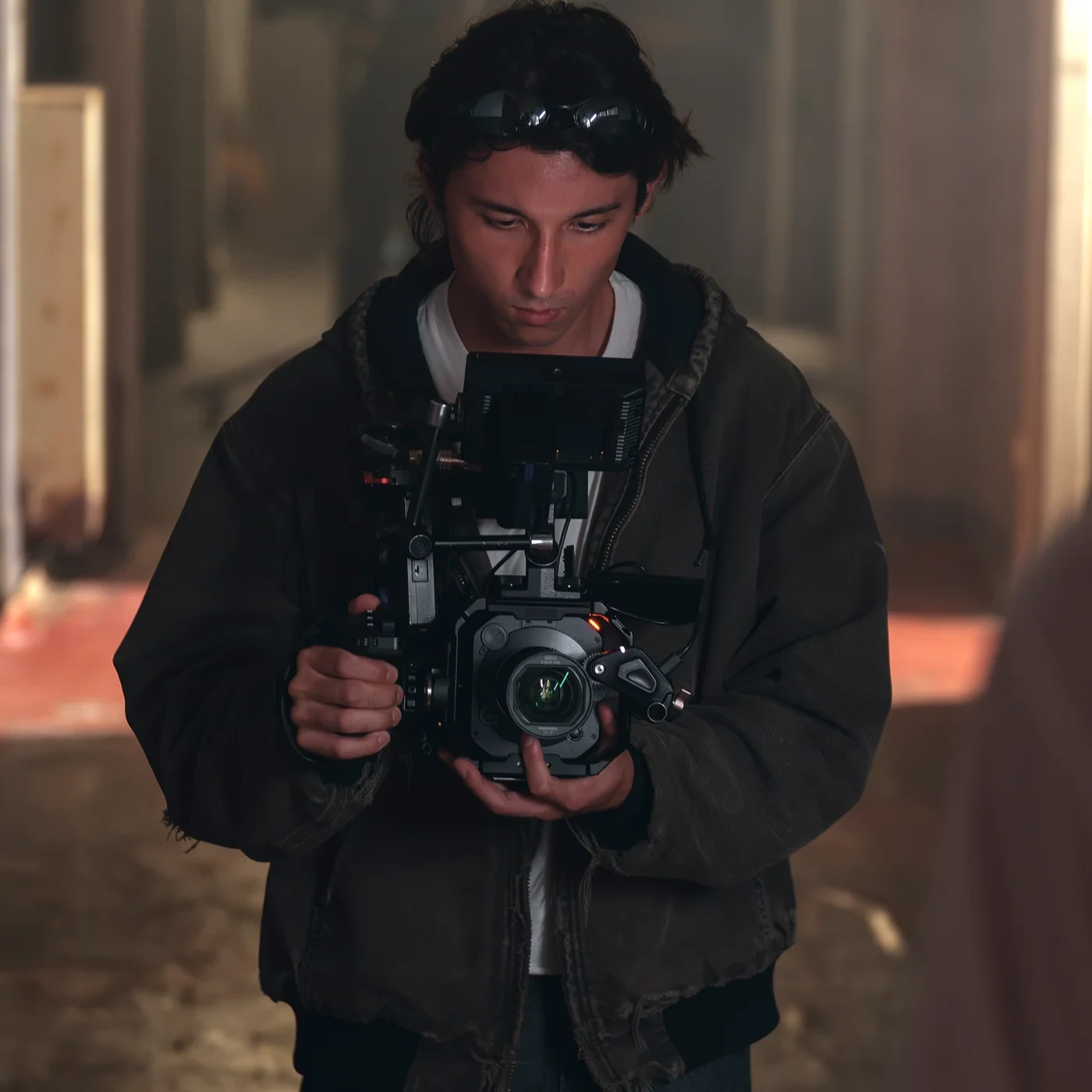
“Drinking Game” by Media Division is one of the two official sample films:
The second sample, “THE RESCUE” by Rowe Films, shows the camera being used in a different narrative production:
A camera for rigs, streaming and multicamera productions
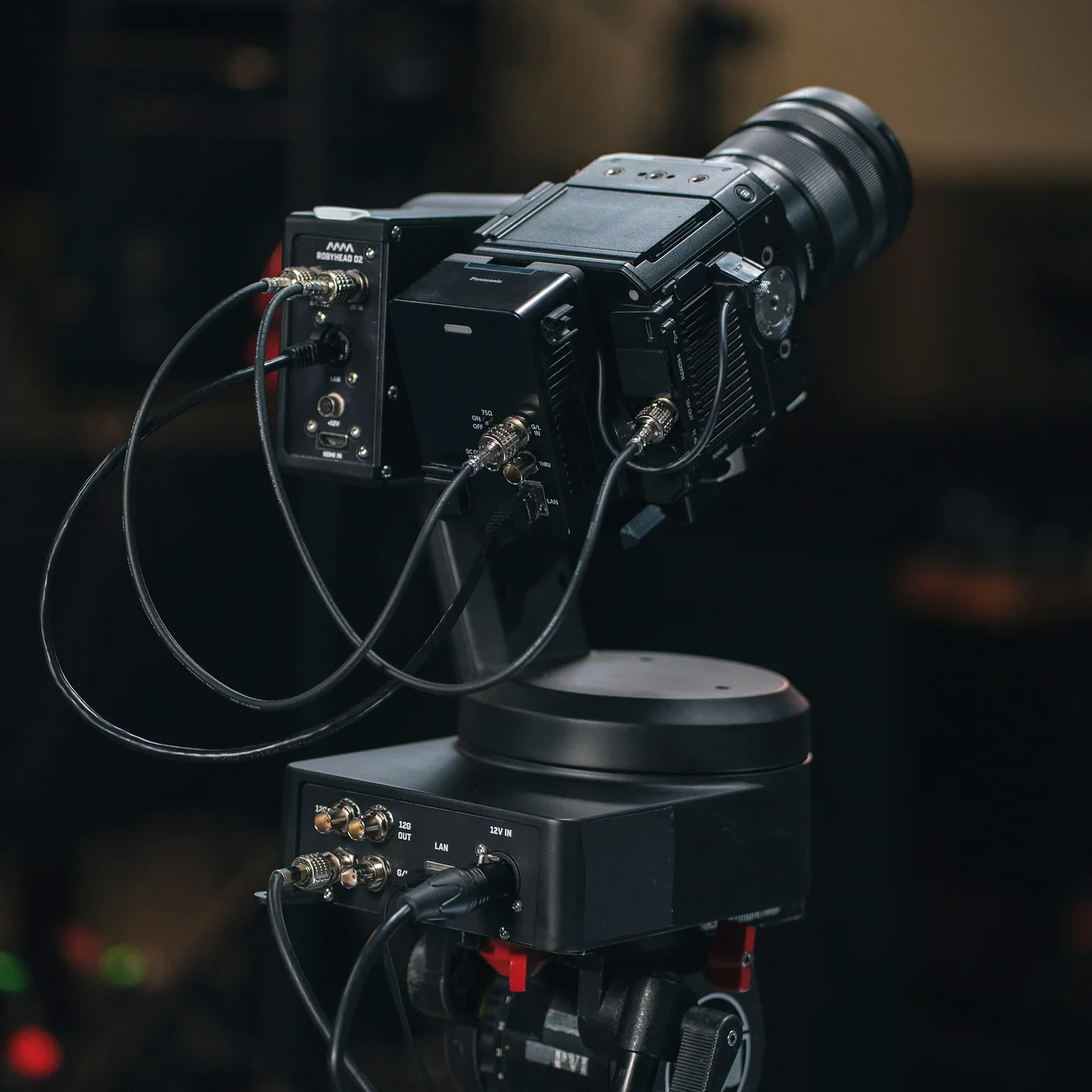
The box-style body includes two locking USB-C ports, USB Power Delivery, live-streaming options over Wi-Fi and smartphone connections, and support for micro V-mount batteries. The optional AU-XHU1 adds XLR inputs and four-channel 32-bit float audio recording in combination with the camera’s mini-jack.
The AU-GRP1 control grip expands hands-on operation. For multicamera and live applications, the AU-LPU1 Live Production Unit, planned for the first half of 2027, brings Genlock IN, PoE++ LAN, remote camera control and integration with Panasonic PTZ systems.
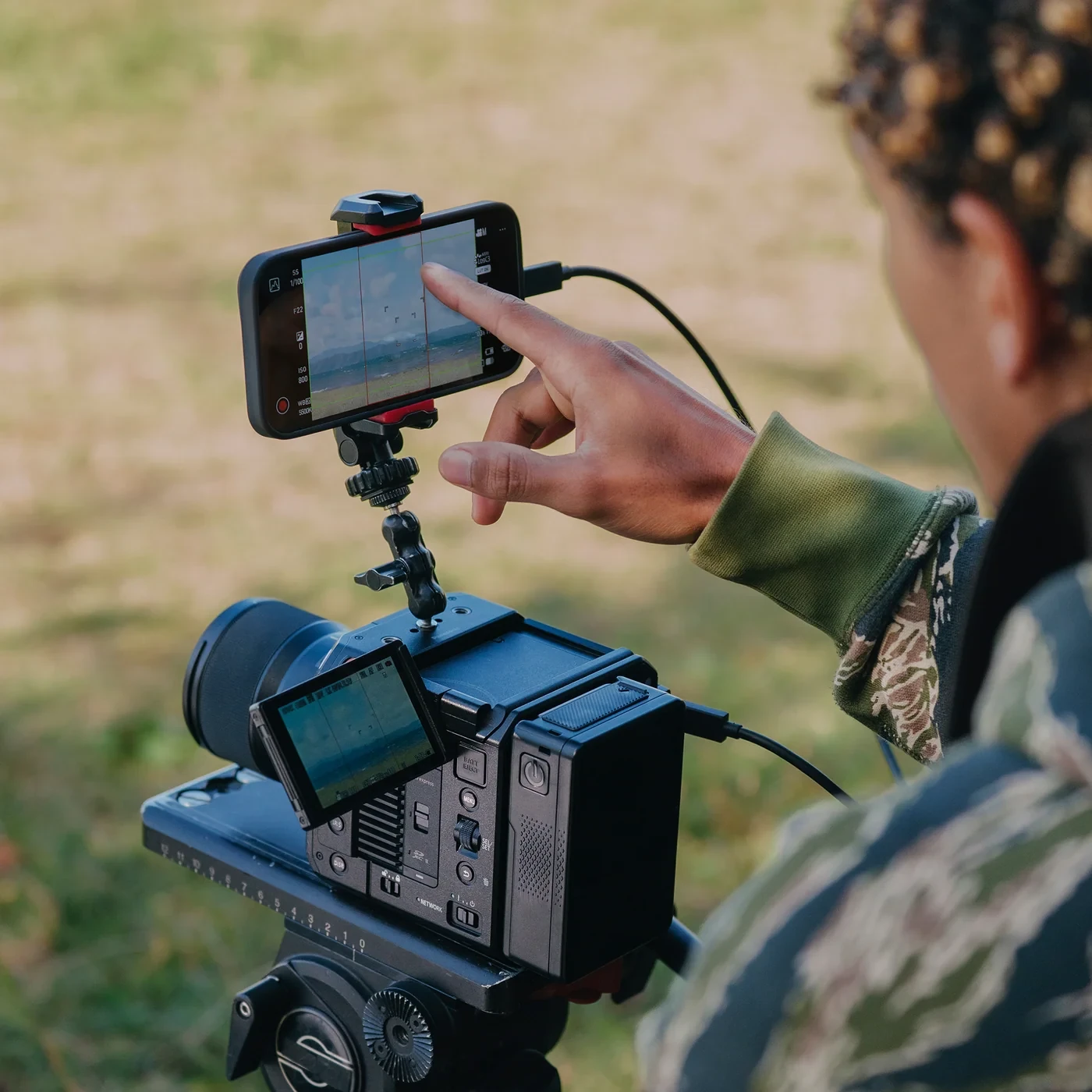
Panasonic has also announced a firmware update planned for the first half of 2027, adding control of the Tilta Mirage Variable ND through the grip or Panasonic controllers, and remote focus/iris adjustment for compatible L-Mount lenses through a Tilta hand wheel. These are planned functions, not launch-day features.
More information here.
Price and availability
Panasonic expects availability to roll out in stages starting in December 2026, depending on region. An official pan-European retail price was not found on its European website during this review. Body-only, kit and accessory pricing should be checked in each local market.
What we think
What makes the SHX1 compelling is how differently it can be configured from one job to another. For documentary work, we want a lightweight rig with stabilization and dependable autofocus. For commercial shoots, RAW formats and a consistent color pipeline matter more. On multicamera jobs, synchronization and remote control become central.
The choice between BRAW to SSD and internal ProRes RAW on a card is genuinely useful because production teams do not all use the same post-production software. Pre-installed LogC3 is also a practical advantage when matching footage from different camera systems.
Still, there are real purchasing considerations. A box-style camera needs accessories to become comfortable handheld, and without built-in ND filters, light control must be planned separately. For a small crew, the real cost is not just the price of the camera body.