

Summary
- Researchers at the Australian National University studied how humans can detect AI-generated faces
- The training focused on six traits: distinctiveness, memorability, proportionality, symmetry, attractiveness and expressiveness
- AI faces tend to be more symmetrical, more proportional and more attractive
- They are also often less expressive, less distinctive and less memorable
- Detection accuracy improved significantly and the findings were replicated by a team in Canada
A new study suggests that people can be trained to better recognize faces generated by artificial intelligence.
Researchers at the Australian National University trained participants to identify AI-generated faces, not by looking for classic errors such as strange ears or distorted details, but by observing broader facial characteristics.
The study matters because synthetic faces are increasingly used in fake profiles, scams and deepfake content, while newer image-generation tools have become so convincing that older visual clues are no longer enough.
AI faces have become much more convincing
A few years ago, a face generated by artificial intelligence often revealed itself through obvious mistakes. Skin could look overly smooth, the eyes might lack coherence, ears could appear distorted and small details in the frame often looked unnatural.
That has changed. Modern image-generation models can produce portraits that look highly realistic, making it difficult even for careful observers to tell whether they are looking at a real person or a synthetic image.
This creates a new problem for online identity, social media and dating platforms, where a profile picture can be used to build trust around a person who does not actually exist.
The ANU study
The research was conducted by the ANU Emotions and Faces Lab and published in the scientific journal PNAS under the title Training Humans to Detect AI-generated Faces.
The team, led by Associate Professor Amy Dawel, examined whether people can improve their ability to recognize AI-generated faces through targeted training.
The important point is that the training was not based on looking for temporary technical flaws. Instead, participants learned to pay attention to broader qualities that often distinguish synthetic faces from real ones.
The six traits to observe
The researchers focused on six perceptual qualities: distinctiveness, memorability, proportionality, symmetry, attractiveness and expressiveness.
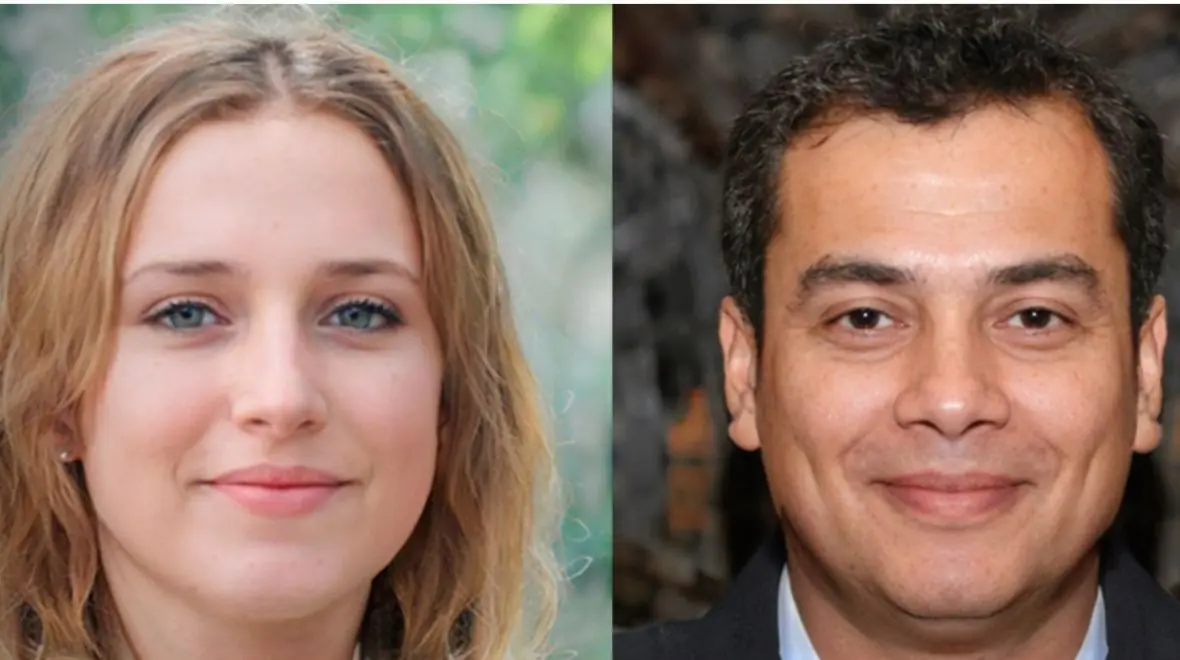
According to the findings, AI-generated faces tend to be more symmetrical, more proportional and more conventionally attractive than real faces. At the same time, they are often less expressive, less distinctive and harder to remember.
In other words, an AI face may not look “wrong.” It may simply look too balanced, too generic and lacking the small personal features that make a real face recognizable.
Why AI creates “average” faces
Image-generation systems are trained on huge collections of photos and learn statistical patterns from many different faces. When asked to create a new face, they do not necessarily copy a real person, but compose a new image based on those patterns.
As a result, many AI faces move toward an average. They are not necessarily unrealistic, but they often appear cleaner, more balanced and more conventional than a real human face.
Human appearance, by contrast, includes small asymmetries, distinctive expressions, imperfect features and details that make a face unique. These imperfections are not a problem, but a sign of authenticity.
Training improved detection
According to the study, the training helped all participants improve their ability to detect AI-generated faces. Those with the highest performance came close to perfect results.
Scientific American reports that participants’ ability to recognize AI faces almost doubled when they were trained to focus on these six traits instead of isolated visual errors.
The training was tested on highly convincing StyleGAN faces, while the researchers note that the next step is to examine how well the method generalizes to faces produced by other artificial intelligence systems.
The method was replicated in Canada
Another important point is that the research findings were replicated by a team at the University of Victoria in Canada, led by Professor Jim Tanaka and Dr Eric Mah.
Repeating the study in a different country strengthens the reliability of the findings, showing that the improvement in participants’ performance was not a fluke.
In addition, the training proved effective online, which opens the door for wider educational tools that could be implemented at low cost.
Why algorithms alone are not enough
Deepfake and AI-image detection cannot rely solely on automated systems. Algorithms can help, but their decision-making is not always transparent, and in real-world conditions they can show weaknesses.
That is why researchers argue that humans need to remain part of the process. Training the human eye can work alongside technology, especially in situations where trust, identity and online safety are critical.
What we think
The study shows that the era of easy AI mistakes is ending. From now on, detecting synthetic images will require stronger visual literacy and more careful observation. The most interesting conclusion is that “perfection” itself may become suspicious: a face that looks too symmetrical, too generic and not very memorable deserves a more critical look.
Frequently asked questions
What is the main sign of an AI-generated face?
There is no single sign. AI faces tend to be more symmetrical, more proportional and more attractive overall, but they are often less expressive, less distinctive and less memorable.
Are strange ears and eye errors still useful?
They can help, but they are no longer reliable enough. Modern image-generation tools are improving constantly, and obvious errors are becoming less common.
Can someone be trained to recognize AI faces?
Yes. The study shows that even short training focused on the right visual traits can significantly improve accuracy.
Why do AI faces often look so perfect?
Because they are generated from statistical patterns across many faces and often move toward a more symmetrical, proportional and conventional average.
Does the method work only on one type of AI image?
The research was tested on StyleGAN faces, and researchers want to examine whether the training generalizes to other image-generation models.