

Summary
- Children respond better when photography feels like play
- Commands and pressure often create resistance
- Offering choices helps children feel involved
- A genuine smile cannot be forced
- Natural activities often create the strongest images
- Do not start with instructions
- Turn the photo session into a game
- Offer choices, not commands
- Do not chase the perfect smile
- Choose the right time
- Let favorite objects enter the frame
- Do not make the process too long
- Photograph action, not only poses
- The adults’ attitude matters
- What we think
- Frequently Asked Questions
Children do not need to be perfectly posed to create beautiful photographs; they need to feel comfortable.
Photographing young children can often be difficult, especially when parents or photographers keep asking them to “look here,” “smile” or “stand still.”
This matters because children react much more naturally when the photo session feels like play rather than an obligation, leading to more authentic images and a better experience for everyone.
Do not start with instructions
One of the most common mistakes is starting the session with directions. Young children do not behave like adults in front of the camera and often become tired or resistant when they feel they have to obey.
Instead of saying “stand there” or “smile,” it is better to give them time to get used to the camera. A few minutes of play, conversation or relaxed presence can completely change the mood.
Turn the photo session into a game
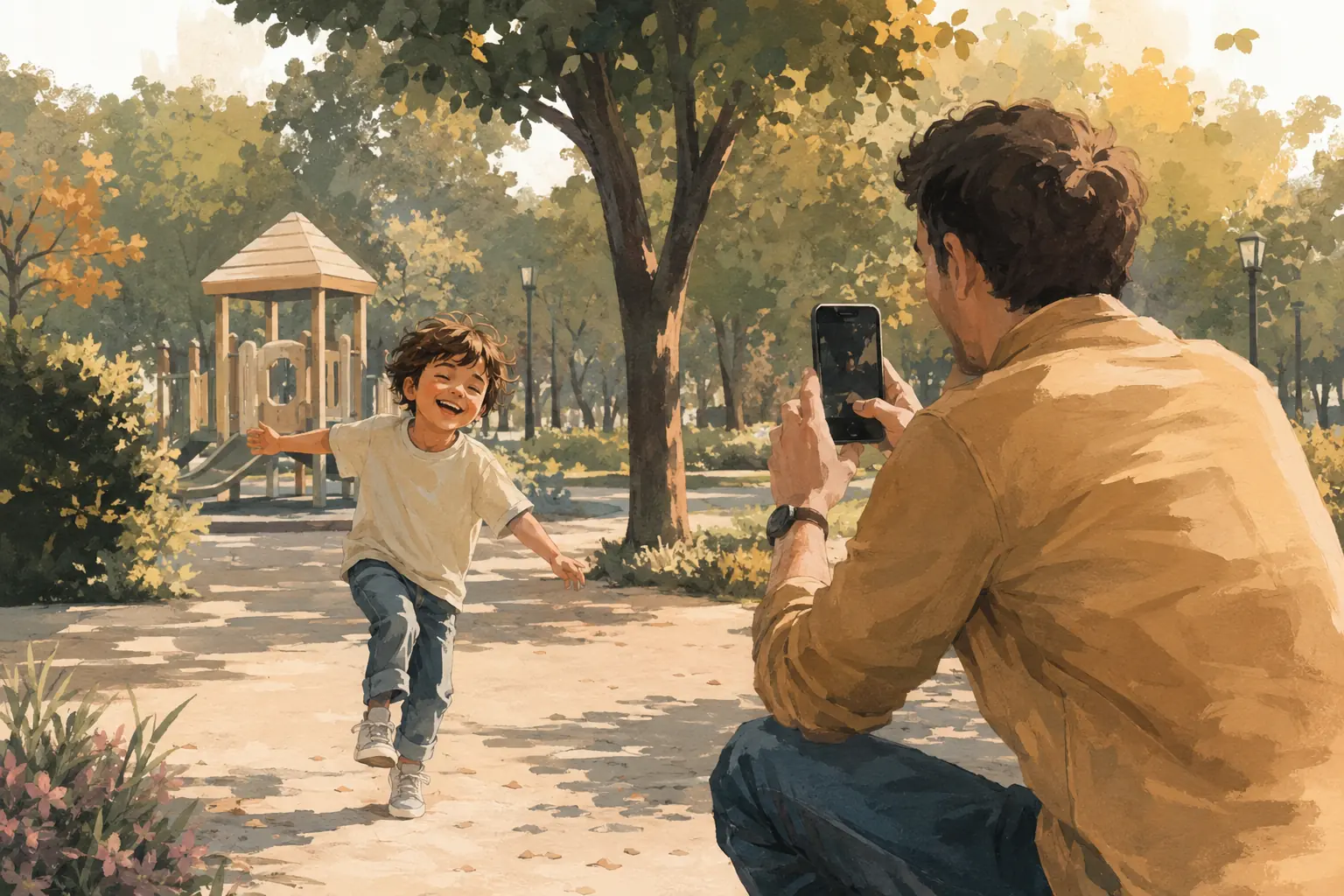
Children cooperate more easily when the process becomes fun. You can ask them to run toward you, hide behind a tree, hug their favorite toy or make a funny face.
These moments often lead to the most natural photos, because the child forgets about the camera and simply lives the moment.
Offer choices, not commands
Young children want to feel that they have a say in what is happening. A simple choice can make a big difference.
For example, instead of saying “go there,” you can ask “would you like to sit on the bench or stand next to the tree?” This way, the child feels involved rather than pressured.
Do not chase the perfect smile
A genuine smile does not appear on command. Instead of constantly asking the child to smile, try saying something funny, making a sound, playing with them or asking them to show you something they like.
Some of the best children’s photos do not include a smile at all. A curious look, a focused moment or a spontaneous movement can be a much stronger image.
Choose the right time
The child’s mood plays a huge role. A photo session when the child is hungry, sleepy or tired is unlikely to go well.
Ideally, the session should take place when the child is rested, has eaten and does not feel that they are missing something more interesting. For outdoor photos, morning or late afternoon usually works better both for the light and for the mood.
Let favorite objects enter the frame
A favorite toy, book, doll or object can be very helpful. The child feels safe and has something familiar to hold or show.
Even if the object seems “out of place” to the parents, it often adds character to the photo and makes the image more personal.
Do not make the process too long
Children have limited patience. A short, pleasant photo session is better than a long effort that ends in frustration.
It is better to take small breaks, change activities and stop before the child becomes completely tired. This keeps the experience positive and makes cooperation easier next time.
Photograph action, not only poses
Children look their best when they are doing something. Running, playing, drawing, dancing, jumping, hugging or exploring a space creates many opportunities for natural images.
Instead of trying to control every movement, follow the child with the camera and observe the moments that happen naturally.
The adults’ attitude matters
If parents are stressed, the child can sense it. When adults pressure, constantly correct or worry too much about the result, the photo session becomes unpleasant.
The most helpful approach is calmness. Fewer instructions, more patience and acceptance that not everything will be “perfect” can lead to much better photos.
What we think
Children’s photography does not need pressure; it needs observation, patience and play. The less we try to force children to pose, the more likely we are to capture images that truly matter.
Frequently Asked Questions
What should we do if the child does not want to be photographed at all?
Do not pressure them. Take a break, change activity and let the camera remain discreetly present until the child relaxes.
Should we ask the child to smile?
Not constantly. A spontaneous smile comes more easily through play, humor or interaction.
How long should a children’s photo session last?
For young children, short shooting periods with breaks are usually more effective than one long continuous session.
Does it help if the child holds a toy?
Yes, especially if it is something familiar and loved. It helps the child feel more comfortable and can make the photos more personal.
What is the biggest mistake in photographing children?
Too much pressure for the perfect pose and smile. Children are photographed best when they move and express themselves naturally.