Summary
At Thessaloniki, Renos Charalambidis explained why an old movie camera, deteriorated film and handwritten notes still matter when making films.
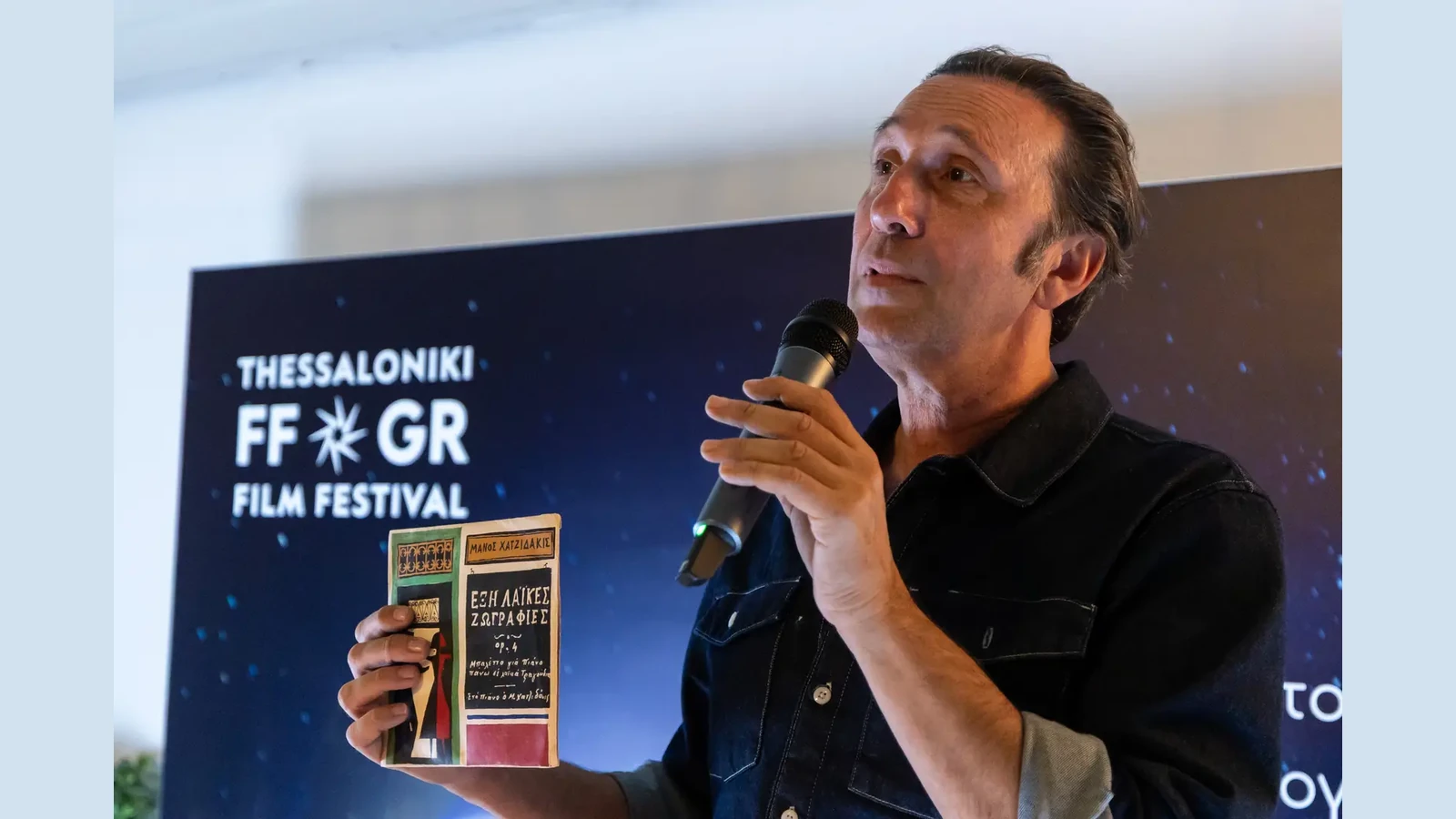
At his “The Analog World Strikes Back” masterclass on November 8 at Ypsilon, part of the 67th Thessaloniki International Film Festival, the director and actor brought personal objects tied to his films and memories. The discussion explored the physical nature of images, memory and the value of imperfection.
The event formed part of a festival featuring 53 Greek films and 19 premieres, including Charalambidis’s “The Classic Masterpiece” among its Greek productions.
“I shoot digitally, I prepare analog”
His defining statement offered a clear account of his approach: “I shoot digitally, I prepare analog.” He did not describe digital and analog creation as mutually exclusive. Rather, working with physical materials during preparation helps him develop his thoughts before filming.
Among the items he brought were a Manos Hadjidakis record from his childhood, a film print of “Cheap Smokes,” an old Polaroid and a handwritten letter from Costa-Gavras. These objects preserve personal history in a form he can physically hold.
A 1992 movie camera and film transformed by time
Charalambidis showed a movie camera he bought in 1992 at a street market in Zografou, Athens. It reappears in “The Classic Masterpiece,” a newer film that reconnects his work with “No Budget Story.”
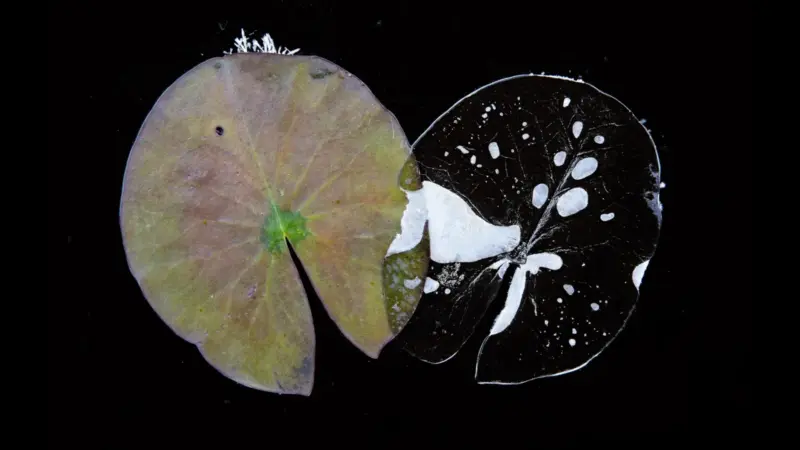
He also revisited old film he had once rejected for technical imperfections. About three decades later, its deterioration had produced unexpected colors and marks that he now valued aesthetically. This was his experience of a particular piece of film, not a general claim that digital post-production cannot achieve comparable imagery.
Handwritten scripts, personal archives and genuine mistakes
He displayed script pages filled with revisions and read passages from “Manual of Cinematic Disobedience,” a small collection of personal notes written in 2013. He described preparation as the work that allows a director to respond to the unpredictability of shooting, rather than eliminate it.
In that context he distinguished imperfections born of lived experience from mistakes deliberately simulated in a digital image. He spoke about his handwriting and spelling errors as marks of individual identity. An old photobooth picture, once dismissed because of an awkward spontaneous expression, became an inspiration for “The Classic Masterpiece” decades later.
He also spoke warmly of screenings from 35mm prints: scratches and wear can become traces of a print’s own history. He ended by encouraging handwritten correspondence, postcards and printed photographs.
What we think
For filmmakers and photographers, the interesting suggestion is not to put down a modern camera. Charalambidis himself shoots digitally. What he keeps analog is part of the process around shooting: note-taking, engaging with archives and making time to prepare before pressing record.
We are accustomed to inspecting images immediately on a screen and often seeing technical faults before anything else. His old-film example offers a useful reminder: an imperfection that is unwanted during production may acquire expressive meaning in a new context. That does not make every poorly exposed shot worthwhile, but it is a reason to look twice before deleting images.
There is also a practical case for keeping an organized archive that includes experiments, notes and rejected takes. An apparently insignificant photograph may become material for another story years later. Printing a few photographs provides another way to encounter them beyond a hard drive.