Summary
- Elliot McGucken sued companies over the alleged use of five photographs on jigsaw puzzles.
- The packages referenced Shutterstock licensing and Karmin copyright.
- A New York judge permitted most claims to proceed.
- No finding of infringement has been made.
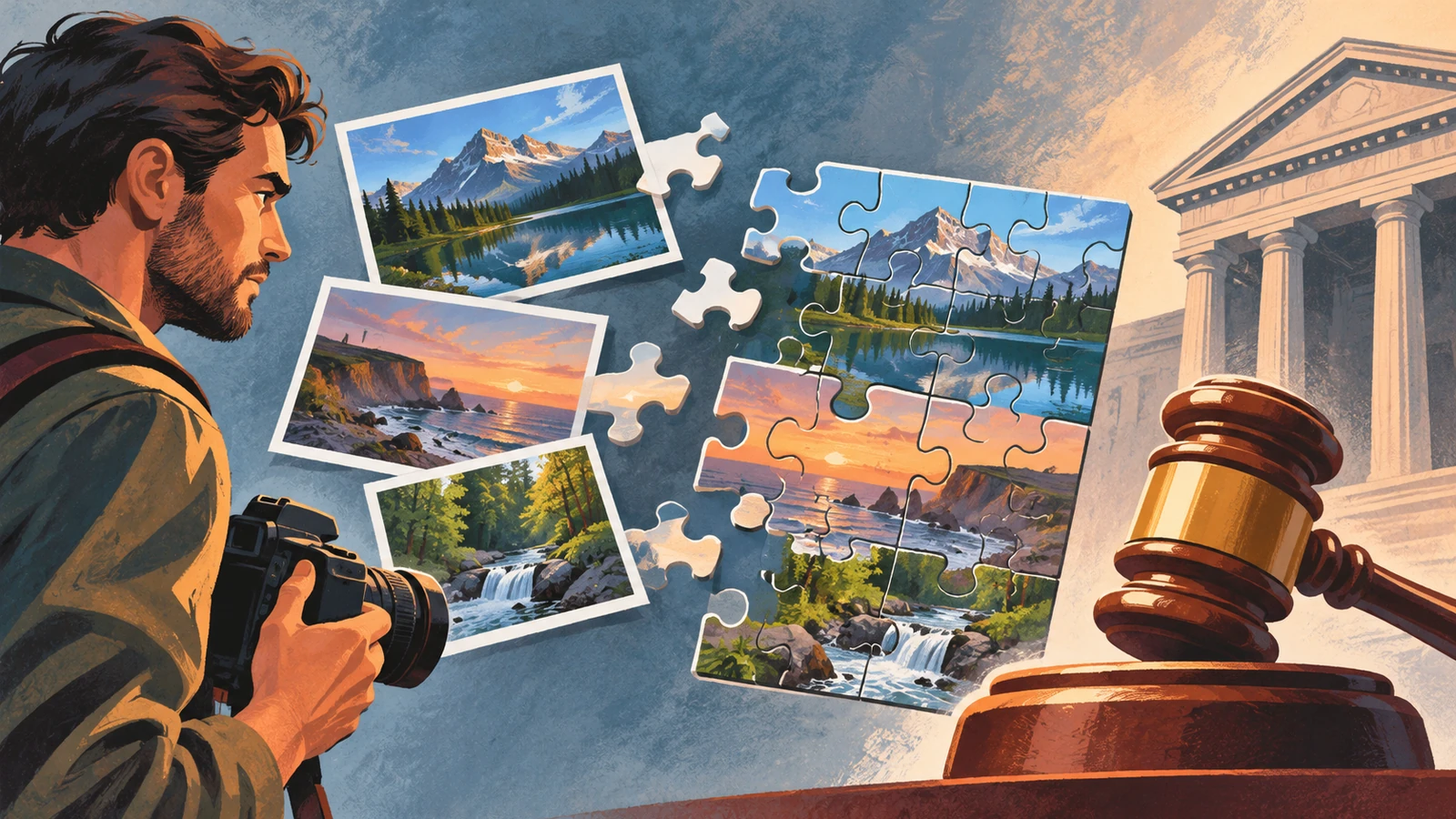
Five landscape photographs turned into commercial jigsaw puzzles are at the center of a U.S. copyright dispute, with photographer Elliot McGucken now allowed to pursue most of his claims.
On November 3, 2026, U.S. District Judge John G. Koeltl in the Southern District of New York largely rejected an effort by 167986 Canada Inc. (Karmin) and Playview Brands to narrow the lawsuit. The ruling addresses whether the allegations may proceed, not whether infringement has been proven.
Five photographs in the Nature’s Beauty puzzle series
McGucken, a landscape and nature photographer, alleges that five of his images were reproduced without permission in KI Puzzles’ “Nature’s Beauty” series. Karmin manufactures and sells the puzzles, while Playview works with the company to market the products under the Karmin International name. The complaint says the puzzles were sold through U.S. retailers.
The packaging stated that the images were used under license from Shutterstock.com, while also displaying “© 2020 Karmin International” and “All Rights Reserved.” McGucken alleges that the images had been offered through the stock platform without his authorization and that the package markings could misleadingly suggest ownership of his photographs.
According to the court document, Playview’s Instagram account promoted one of the puzzles on July 20, 2023. McGucken also alleges that identifying copyright information was removed and that sales continued following Shutterstock notices to customers. Those allegations remain matters for litigation.
What the court allowed to proceed
The defendants sought dismissal of secondary-liability and Digital Millennium Copyright Act (DMCA) claims, and asked the court to strike requests for damages. The direct copyright infringement claim was not challenged in that motion.
The judge permitted the vicarious infringement and DMCA copyright-management-information claims to proceed. He also declined to strike requests for statutory and enhanced damages and attorney’s fees. The contributory infringement claim was dismissed after the photographer stated that he would no longer pursue it.
The dispute over Shutterstock licensing and copyright information will be addressed in later proceedings. The November 3 order does not determine liability or award damages.
Why this matters to photographers
Obtaining an image through a stock platform does not remove the need to verify where the rights came from and what the license covers. Once a photograph becomes part of a physical retail product, license scope, provenance and copyright notices carry direct commercial consequences.
Questions about copyright ownership and licensing also arise in the photographer’s dispute with Getty over copyright assignment contracts. Likewise, the lawsuit over a cartoon based on a photograph highlights how photographic work can be adapted into a different commercial format.
What we think
For a photographer, discovering an image printed on a commercially sold puzzle is a very different matter from seeing a casual repost. That photograph has become part of a product generating revenue. Its use deserves an identifiable, appropriately scoped license—not just a generic mention of a stock website.
What makes this dispute particularly notable is the combination of a Shutterstock licensing statement, the company’s own copyright notice on the packaging, and the allegation that creator information was removed. A properly documented licensing chain should establish who granted which rights, when, and for what uses.
For photographers licensing their work, keeping original files, publication records, contracts, and license histories remains a practical precaution. If a dispute surfaces years later, those records are worth far more than a vague recollection of where an image was uploaded.