

Summary
- A photographer has sued a Utah coffee shop over the commercial use of a cartoon based on one of his photographs.
- The case focuses on whether the illustration remains substantially derived from the original image.
- The outcome could influence future copyright disputes involving adapted photographs.
A new lawsuit in the United States is putting the limits of photographic copyright protection back in the spotlight.
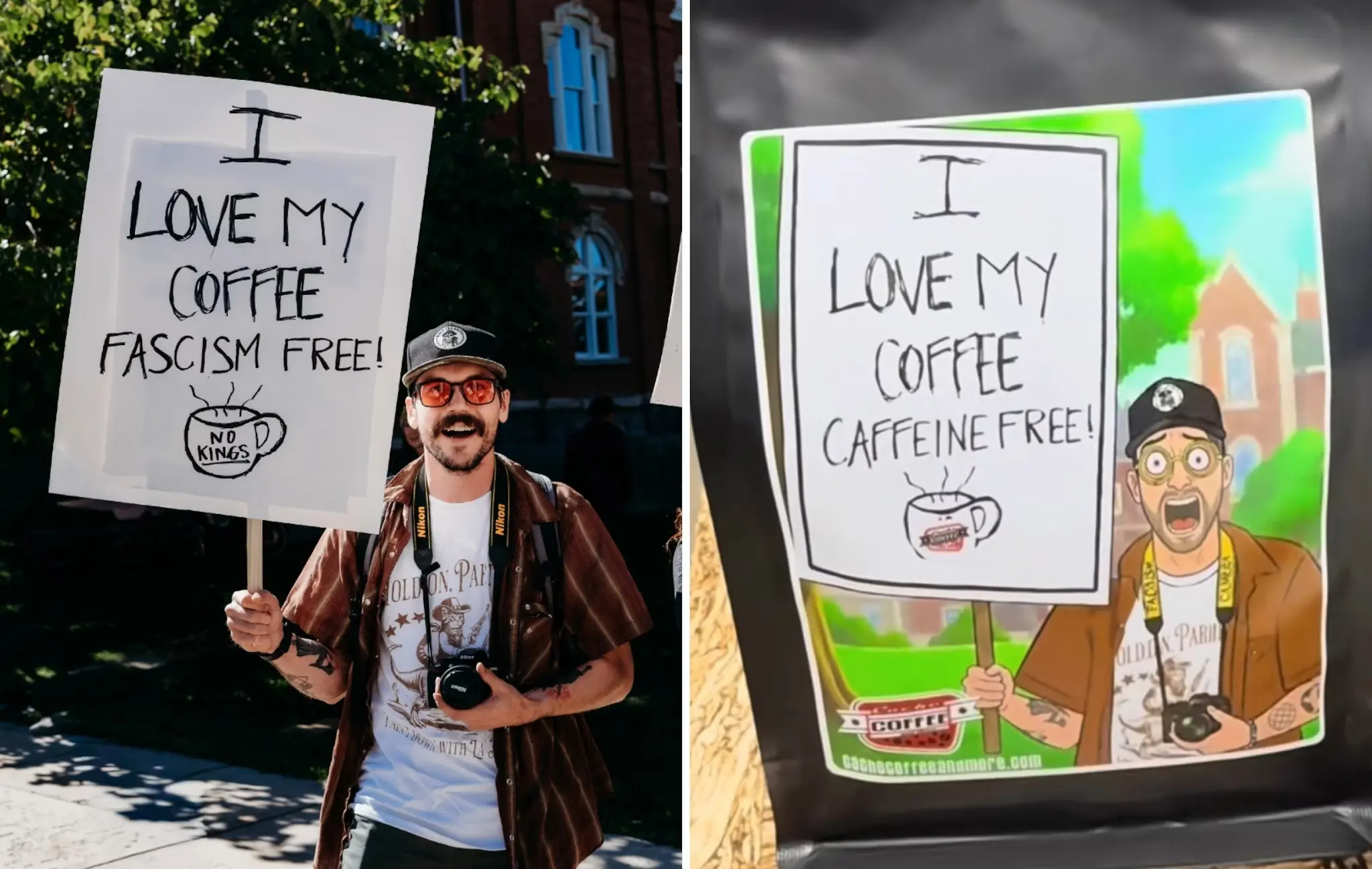
A professional photographer has sued Utah-based Cache Coffee and More, alleging that the company used one of his protest photographs without permission by turning it into a cartoon illustration for coffee labels, cups, and merchandise. According to the complaint, the original image served as the basis for the commercial artwork.
The lawsuit raises an important legal question: whether converting a photograph into a cartoon creates a sufficiently new work or whether it still infringes the photographer’s copyright. The outcome could have broader implications for photographers, illustrators, and commercial image licensing.
The Photographer’s Claims
According to the complaint, the photographer requested that the company stop using the image on social media. While some content was reportedly removed, he alleges that the business continued using a cartoon version of the image on commercial products.
The lawsuit seeks statutory damages and alleges willful copyright infringement.
The Legal Question
The court will determine whether the cartoon is sufficiently transformative or whether it remains substantially based on the protected photograph.
U.S. copyright law evaluates these issues case by case, considering similarity, purpose, and commercial use.
Why It Matters
The case highlights that altering the appearance of a photograph does not automatically eliminate copyright concerns.
The final decision may become an important reference for future disputes involving illustrations, AI-generated adaptations, and derivative visual works.
What We Think
This case reminds photographers that significant visual modifications do not necessarily eliminate copyright protection. As AI-assisted image creation becomes increasingly common, similar legal disputes are likely to become even more important.
Frequently Asked Questions
Who filed the lawsuit?
A professional photographer who claims his work was commercially used without permission.
What did the coffee shop allegedly use?
A cartoon version of one of his photographs on coffee-related merchandise.
Does a cartoon automatically avoid copyright infringement?
No. Courts evaluate each case based on its specific facts.
Why is this important?
Because the ruling may influence future copyright cases involving adapted photographs.