Summary
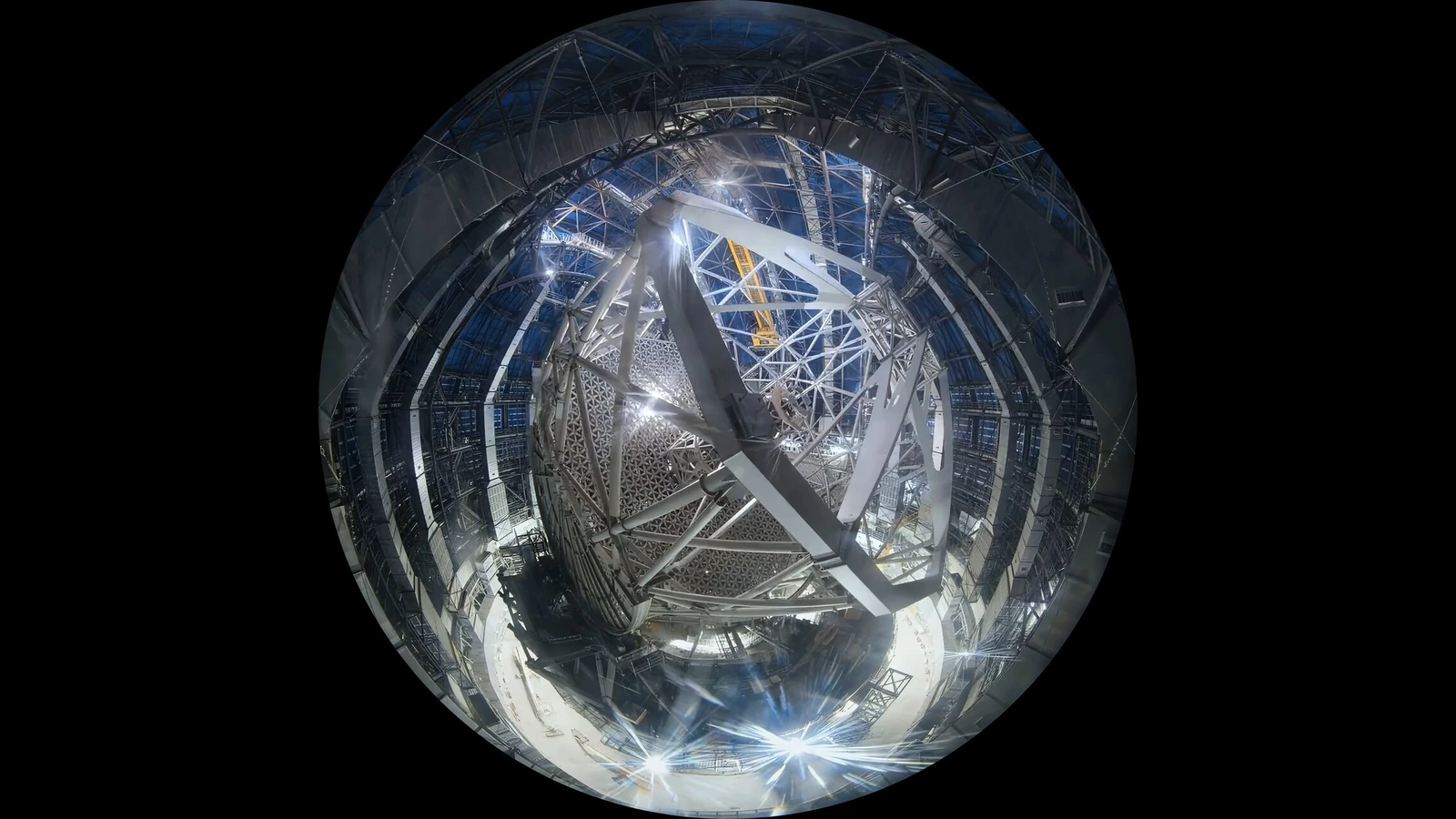
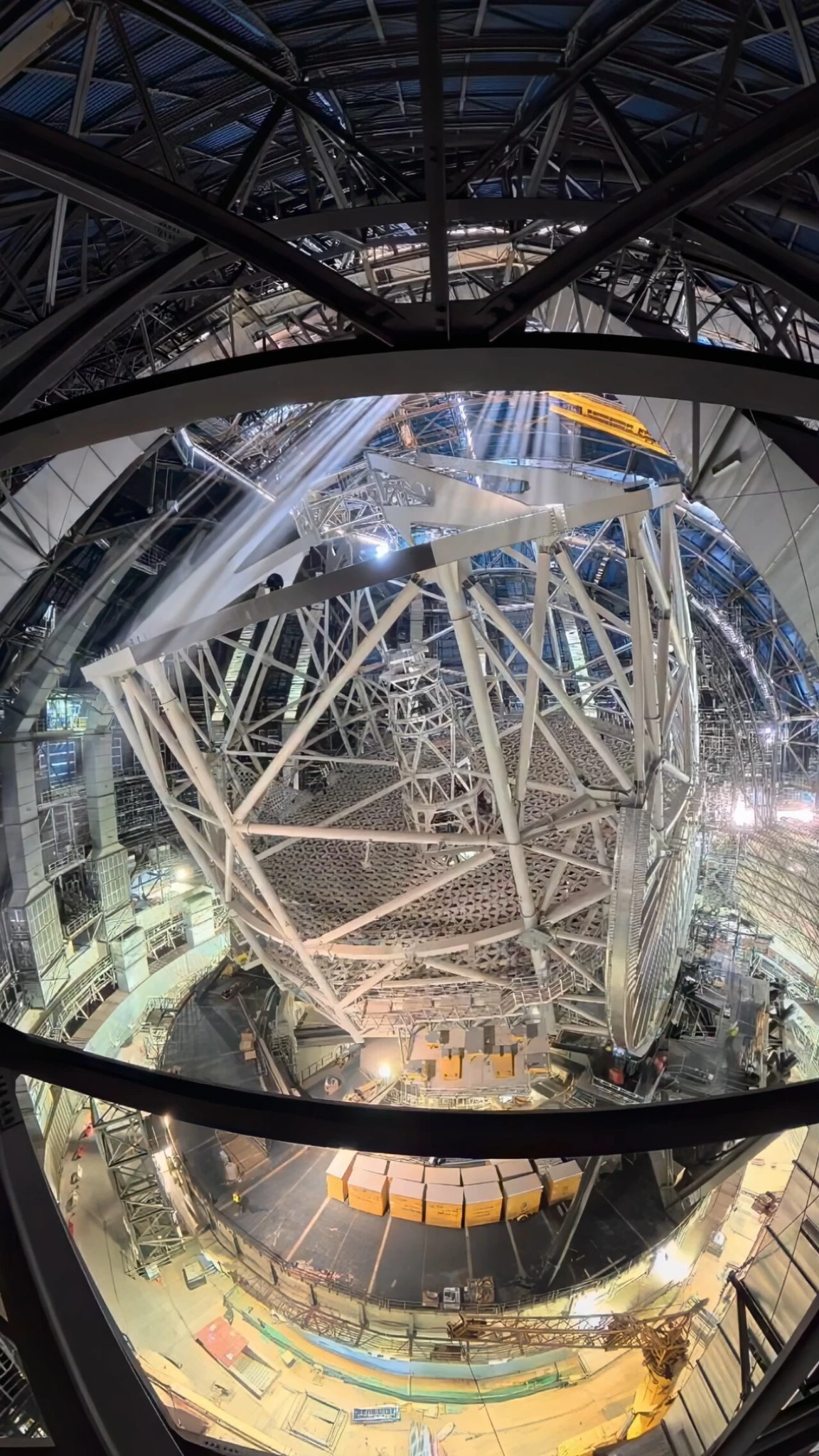
An almost 2,000-tonne steel structure has moved around its horizontal axis for the first time, as ESO’s Extremely Large Telescope (ELT) passed a major test in Chile.
The test took place in October 2026 and was presented by the European Southern Observatory (ESO) on 26 October. The footage shows the enormous framework that will carry the telescope’s mirrors tilting in a controlled motion before returning to its upright position.
ESO’s official time-lapse documents the test and the movement of the structure.
https://www.eso.org/public/videos/potw2643a/
How almost 2,000 tonnes of steel were moved
The remarkable part is not just the weight but how the structure moved. The ELT team lifted it onto hydrostatic bearings: the sliding surfaces do not touch directly because an exceptionally thin film of pressurised oil separates them, minimising friction.
In this initial test, the oil film was about 120 micrometres thick—just 0.12 millimetres. ESO says it will be reduced to about 80 micrometres in the future. This arrangement lets such a massive structure move smoothly while retaining the stiffness it requires.
Why the ELT must move on two axes
The ELT needs to rotate in azimuth to face different directions along the horizon and also change its elevation to follow celestial targets across the southern sky. Rotation around its vertical, azimuth axis had already been tested successfully a few months earlier. The new test concerns the horizontal, altitude axis, which tilts the structure up or down.
Roberto Tamai, ELT Programme Manager, described the first movement as a gentle oscillation of a few centimetres around the balanced position. It is a telling detail: before attempting large movements, engineers verify that such an enormous structure responds predictably even to small adjustments.
A telescope with a 39-metre primary mirror
The structure being tested is designed to carry the ELT’s five mirrors, including a 39-metre primary mirror. The telescope is under construction on Cerro Armazones in Chile’s Atacama Desert and is designed to capture exceptionally faint and distant objects in fine detail.
The Atacama site was chosen for its excellent observing conditions. Even there, however, bright satellite trails crossing the night sky are becoming a serious challenge for the world’s most advanced ground-based observatories.
What we think
Anyone who has tried to keep a large telephoto lens perfectly steady can appreciate why this test matters. We are talking about a structure weighing thousands of tonnes that must change direction with control and precision, without mechanical flex undermining the very observations it is built to make.
What makes the time-lapse compelling is that it reveals the engineering work usually hidden behind spectacular astronomy images. Long before light reaches a scientific detector, the instrument needs a mechanical foundation precise enough to make the observation possible. That 120-micrometre oil film is a great reminder that a massive technical achievement can depend on a remarkably tiny distance.
For photographers and time-lapse filmmakers, ESO’s footage also offers a useful visual storytelling lesson: showing the same scene from different viewpoints makes the scale and motion of a subject much clearer than a single still photograph can.