Summary
- Photographer Pipo Nguyen-Duy and his wife were found dead in Ohio on October 28, 2026.
- He had fled Vietnam as a refugee in 1975.
- He taught at Oberlin College from 1998 and received a Guggenheim Fellowship in 2011.
- His work examined war, identity, and memory.
Pipo Nguyen-Duy, the photographer and Oberlin College professor whose work explored memory, identity, and the lasting impact of war, was found shot dead alongside his wife in Ohio on October 28, 2026.
He was 64. Having arrived in the United States as a refugee from Vietnam, Nguyen-Duy became a distinctive voice in contemporary photography, exhibiting internationally and receiving a Guggenheim Fellowship.
What happened in Oberlin
Oberlin police found Nguyen-Duy and his wife, Trần Thị Nam Phong, 56, dead at their home on October 28. Both had suffered multiple gunshot wounds.
Authorities announced the arrest of the photographer’s adult child and the filing of murder-related charges. The criminal case remained ongoing at the time of publication.
Oberlin College president Carmen Twillie Ambar paid tribute to a beloved professor and to his impact on students and colleagues. The college established an online remembrance space, while works by the artist are on display at the Allen Memorial Art Museum.
From the Vietnam War to photography
Nguyen-Duy was born in 1962 in Huế, Vietnam, near the demilitarized zone. He grew up hearing gunfire and left for the United States as a political refugee in 1975, when he was 13. That experience profoundly shaped his later exploration of what it means to call a place home.
Before committing himself to photography, he studied economics, lived in New York City, and worked in several different jobs. He later studied photography at the University of New Mexico. He had taught art and photography at Oberlin College since 1998 and received a Guggenheim Fellowship in 2011.
The photographic series that defined his work
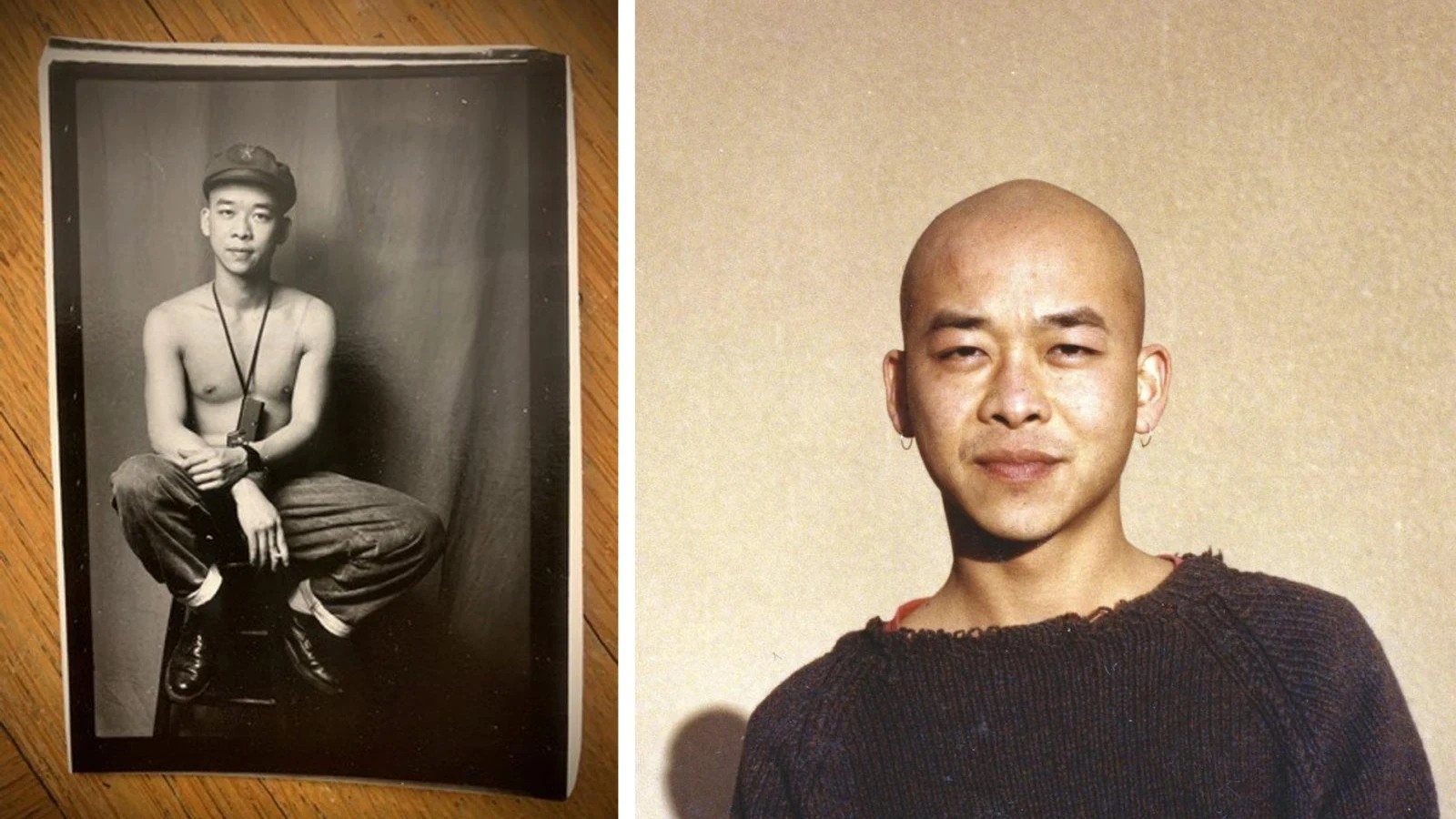
In AsSimulation (1995–1998), Nguyen-Duy created staged black-and-white self-portraits that drew on the visual language of Renaissance and Baroque art. He used his own likeness to explore race, gender, and the uneasy experience of cultural assimilation.
(My) East of Eden took him back to Vietnam. Children, landscapes marked by war, and carefully staged scenes form an account of loss, survival, and the possibility of renewal. Rather than illustrating history, these photographs confront what history leaves behind.
Images of the Vietnam War also survive in collective memory through photographs such as Sal Veder’s “Burst of Joy”, which captured an American prisoner of war returning to his family. Nguyen-Duy turned his camera toward another side of that history: the place where he grew up and the people living with its consequences.
For Hotel Window (2016–2019), he observed a street in Ho Chi Minh City from his hotel room, working with a camera mounted on a tripod. Moving away from carefully staged pictures, he adopted an insistent, almost daily form of observation in an attempt to reconnect with the country of his birth.
His personal photography archive and the CLAMP gallery’s overview of his series offer a meaningful way to discover his work beyond the news of his death.
What we think
It is difficult to read that a photographer who grew up with the sounds of war died in such a violent way. Harder still is the thought that a lifetime of creative work might be reduced to the details of a police report.
Pipo Nguyen-Duy had far more to say through his pictures. He returned to a country he had left as a child, worked with self-portraiture and staged scenes, and later simply positioned himself behind a window to watch. These different approaches reveal a photographer who never settled for one recognisable style but kept searching for ways to speak about identity and memory.
That is what deserves to endure: his photographs and the people he taught to look more carefully.