Summary
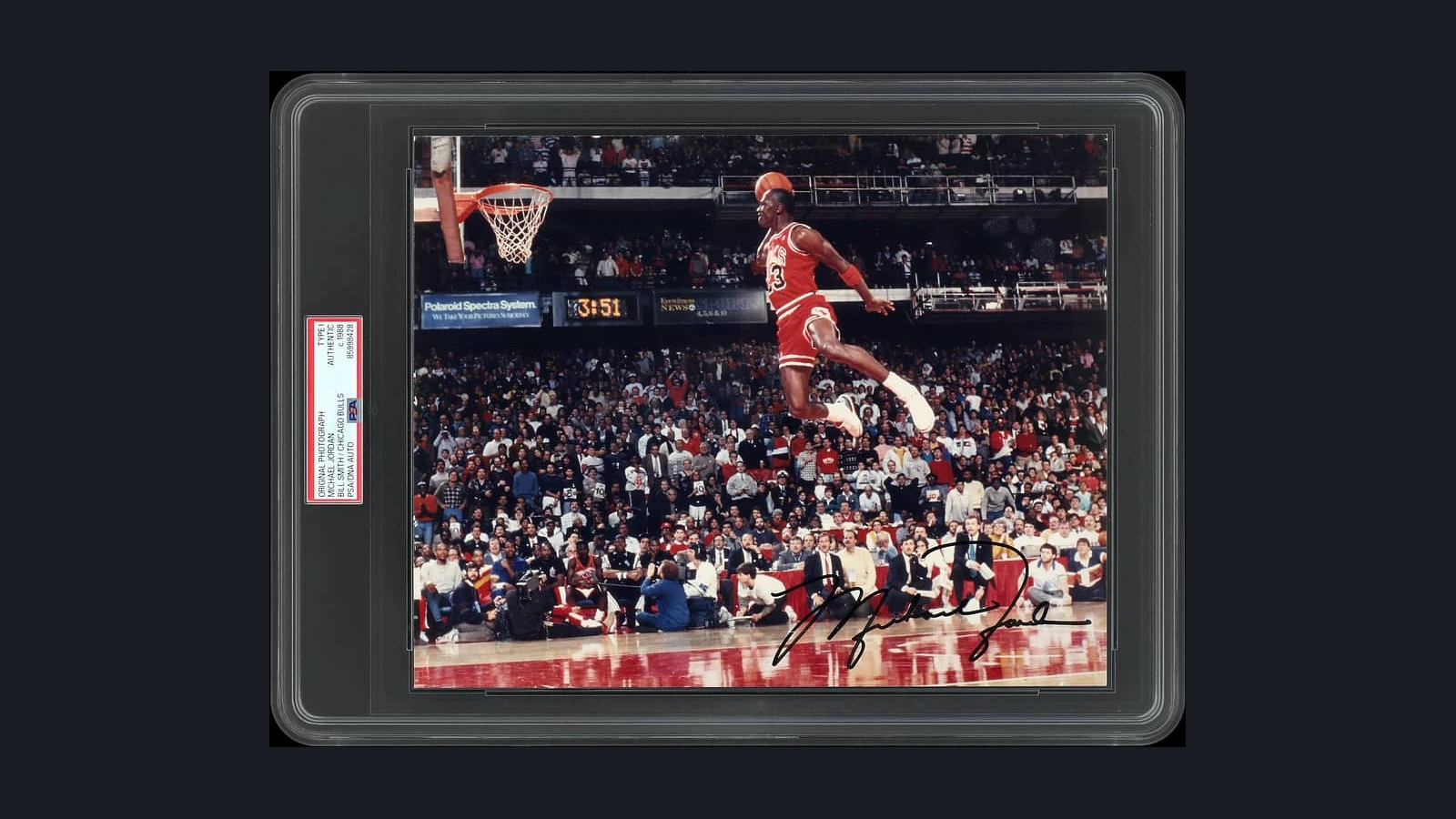
- Goldin is auctioning an original signed print of Bill Smith’s photograph of Michael Jordan’s 1988 dunk.
- The print is certified PSA/DNA Type I and is linked to the 1989 Nike Flight Camp.
- Smith used a Canon camera, a 50mm lens and strobes, giving him essentially one chance to capture the moment.
- The image highlights the importance of positioning and timing in sports photography.
One of basketball’s most recognizable moments is back in the spotlight: an original signed print of Bill Smith’s photograph of Michael Jordan’s legendary 1988 dunk is heading to auction.
On February 6, 1988, at Chicago Stadium, Jordan launched from the free-throw line during the NBA Slam Dunk Contest. Chicago Bulls photographer Bill Smith was positioned near the court and caught him airborne, with the hoop and the stands giving the frame an extraordinary sense of distance and height.
A signed print with a documented history
The item is an 8×10-inch photographic print signed by Jordan and certified by PSA/DNA as Type I. Goldin says only three PSA-certified Type I prints of this particular photograph are known. Type I means a print made from the original negative within approximately two years of the exposure; it does not automatically mean a one-of-a-kind print.
The print has provenance linked to Nike’s 1989 Flight Camp and is accompanied by a related brochure. Goldin notes light scratches on the surface, an important detail when assessing the collectible’s condition. The photograph is lot #2 in the company’s Fall Photography Auction, with extended bidding beginning on November 5, 2026 at 03:00 UTC. The live bid price may change while the auction is underway.
A Canon, a 50mm lens and one chance
Smith had watched Jordan practise and knew he might attempt the free-throw-line dunk, but not exactly when. He chose a sideline position between the hoop and the foul line, slightly closer to the basket. His intention was to make the distance Jordan travelled visible, rather than merely photograph him jumping.
He used a Canon camera with an ordinary 50mm lens and strobes installed high above the court. The flashes needed time to recycle, ruling out rapid-fire exposures. He had to anticipate the movement and release the shutter at precisely the right moment. The film was processed later at a 24-hour lab; only then did he discover he had captured the frame he wanted.
The same dunk, different photographers
Smith’s frame should not be confused with the famous picture made by Walter Iooss Jr. from another position on the court. Walter Iooss’s view of the 1988 dunk offers another interpretation of the same instant: move the camera and the visual story changes.
Another iconic Jordan image was made by Jacobus Rentmeester and later became central to the photography and Nike legal dispute. It is a different image from the 1988 dunk, but a reminder of the complicated relationship between photography, authorship and commercial symbols. Jordan’s photographic history also includes Fernando Medina’s image of the final shot in 1998.
What we think
What makes Bill Smith’s photograph so effective is how clearly it conveys movement. We can see the space between Jordan and the basket, his body suspended almost horizontally above the floor and the crowd completing the scene. A different camera angle would tell a very different story of the same dunk.
For photographers, the compelling detail is how little room there was for a burst of frames and picking the winner later. A 50mm lens, a carefully chosen position, an understanding of the sport and exact timing. It is a reminder that preparation can matter more than an elaborate kit.
The auction brings another dimension into focus: the image familiar to millions is not the same thing as this specific physical artefact, with its provenance, signature, wear and certification. These details are what collectors evaluate when a sports photograph moves from the court and the magazine page into the market for historical prints.