Summary
- Jerry Gay died on October 14, 2026, aged 79.
- He won the 1975 Pulitzer for a photograph of four exhausted firefighters.
- He worked for newspapers across the United States and published a photography book in 2010.
- He remained committed to film and human-centered reporting.
Jerry Gay, the photojournalist who won a Pulitzer Prize for capturing four exhausted firefighters, died on October 14, 2026, aged 79.
Gerald H. “Jerry” Gay left decades of photojournalism, one exceptional black-and-white image, and an approach to reporting that placed people at the heart of every story.
Who was Jerry Gay?
He grew up in Lynnwood, Washington. He became interested in photography and black-and-white darkroom work as a child, delivered the local Daily Herald newspaper and worked on his school newspaper. He graduated from Edmonds High School in 1964.
Gay attended the Brooks Institute of Photography in California but left before graduating to pursue journalism. He joined The Seattle Times in 1972, where he would make the photograph that gained international recognition.
His career extended far beyond Seattle, including newspaper work in Everett, Los Angeles, New York, Minnesota and Hawaii. He later returned to Washington community journalism, photographing everyday residents for Robinson Newspapers.
The photograph that won the Pulitzer
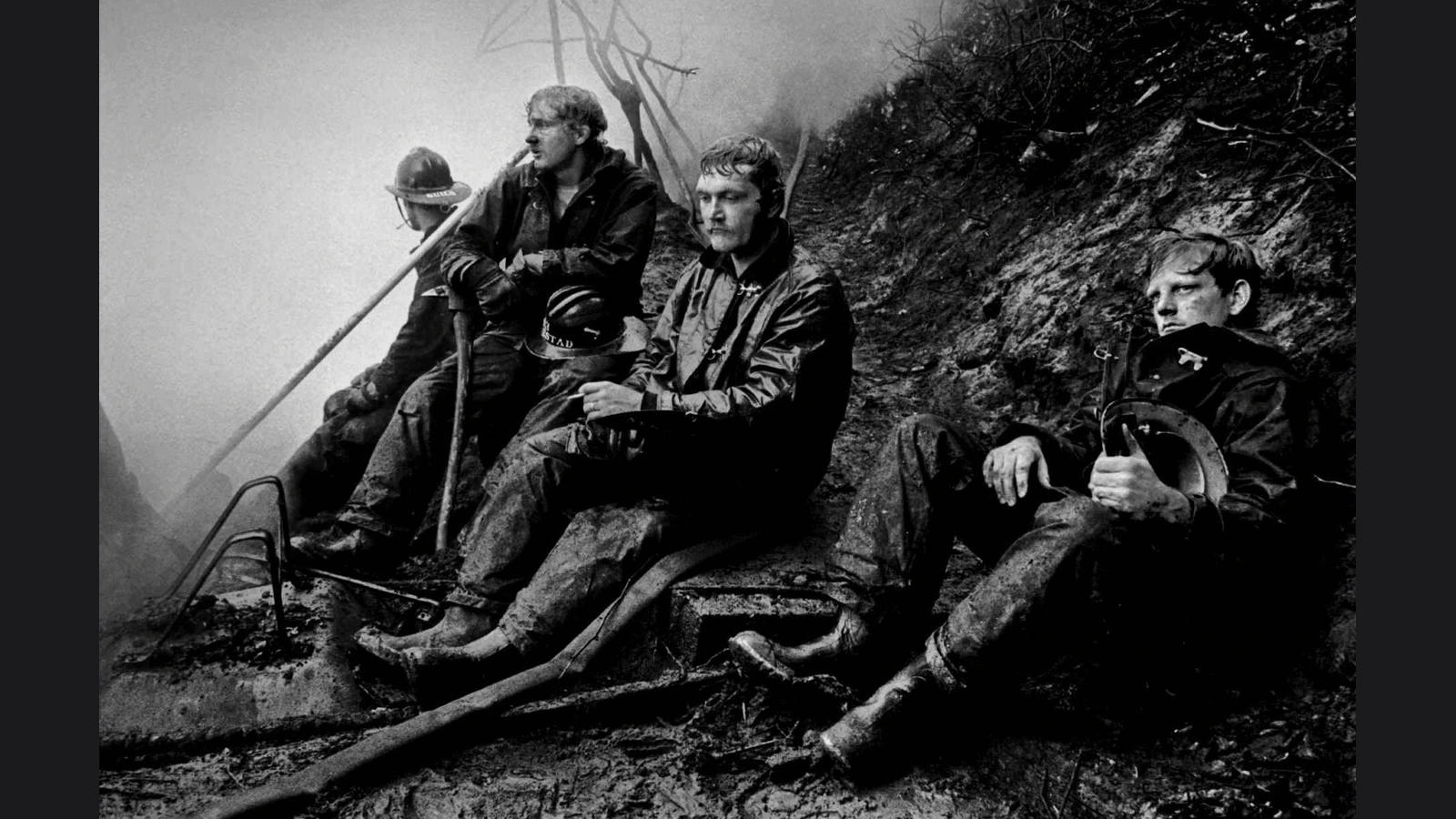
On October 11, 1974, Gay arrived at a house fire in Burien, near Seattle. Much of the emergency had passed. Instead of photographing flames, he noticed four exhausted volunteer firefighters sitting in the mud with smoke hanging behind them.
He exposed only a handful of frames. “Lull in the Battle” contains no heroic pose and no spectacular action: only men recovering from an ordeal. Published in The Seattle Times, it won the 1975 Pulitzer Prize for Spot News Photography, the newspaper’s only Pulitzer in photography.
The composition evokes images of soldiers after combat. The firefighters, mud, hoses and heavy smoke convey physical and emotional fatigue without showing the fire itself.
His wider career and book
Gay continued producing portraits, everyday scenes and major news coverage. His work included photographs of serial killer Ted Bundy in a Colorado jail in 1977; one memorable frame emphasized the chains around Bundy’s ankles from a low viewpoint.
In 2010 he published “Seeing Reality: Humanity, Humility and Humor,” a collection from his photographic travels across the United States, attentive to humor, dignity and ordinary lives. He remained committed to film and darkroom printing even as newspapers embraced digital photography.
Colleagues recall a photographer willing to break away from a crowd of press photographers to notice a human detail. His family retains negatives, slides and publications and hopes to archive and digitize the material.
A lasting legacy in photojournalism
Photography continues to receive major recognition through events such as the 2026 Pulitzer photography awards. Gay’s work returns us to something enduring: photography’s power to make a seemingly overlooked moment matter.
What we think
Jerry Gay’s picture is a lesson in where to point the camera when the “big story” appears to be over. He arrived too late for the flames, yet precisely in time to show the human cost of fighting them.
For those of us photographing news, the lesson is practical. Do not chase only the obvious frame. Look around, notice reactions, respect your subjects and pay attention to what unfolds at the edges of the event.
What makes this particular photograph so strong is that Gay did not need to stage anything. The body language and expressions do the work. That is why the image still holds up more than half a century later.