Summary
- Rian Johnson teamed up with Steve Yedlin and Eric Cameron to create Chromagraph Camera.
- The app starts from RAW data and uses its own color and texture processing.
- It offers non-destructive adjustments while preserving the originals.
- It is a one-time iPhone purchase and does not record video.
Knives Out director Rian Johnson has brought the cinematic image aesthetic of his films to an iPhone photography app that processes RAW data rather than simply adding a filter.
Chromagraph Camera was created with his longtime cinematographer Steve Yedlin and programmer Eric Cameron. It launched on October 20, 2026, and attracted wider attention after Johnson publicly introduced it later that month.
The Knives Out image aesthetic comes to iPhone
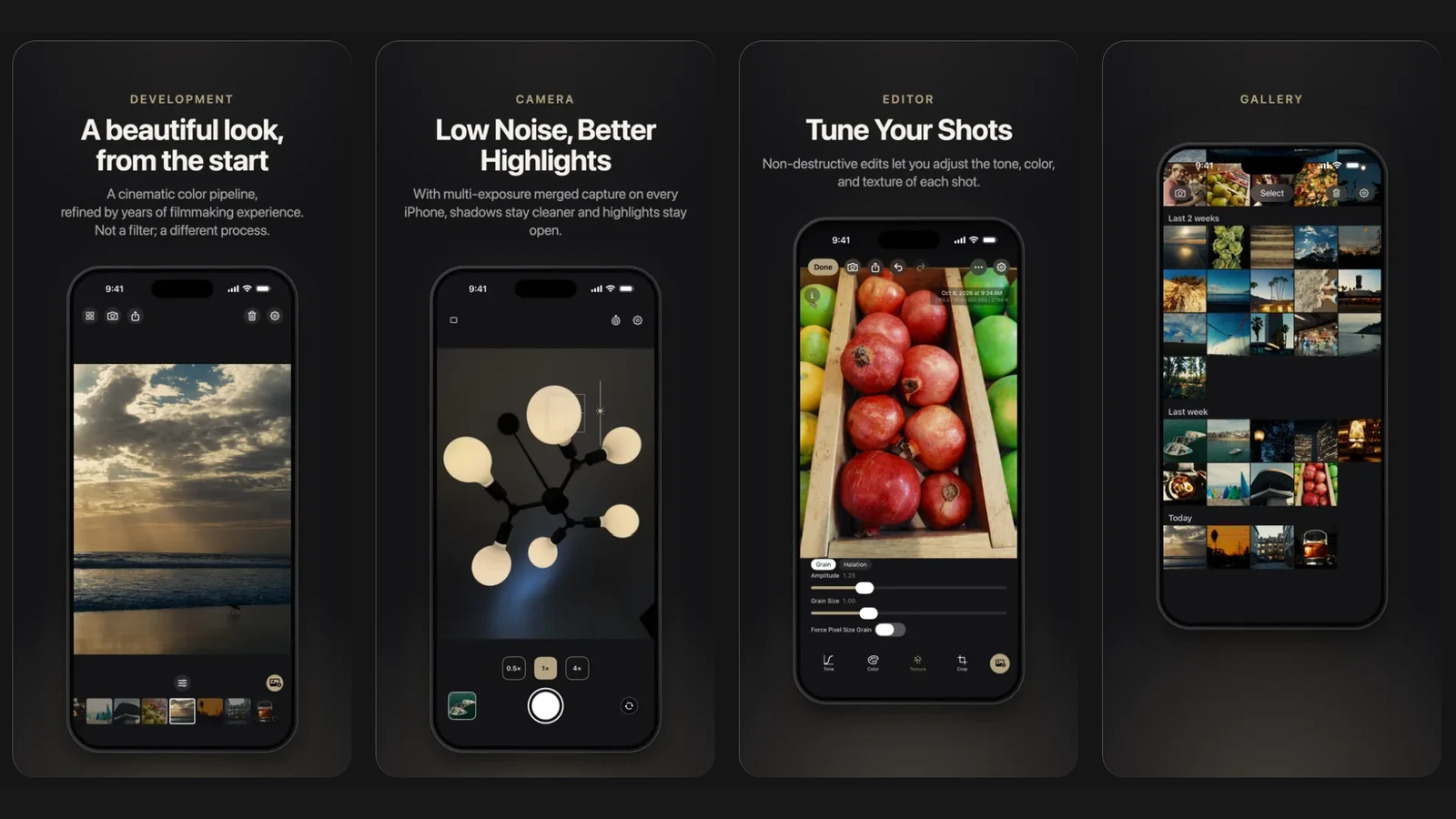
The idea is different from conventional apps built around film presets. Chromagraph takes raw camera data and uses its own processing for tone, color and texture. Its creators say the rendering draws on Yedlin’s color-science approach in Johnson’s films.
That means the signature look is established as the finished image is rendered, rather than layered over an already processed Apple JPEG. For context, the way smartphones build and process photographs before we see them helps explain why this distinction matters.
RAW capture, dynamic range and creative image development
On compatible iPhones, the app uses merged exposures to reduce noise, retain shadow information and protect highlights. The finished look is not shown directly in the viewfinder; photographers see the processed result in the app gallery after capture.
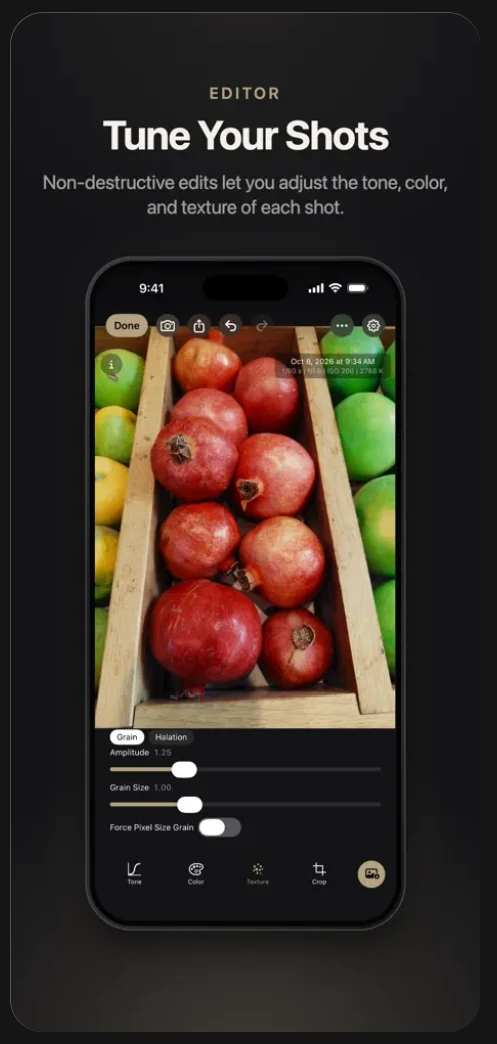
Original RAW files remain in the internal gallery and edits are non-destructive. Controls include color, tone, texture, grain and halation, the glow around strong highlights. Finished photographs can be exported as JPEG or HEIC with the adjustments applied.
The approach is part of a wider shift toward alternative RAW rendering on phones, also seen in Halide Mark III and its photographic Looks. Chromagraph, however, is built around one carefully chosen core aesthetic rather than a large library of unrelated film simulations.
Pricing, availability and limitations
Chromagraph Camera is available on the App Store as a one-time purchase priced at $12.99 in the United States. It requires iOS 17 or later and captures still photographs only: there is no video mode. Individual camera availability depends on RAW capture support on each iPhone.
More information here.
What we think
What makes this interesting is that Johnson and Yedlin did not set out to build another app with dozens of effects. They took a deliberate approach to color and cinematic images and brought it into the capture process. For photographers who use an iPhone seriously, having a say in that rendering instead of accepting the phone’s default look is a practical benefit.
We would want to see how it handles demanding scenes: skies with hard highlights, faces in shadow, and night shots with bright light sources. Those are the conditions where smooth tonal transitions and believable texture matter as much as an attractive color palette. Keeping the RAW originals and offering non-destructive editing are particularly valuable if you plan to revisit a photograph later.
There is also a clear creative choice that will not suit everyone. The curated aesthetic is built into the app, and you do not see the final rendering before pressing the shutter. Photographers looking for a neutral starting point or a wide range of unrelated looks may prefer a different tool.
Frequently asked questions
Can Chromagraph Camera shoot video?
No. The app is designed exclusively for still photography.
Does it simply apply an iPhone photo filter?
No. The developers say it starts from RAW data and builds its own rendering of color and texture rather than adding a filter to Apple’s already processed image.
Does it require a subscription?
No. It is sold as a one-time App Store purchase.