Summary
- Darth Vader’s original lightsaber sold for nearly five million dollars.
- Its hilt was fashioned from a British Microflash camera flash attachment.
- The prop was used in two Star Wars films. Distinctive wear helped match it to production images and footage.
A genuine Darth Vader lightsaber built from a photographic flash attachment sold for $4,875,000, setting a new auction record for any Star Wars collectible.
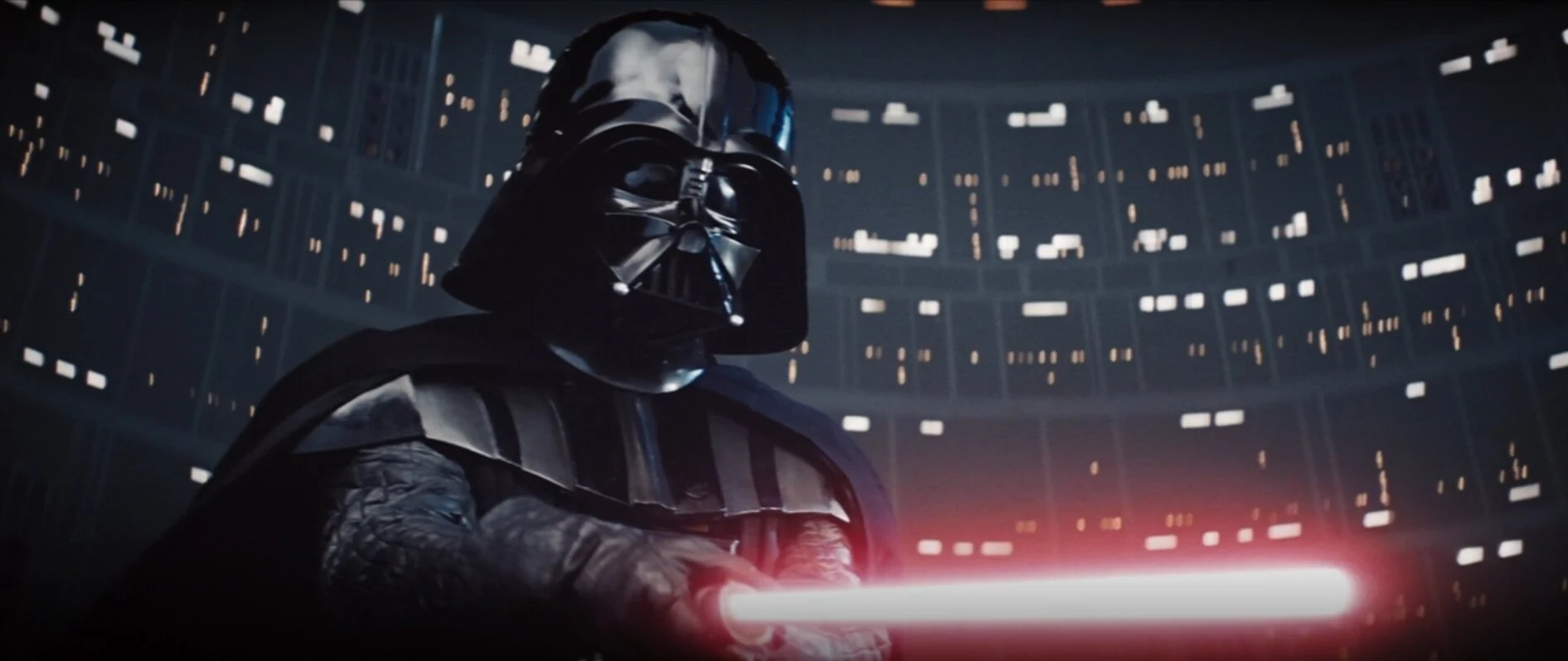
Heritage Auctions sold the prop on November 12, 2026. It was used during the duels in The Empire Strikes Back (1980) and Return of the Jedi (1983), and its photographic origins make the story especially compelling.
From an M.P.P. Microflash camera flash to Darth Vader’s weapon
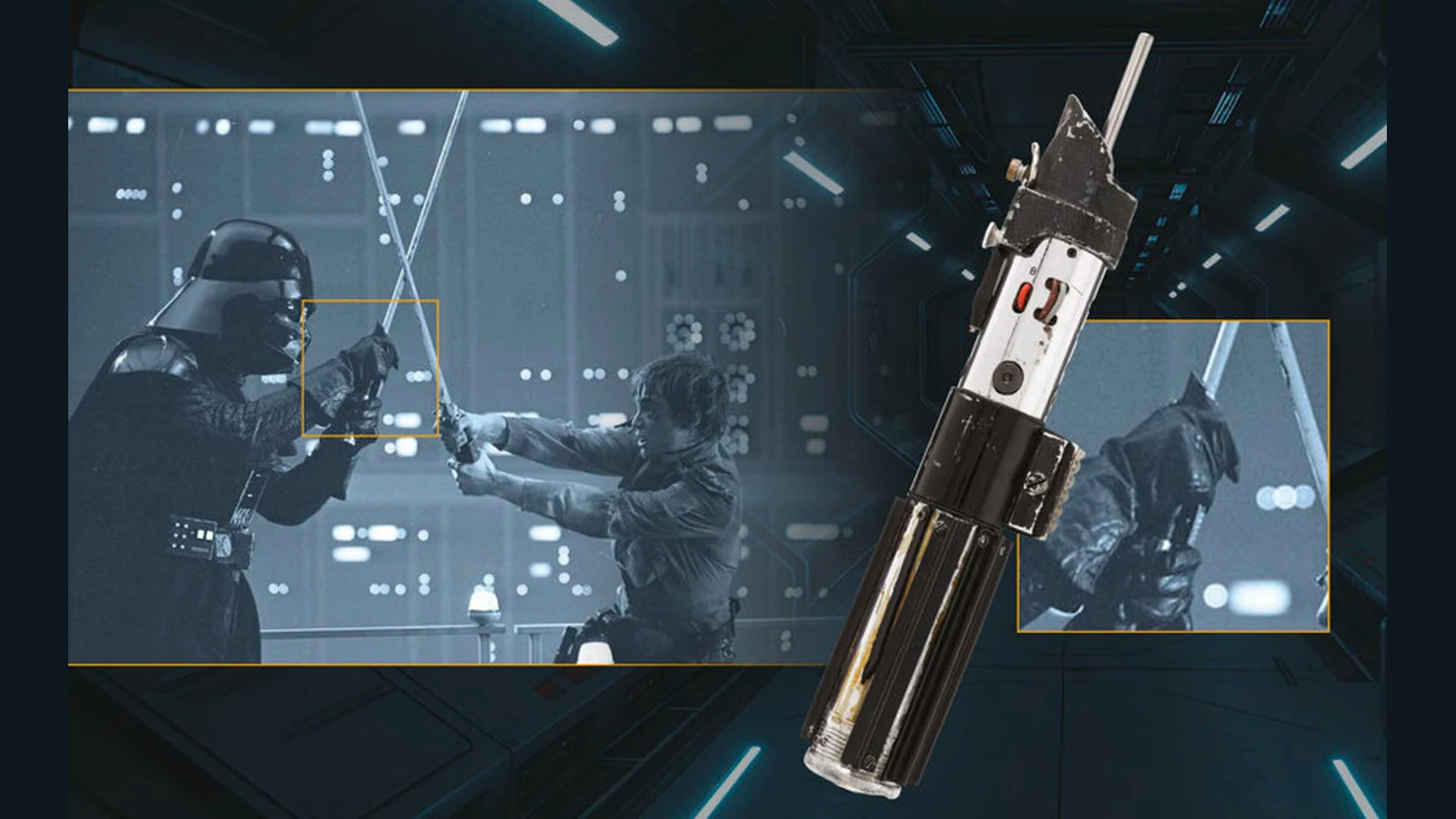
The hilt was not manufactured from scratch as a piece of science fiction technology. The prop makers adapted a British M.P.P. (Micro Precision Products) Microflash camera flash attachment from the 1950s, retaining key elements of its original metal construction.
They added seven black T-track grips, calculator magnification bubbles inside the clamp, decorative wiring and a D-ring to hang it from Vader’s belt. Turning a photographic accessory into one of cinema’s most recognizable objects is a striking example of resourceful practical prop design.

Built to withstand real on-set duels
This was not merely a decorative hilt. For the action scenes, the crew inserted two solid aluminum cylinders and fittings to secure the blade rod. Interchangeable wooden blades were used during filming. Some initially carried reflective Scotchlite material as a reference for the glowing visual effect, while later versions were painted white.
David Prowse and Olympic fencer and stunt performer Bob Anderson played Vader in the relevant sequences. The combat placed considerable stress on the props, so grips that had originally been glued in place were later reinforced with screws. Scratches and other wear now provide valuable clues for identifying the object.
How the prop was matched and the record it broke
The identification relies on distinctive details: the shape of the D-ring in a production still from The Empire Strikes Back and a dent in the lower endcap visible in a close-up from Return of the Jedi. Possible use of the same prop in A New Hope (1977) has not been conclusively established.
The lightsaber previously sold through Propstore for $3,654,000 in September 2025. Its new price of $4,875,000 exceeds the $3,750,000 realized by Luke Skywalker’s lightsaber in July 2026, as well as the former overall Star Wars collectible record of $3,875,000 for Tom Jung’s original poster artwork.
The auction featured 27 additional lightsabers from across Star Wars film and television. This particular object is linked to the Cloud City duel and Vader’s revelation to Luke.
What we think
It is remarkable what a film crew could create with readily available parts, a little metalworking and a lot of imagination. For those of us who work with cameras and lighting, the best detail is that the legendary black hilt started life as a real photographic flash attachment.
The object still carries marks from filming. Those imperfections are part of its history, not defects to fix. The same principle comes through when looking at the original props and production archives preserved by Amblin: understanding how something was made can be every bit as interesting as the finished shot.
The price is extraordinary for an item with roots in a photographic accessory. But the story is a reminder of a timeless filmmaking skill: some of cinema’s most convincing images come from crews finding new uses for ordinary objects.