

Summary
- Sajad Imanian was scheduled to cover the World Cup for the Asian Football Confederation
- His U.S.
- visa application was rejected under restrictions affecting Iranian nationals
- He was questioned about his military service and possible travel to Lebanon or Gaza
- More than 20 Iranian journalists faced similar obstacles
- The restrictions also affected members of Iran’s national team delegation
- The case raises political and press freedom concerns
U.S. entry policies prevented Iranian photographer Sajad Imanian from covering the 2026 World Cup despite his professional accreditation and assignment.
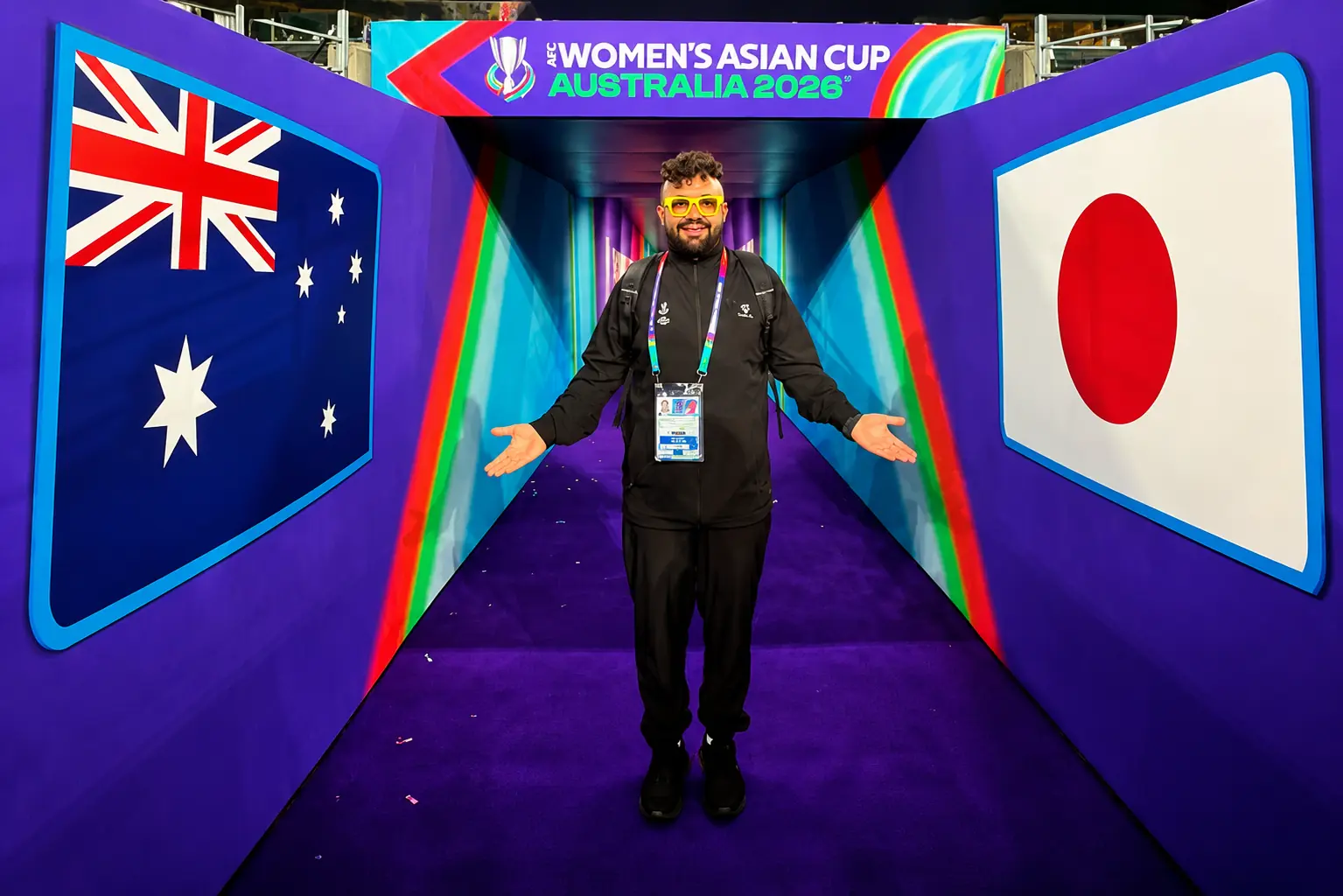
The 26-year-old photojournalist, who lives in Australia and works as a social media specialist for the Asian Football Confederation, was expected to travel to the United States to cover the tournament. His visa application was rejected following an interview of almost one hour at the U.S. Consulate General in Sydney.
The case concerns more than a single photographer, highlighting the political consequences of U.S. travel restrictions that provided exemptions for athletes and team personnel but not for journalists, photographers, or supporters of certain nationalities.
The Interview at the U.S. Consulate
During the examination of his application, Imanian was questioned about his mandatory military service in Iran and whether he had ever travelled to Lebanon or Gaza.
He said that he had never visited either location. Despite his answers, professional role, and assignment for the Asian Football Confederation, his application was rejected.
The photographer had left Iran six years earlier and established his professional base in Australia. His Iranian citizenship, however, remained a decisive factor in his ability to enter the United States.
The Political Restrictions Behind the Decision
The rejection was connected to U.S. government travel restrictions affecting nationals of countries including Iran, Haiti, Senegal, and the Ivory Coast.
The rules provided exemptions for footballers, coaching staff, official delegation members, and immediate relatives. Those exemptions, however, were not automatically extended to members of the media or supporters.
The U.S. State Department maintained that every application was examined individually under the law and established security procedures. It also confirmed that the relevant presidential proclamation suspended visa issuance and entry for most Iranian nationals, subject to limited exceptions.
He Was Not the Only One
Imanian was one of several Iranian journalists who were unable to cover the World Cup from the United States.
More than 20 journalists who were expected to follow Iran’s national team were reportedly unable to secure even an embassy appointment, despite holding FIFA accreditation.
The International Sports Press Association formally contacted FIFA, raising concerns about visa denials affecting accredited journalists from Iran and African countries.
Some journalists who received single-entry visas also faced difficulties. Had they travelled to Canada or Mexico to follow their teams, they would not have been allowed to re-enter the United States for subsequent matches.
The Impact on Iran’s National Team
The political restrictions did not affect journalists alone. Fifteen members of the Iranian delegation, including two analysts and a media manager, were not granted U.S. visas.
The team was also required to move its base from Tucson, Arizona, to Tijuana, Mexico. After matches in the United States, the players had to return immediately to Mexico because they were not permitted to remain overnight in the host city.
The situation prompted criticism from the Iranian side, which argued that player recovery, delegation management, and media coverage had all been affected.
His Experience at Other Major Events
Sajad Imanian has covered international sporting events including the Paris 2024 Olympic Games, the 2026 Winter Olympics in Italy, and previous World Cups.
At the European events, an official invitation or accreditation served as travel authorization alongside his Iranian passport. Entry into the United States required a standard visa application, which was ultimately rejected.
His absence meant that he could not produce photographic and digital content for the Asian Football Confederation at matches held in the United States.
A Press Freedom Issue
The exclusion of accredited journalists and photographers caused concern among press freedom organizations.
The Committee to Protect Journalists had warned that increased immigration enforcement and legal uncertainty could affect the ability of journalists to enter, remain in, and work in the United States.
FIFA did not publicly comment on the specific case, while Iranian journalists argued that the governing body had not provided meaningful assistance.
What We Think
Hosting a World Cup cannot be separated from the political decisions of the host country. When accredited media professionals are excluded because of broad travel restrictions, diversity of coverage is reduced and serious questions arise over whether a global tournament remains genuinely accessible to everyone.
Frequently Asked Questions
Why was Sajad Imanian’s visa rejected?
His application was rejected under U.S. entry restrictions affecting most Iranian nationals.
Did he have World Cup accreditation?
Yes, he was expected to cover the tournament for the Asian Football Confederation.
What was he asked during the interview?
He was questioned about his military service in Iran and possible travel to Lebanon or Gaza.
Did other journalists face the same problem?
Yes, more than 20 Iranian journalists were unable to secure the necessary appointments or visas to cover the tournament.
Why is the case considered a political issue?
The exclusion resulted from state travel policy connected to the applicants’ nationality and affected journalists’ access to an international sporting event.