

Summary
- “Untold UK: Vinnie Jones” is available as a Netflix title and runs for 1 hour and 17 minutes.
- It is an interesting recommendation both for casual viewing and for photographers, videographers and filmmakers.
- Ben Nicholas and David Tryhorn directed the documentary.
- Jonas Mortensen served as Director of Photography and Anton Short as editor.
- Contemporary cinematic footage is combined with television archive from a radically different era.
- The Crazy Gang story also offers a journey into the mentality of old English football.
- What to watch right now: why we recommend it to viewers
- Why visual creators should watch it too
- The direction of Ben Nicholas and David Tryhorn
- Jonas Mortensen’s cinematography
- The environment becomes part of the portrait
- Anton Short’s editing and the value of archive
- Sound and music become invisible editing
- The Crazy Gang and the logic of old football
- Vinnie Jones sits directly between two eras
- It is not a filmmaking masterclass — and that is useful
- It also has limitations
- What we think
- Frequently asked questions
For anyone looking for something to watch right now, “Untold UK: Vinnie Jones” is an interesting choice both for viewers wanting a powerful story from old English football and for creators interested in how directing, cinematography, editing, sound and archive material can turn memory into storytelling.
The Netflix documentary was released on May 26, 2026, runs for 1 hour and 17 minutes and remains listed on the platform in August 2026. It follows Vinnie Jones from construction sites and Wimbledon to FA Cup glory, the 1992 controversy surrounding “Soccer’s Hard Men” and his later transition to Hollywood.
It is also worth watching with a second perspective. For a regular viewer, it is an energetic and nostalgic story about a football era that now feels remarkably distant. For a photographer, videographer or filmmaker, it is simultaneously an opportunity to observe how a contemporary interview is constructed, how environments are used inside the frame and, above all, how modern cinematic footage can be combined with decades-old television imagery without losing narrative cohesion.
What to watch right now: why we recommend it to viewers
Netflix describes “Untold UK: Vinnie Jones” as, among other things, nostalgic, biographical and sports-focused, labels that capture the experience fairly well.
The viewer does not need an extensive knowledge of Wimbledon or English football in the 1980s and 1990s. Jones is a sufficiently powerful character to drive the story himself: from semi-professional football and manual work to top-flight football, FA Cup winner and eventually a recognisable actor.
For those who remember that period, the archive footage works almost instantly. The colours, television cameras, 4:3 imagery, grounds, kits, tackles, crowds and newspaper headlines transport the viewer into a completely different world.
For younger audiences there is something equally interesting: the documentary indirectly explains why there was room for a player such as Jones at the time and how the famous culture of football “hard men” could become part of a team’s identity.
Why visual creators should watch it too
This is perhaps the additional reason why “Untold UK: Vinnie Jones” fits PTTL particularly well.
You do not have to care about football to take ideas from the way the documentary has been constructed.
A photographer can study the use of lighting and environment in the contemporary portraits. A videographer can observe how shot sizes change through an interview and how cutaways prevent visual stagnation. An editor can temporarily ignore the subject and focus on the transitions between talking heads, matches, television appearances, still photographs and newspaper headlines.
And a documentary filmmaker can notice the most important point: archive footage is not merely used as evidence for what is being said. It frequently becomes the carrier of emotion itself.
That is a useful lesson. The technical imperfection of an old image is not always a problem that needs to disappear. It may be precisely what gives a story authenticity, a sense of time and memory.
The direction of Ben Nicholas and David Tryhorn
The documentary is directed by Ben Nicholas and David Tryhorn and produced by Pitch Productions. Max Dobbyn is producer, Jon Owen and Jonathan Rogers are executive producers, while the contemporary filming took place in London in 2024.
The two directors have already worked with major football stories. Their previous collaborations include “Pelé” and “The Figo Affair: The Transfer That Changed Football,” which helps explain their confidence in moving between the mythology of a famous figure and the real story behind that mythology.
The main creative decision is not to turn Jones into the subject of a cold historical investigation. He remains at the centre of the story and speaks about his own life, accompanied by contributors including John Fashanu, Dave Bassett, Bobby Gould, Sam Hammam and Piers Morgan.
That provides immediacy and personality, but it also comes at a cost: the film often positions itself closer to Jones’s world than in opposition to it.
Jonas Mortensen’s cinematography
Jonas Mortensen served as Director of Photography, with Vision Artists confirming his involvement in the production alongside directors Nicholas and Tryhorn.
There is something here that creators should pay particular attention to.
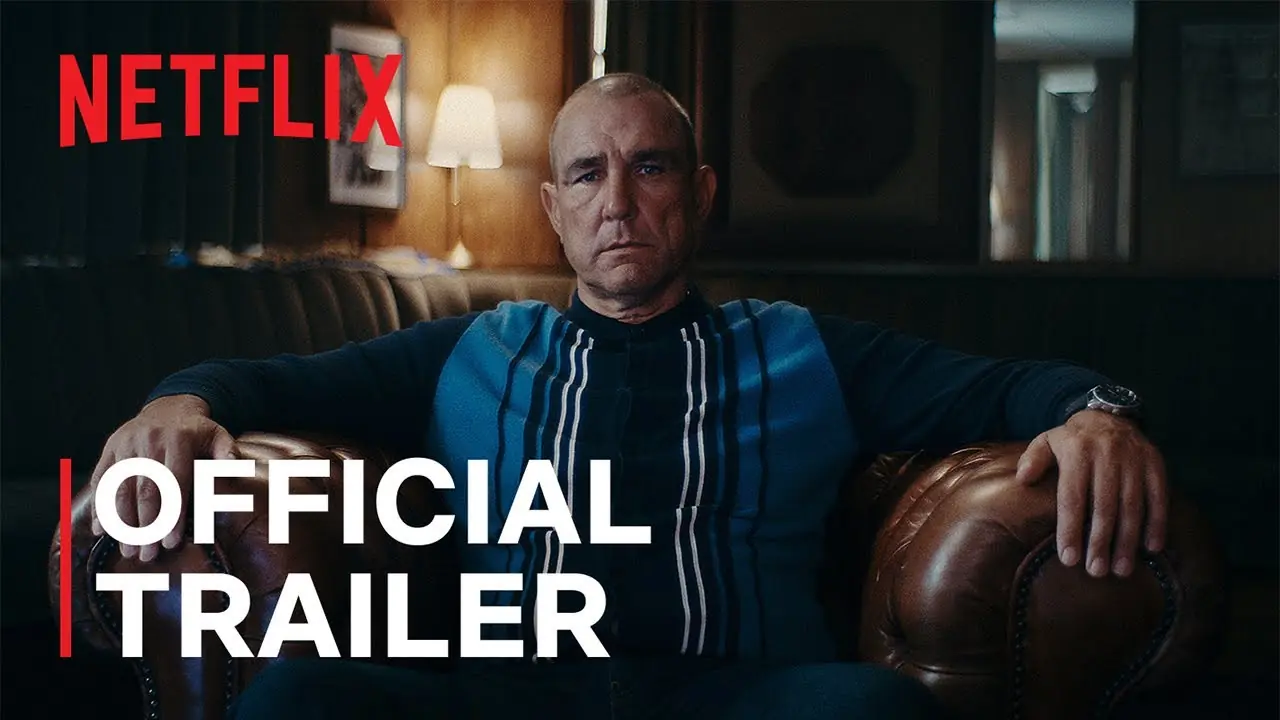
The contemporary photography does not attempt to imitate the past. It does not need artificial grain or an imitation VHS aesthetic. Instead, it allows the modern imagery to remain clearly contemporary and relies on the contrast with genuine archive footage.
This creates two visual timelines.
The present-day Jones appears in controlled, carefully constructed portraits. The younger Jones exists within television cameras from another period, limited dynamic range, older colour reproduction and imagery that inherently carries its age.
The transition from one to the other is more powerful than any artificial retro filter.
The environment becomes part of the portrait
Another element worth observing for photographers and videographers is that the interviews are not treated as simple talking heads against a neutral background.
Space, objects, practical lights and textures contribute to the frame.
It is a reminder that an interview location does not need to be merely somewhere with enough room for a tripod, camera and lights. It can add information about the person and bring depth to an image before a single word is spoken.
The lesson is not to copy a particular setup. It is to ask before every interview: what does this environment say about the person inside it?
Anton Short’s editing and the value of archive
Anton Short edited the documentary.
On a production like this, the editor faces a problem common to many real-world documentaries: sources that technically do not match.
Decades-old material, television broadcasts, different aspect ratios, photographs, media extracts and contemporary digital cinematography all have to become one film.
Trying to completely homogenise them would be a mistake.
The strength comes from the differences.
When a clean contemporary interview cuts to old television footage, the sudden reduction in technical quality becomes a narrative advantage. The viewer immediately feels the transition in time.
For an editor, this may be one of the most important lessons in the film: continuity does not necessarily mean identical imagery. It means that different imagery serves the same story.
Sound and music become invisible editing
The score was created by Toydrum, while available credits list Patrick Fripp as sound designer and Nas Parkash in the sound department.
Their work becomes particularly important when the visual material is constantly moving between eras.
An old football match does not sound like a contemporary interview. A television tape, a news extract and a modern filmed conversation belong to entirely different technical worlds.
Sound can make those transitions feel natural.
For a creator, the documentary may therefore deserve a second viewing with less attention paid to the image: when does the music enter, when does it disappear, when is the natural archive sound preserved and how is the intensity of a sequence being built before the viewer consciously notices the editing?
The Crazy Gang and the logic of old football
All of this works because there is also a very good story underneath.
Jones was part of the Wimbledon side known as the Crazy Gang, a team associated with intense physicality, a distinctive culture and a footballing identity that would be difficult to reproduce in exactly the same form today.
The defining moment came in 1988, when Wimbledon defeated Liverpool 1-0 at Wembley to win the FA Cup. Dave Beasant became the first goalkeeper to save a penalty in an FA Cup final and the first goalkeeper to lift the trophy as captain.
That is where an important part of the nostalgia lies.
The Crazy Gang did not simply consist of “hard men.” It had a specific footballing personality. Duels, second balls, intensity, psychological pressure and direct play could all form part of the plan.
The result against Liverpool gave that identity something far more important than reputation: success.
Vinnie Jones sits directly between two eras
The story becomes even more interesting because Jones’s career coincided with a major transition in English football.
In 1992, the controversial video at the centre of the documentary generated a major backlash and threatened his career just as the new Premier League era was beginning. That transition is a key part of Netflix’s own presentation of the story.
It is almost symbolic.
The old world of hard men, ageing grounds and a more local television culture was colliding with a product that would become one of the world’s most powerful sporting industries over the following decades.
That is also why images of Jones now appear so distant. The cameras and resolution did not simply change. The entire ecosystem changed.
It is not a filmmaking masterclass — and that is useful
There is no need to present “Untold UK: Vinnie Jones” as a cinematography masterpiece to justify recommending it to creators.
Its value lies precisely in the fact that it is a professional documentary production in which craft serves the subject.
A creator can observe how an interview remains engaging without extreme camera movement, how an old clip can be more powerful than a technically perfect modern shot and how 77 minutes of radically different material can find a common rhythm.
That can often be more useful than studying only films in which the cinematography deliberately places itself in the foreground.
It also has limitations
Critical response was not unanimously enthusiastic. The Guardian awarded it three out of five stars, describing it as energetic and entertaining but arguing that it avoids deeply challenging Jones about several aspects of his behaviour and public persona.
That matters because it also affects how the direction can be interpreted.
The film chooses experience and personality over rigorous deconstruction. That makes it accessible and enjoyable viewing, particularly for someone simply looking for something to watch in the evening, but it also means it should not be regarded as the final word on Jones or the Crazy Gang.
What we think
“Untold UK: Vinnie Jones” is one of those recommendations that works on two levels. As a viewer, you can simply enjoy 77 minutes of football history, nostalgia, extraordinary characters and imagery from a world that no longer exists. As a creator, you can watch it again and look behind the story: interview setups, light, textures, changing formats, archive usage, editing rhythm and sound.
That is also why it is a strong recommendation right now. You do not need to be a dedicated football fan to find something worthwhile in it. And for a photographer or filmmaker there is another useful reminder: powerful storytelling does not always require technically perfect imagery. Sometimes an old, noisy television recording carries more emotion than the most carefully crafted contemporary shot.
Frequently asked questions
Is “Untold UK: Vinnie Jones” worth watching if you are not a football fan?
Yes, provided you enjoy biographies and strong personalities. The documentary uses Jones’s football career as its foundation, but his path from construction sites to Wimbledon and eventually Hollywood reaches beyond the sport itself.
Why is it interesting for photographers and filmmakers?
Because it combines contemporary filmed interviews with extensive archive material and demonstrates how lighting, production design, editing and sound can create a coherent story from technically very different sources.
Who was the Director of Photography?
Jonas Mortensen served as Director of Photography.
Who directed and edited the film?
Ben Nicholas and David Tryhorn directed it, while Anton Short served as editor. Pitch Productions produced the documentary.
How long is it and when was it released?
“Untold UK: Vinnie Jones” runs for 1 hour and 17 minutes and was released on Netflix on May 26, 2026.