Summary
- Peoria Riverfront Museum acquired an 1858 ambrotype of Lincoln.
- The photograph is attributed to Roderick Cole and was taken in Peoria.
- The plate was located at a rare book fair in New York City.
- It will remain in the museum’s permanent collection.
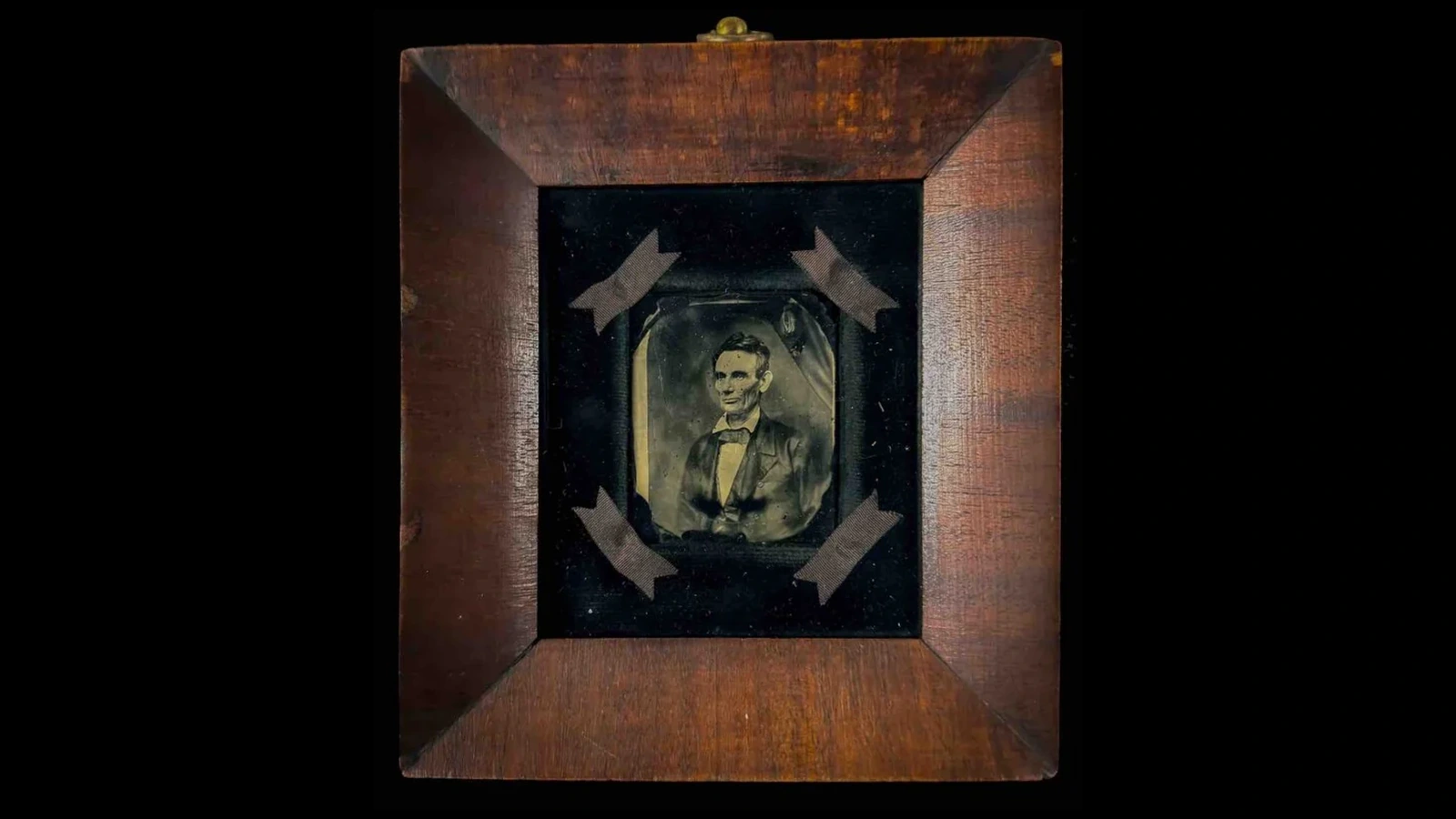
The original glass portrait of Abraham Lincoln from 1858 is returning to Peoria, Illinois, after the Peoria Riverfront Museum acquired it for its permanent collection.
The museum announced the acquisition on October 20, 2026, its 14th anniversary. The image shows a beardless Lincoln during his Senate campaign against Stephen A. Douglas.
https://youtube.com/watch?v=T1XtnSZv_-o%3Fsi%3DhRMcRKKZ5Xg6-MaV
The portrait and its city
Known as the “Peoria Portrait,” the photograph is attributed to Roderick M. Cole, whose studio stood at the corner of Main and Washington streets. Chief curator Bill Conger describes it as the only known photograph of Lincoln taken in Peoria.
Lincoln’s connection to the city already carried political significance: on October 16, 1854, he delivered his speech there opposing the expansion of slavery into U.S. territories. The portrait followed four years later, before his presidency.
Lincoln reportedly favored this portrait among his early photographs. The image was later reproduced as cartes de visite, small paper photographs circulated among voters and supporters. A studio portrait thus helped introduce the politician’s face to a wider public.
From a rare book fair to a permanent collection
Daniel Weinberg of Abraham Lincoln Book Shop Inc. in Chicago and Seth Kaller, curator of “The Promise of Liberty,” located the ambrotype at a rare book fair in New York City, after decades in private hands.
According to the museum, Weinberg authenticated it following extensive correspondence with other Lincoln specialists. The museum’s America 250 donors funded the acquisition. The portrait is on display through the end of 2026 and will remain in Peoria permanently.
What exactly is an ambrotype?
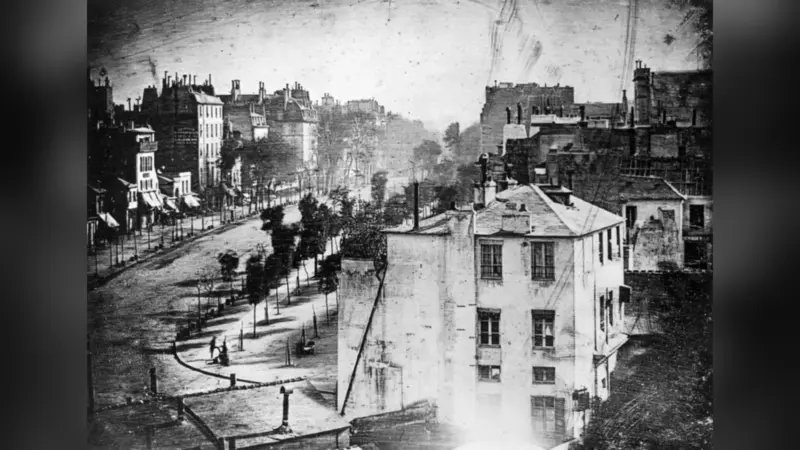
An ambrotype is a photograph on glass: an underexposed collodion negative appears positive when placed against a dark backing. The process was widely popular from the mid-1850s to the mid-1860s, before giving way to paper photographs that could be reproduced more easily.
Within the history of photography, processes like this remind us how closely an image was tied to its physical material. The object acquired here is the glass plate the museum identifies as the original, carrying a different documentary value from a later paper reproduction.
What we think
For us, the appeal is the opportunity for the public to see the photographic object itself. In a digital file, we tend to focus on Lincoln’s face. In front of the plate, we can also examine the glass, its presentation and the way a 19th-century photograph was meant to be held and viewed.
Its return to the city where it was taken matters too. The studio’s location and the sitter’s political career give specific context to an image we might otherwise treat as another famous historical portrait. That connection between image, place and provenance gives its museum presentation substance.