Summary
- Sergei Loznitsa’s Imperium won Best Film at the 70th BFI London Film Festival.
- It draws on Italian archival footage of the Soviet Union from 1970–1973.
- Asmahan Bkerat’s Concrete Land received the Grierson Award, following a Bedouin family in Jordan.
Sergei Loznitsa’s Imperium won the Best Film Award at the 70th BFI London Film Festival, putting a documentary made entirely from archival images of the Soviet Union at the centre of the awards.
The results were announced on 18 October 2026. Asmahan Bkerat’s Concrete Land received the Grierson Award in Documentary Competition with a story of family, displacement and survival in Jordan.
Watch an official clip from Imperium.
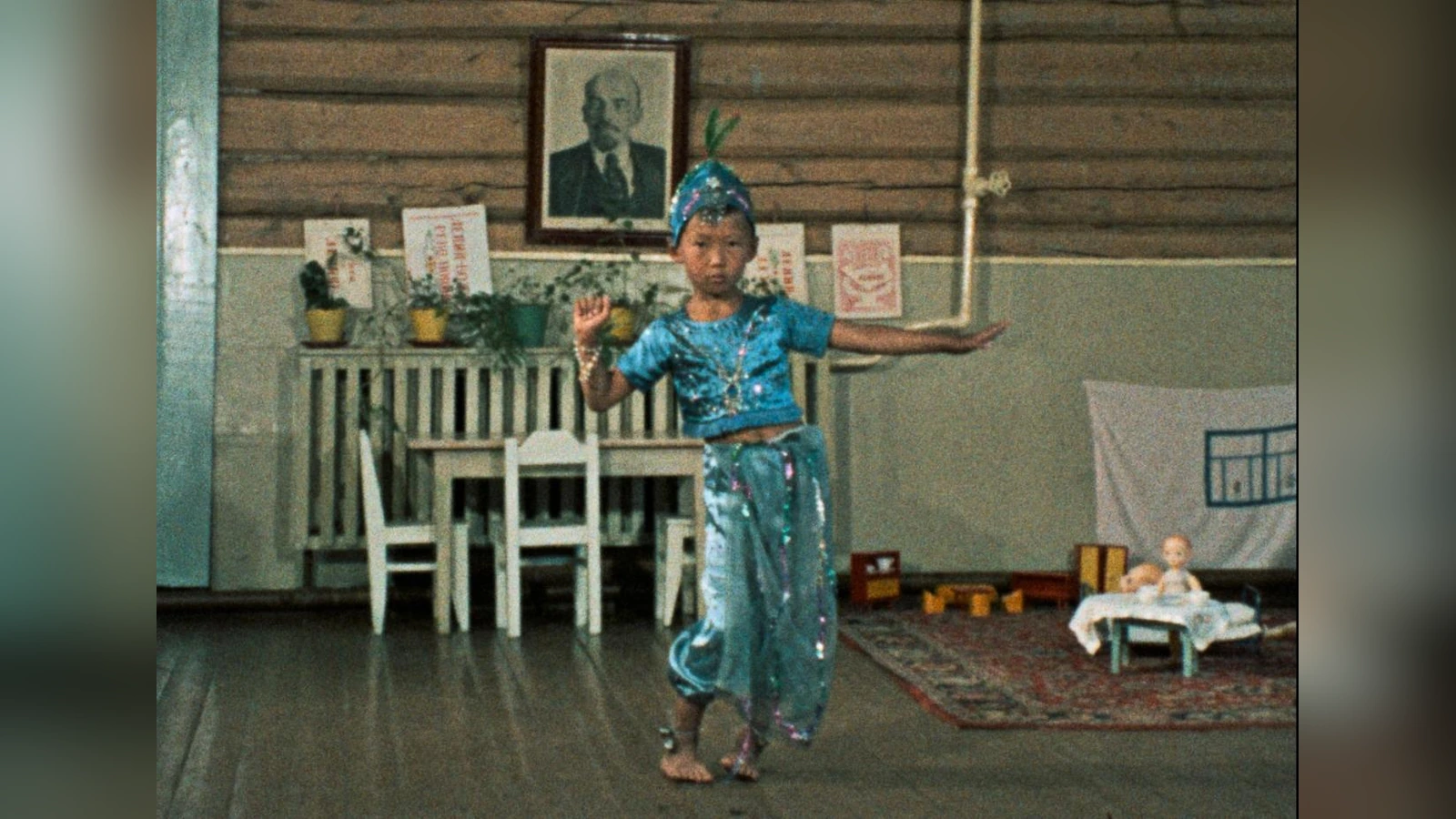
Imperium: The Soviet Union through an Italian archive
Sergei Loznitsa draws on footage shot by Italian filmmakers between 1970 and 1973 and preserved at Rome’s AAMOD archive. Their expeditions covered more than twenty regions of the Soviet Union, recording its cultural, social and religious diversity.
The journey begins in Moscow and moves towards remote communities. The official image of a unified empire encounters different languages, traditions and ways of life. That gap sits at the heart of the film: what images preserve of people’s lives beyond the unity the state seeks to project.
Imperium uses no voice-over or explanatory commentary. Its narrative rests on the connections between shots, with editing by Audinga Kučinskaitė and Loznitsa.
Concrete Land: Eight years with one family
In her feature documentary debut, Palestinian-Jordanian filmmaker Asmahan Bkerat follows the Najars, an Afro-Palestinian Bedouin family on the outskirts of Amman. They live in tents alongside their animals as urban expansion, the threat of eviction and racism put pressure on their everyday lives.
Bkerat followed the family for eight years. The grandfather holds on to his land and sheep, his son faces the uncertainty of their remaining there, and Eman grows from a child into a teenager. The different generations give a human face to the conflict between preserving a way of life and finding a secure home.
The Documentary Competition jury singled out the image-making, sound design and construction of scenes, placing particular emphasis on the filmmaker’s trusting relationship with the people she films.
Watch the trailer for Concrete Land.
The other awards
The Sutherland Award for a first feature went to Sompot Chidgasornpongse’s 9 Temples to Heaven.
Watch the trailer for 9 Temples to Heaven.
Rahul Roye’s Aman received the Short Film Award.
Watch the trailer for Aman.
Special mentions went to Bertil Nilsson’s Masc, Theo Rollason’s Queer Edward II and Elizabeth Hobbs’s Daughters of the Late Colonel, in the first feature, documentary and short film competitions respectively.
Watch the teaser for Masc.
Watch an official clip from Queer Edward II.
Watch the trailer for Daughters of the Late Colonel.
What we think
Archival filmmaking matters whenever we reopen old footage and ask what story it might tell today. With Imperium, the absence of voice-over particularly interests us: the order and duration of shots carry more of the narrative weight. It is worth watching the film with that choice in mind and paying attention to how an image’s meaning shifts with the one that follows.
With Concrete Land, we are drawn to the time devoted to its subjects. Eight years means returning, encountering change and allowing relationships to develop alongside filming. When Panagiotis Papoutsis discusses trust while filming Mona Kleidia, he stresses consistency and respect. That work directly affects how close a camera can get to someone’s life, and often requires more patience than any technical decision.