

Summary
- Twenty-seven interviews with photographers in London
- Runtime: 1 hour 45 minutes
- Shot mainly on a Panasonic X1600E using available light
- Available online from September 17, 2026
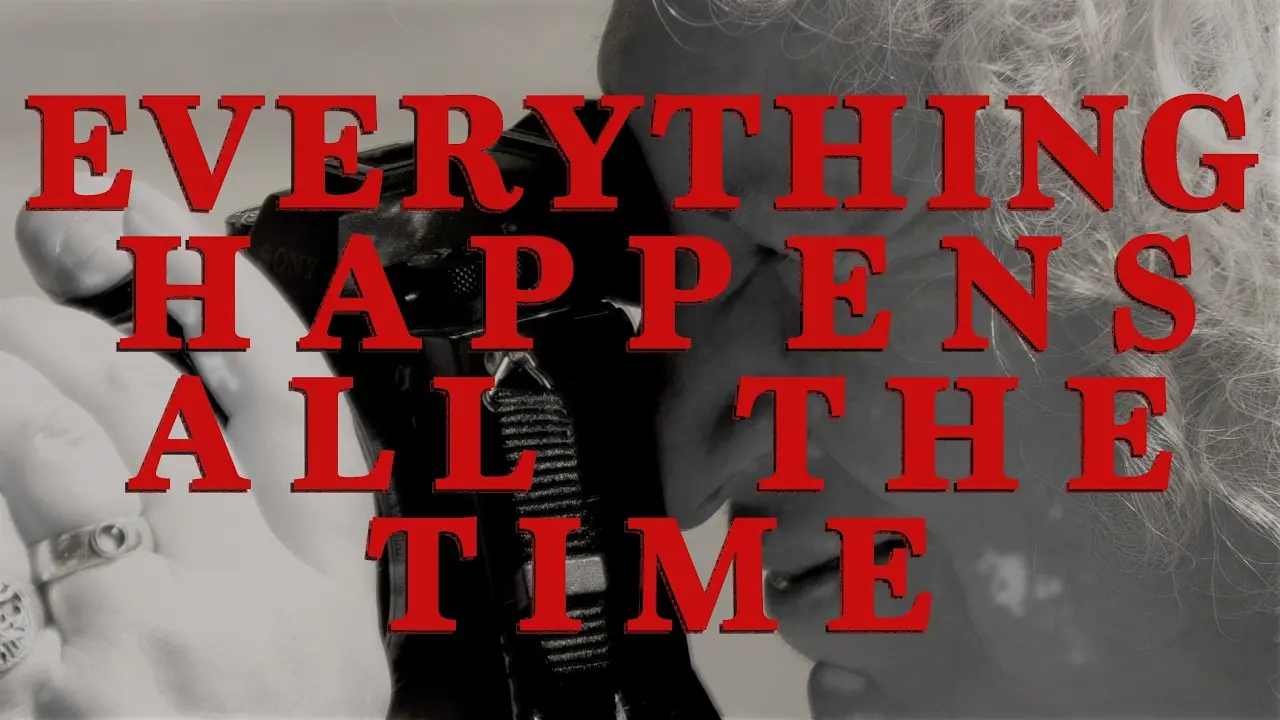
Simon King’s Everything Happens All the Time documents London’s contemporary street-photography community through 27 interviews, photographs and observational footage from the city.
The 1 hour 45 minute documentary does not try to confine street photography to a rigid definition. It brings together photographers with different levels of experience and different approaches, from candid street photographers to photojournalists, documentary photographers and creators working in more abstract ways.
Twenty-seven photographers and one London community
Simon King is himself a street and documentary photographer. The film grew out of repeated encounters and conversations with people he regularly saw on the streets, at photography meet-ups and around events in the city.
Everything Happens All the Time looks not only at how each person photographs, but also at the relationships between photographers and the community that has formed around the genre in London. The film is built around 27 interviews, combined with still photographs and street footage.
Street-photography logic shaped the production
The same need for speed, discretion and readiness also shaped the production. King primarily chose a Panasonic X1600E instead of a larger cinema rig so he could carry the camera every day, move quickly and react when a moment appeared.
The X1600E’s built-in lens offers an approximately 25–600mm equivalent range, allowing him to change framing and distance immediately without swapping lenses. Audio was recorded with a DJI Mic Mini system connected to the camera.
Nothing but available light
No dedicated artificial-lighting setup was used during the production. Interviews and observational footage were lit by whatever was available at the time: sunlight, shade, window reflections and the diffuse grey light of an overcast London day.
King says most of the film was shot at 24fps with a 1/48-second shutter, keeping gain at its lowest native setting. In many situations he left the aperture on automatic so he could focus on the subject rather than constant exposure adjustments.
Deeper depth of field and the unexpected in frame
The X1600E’s relatively small sensor produces deeper depth of field than the very shallow look often associated with “cinematic” imagery. For King, that matched his still-photography approach because he wants to preserve the relationship between the main subject and what is happening around it.
One telling example came during the interview with Elliott Gunn. While Gunn was speaking, a couple in the background kissed for an extended period and remained clearly visible in the frame. The spontaneous detail became, in effect, a street-photography moment inside the documentary itself.
A production that keeps its imperfections
King is open about the film also being a learning process. Interviews were often arranged spontaneously when photographers were available, and practical compromises in both image and sound remain visible in parts of the finished film.
Rather than chase a completely controlled production, he chose to preserve the immediacy of the process. That approach connects directly with the film’s subject: observing the street and being ready to record something that cannot be predicted.
What we think
The documentary’s most interesting idea is that it treats street photography as a living, varied practice rather than a strict set of rules. The way it was made — with a compact setup, available light and an emphasis on reacting to the moment — also closely mirrors the logic of the photographic genre itself.
Frequently asked questions
What is Everything Happens All the Time?
It is Simon King’s feature-length documentary about street photography and the community of photographers that has formed around the genre in London.
How many photographers take part?
The film is built around 27 interviews with photographers of different experience levels and approaches.
How long is the film?
The documentary runs for approximately 1 hour and 45 minutes.
What camera was it shot on?
Simon King primarily used a Panasonic X1600E, with DJI Mic Mini for audio.
Was artificial lighting used?
No. The production relied on available light in London, without a dedicated lighting setup.