Summary
- Pichai Prathetsena’s photograph in a Facebook group drew the attention of Thai authorities.
- A field inspection confirmed six theropod footprints dating back approximately 120 million years.
- The discovery area was temporarily closed for protection and further examination.
A tourist’s photograph shared in a Facebook group led specialists to six dinosaur footprints dating back approximately 120 million years in Thailand.
Pichai Prathetsena was visiting the Phu Phrabat area in Udon Thani province with his family when he noticed unusual marks in rock near a forest stream. He photographed them and shared the image in a Thai animal-identification group. The post reached the relevant authorities, who contacted him.
Six footprints from the Early Cretaceous
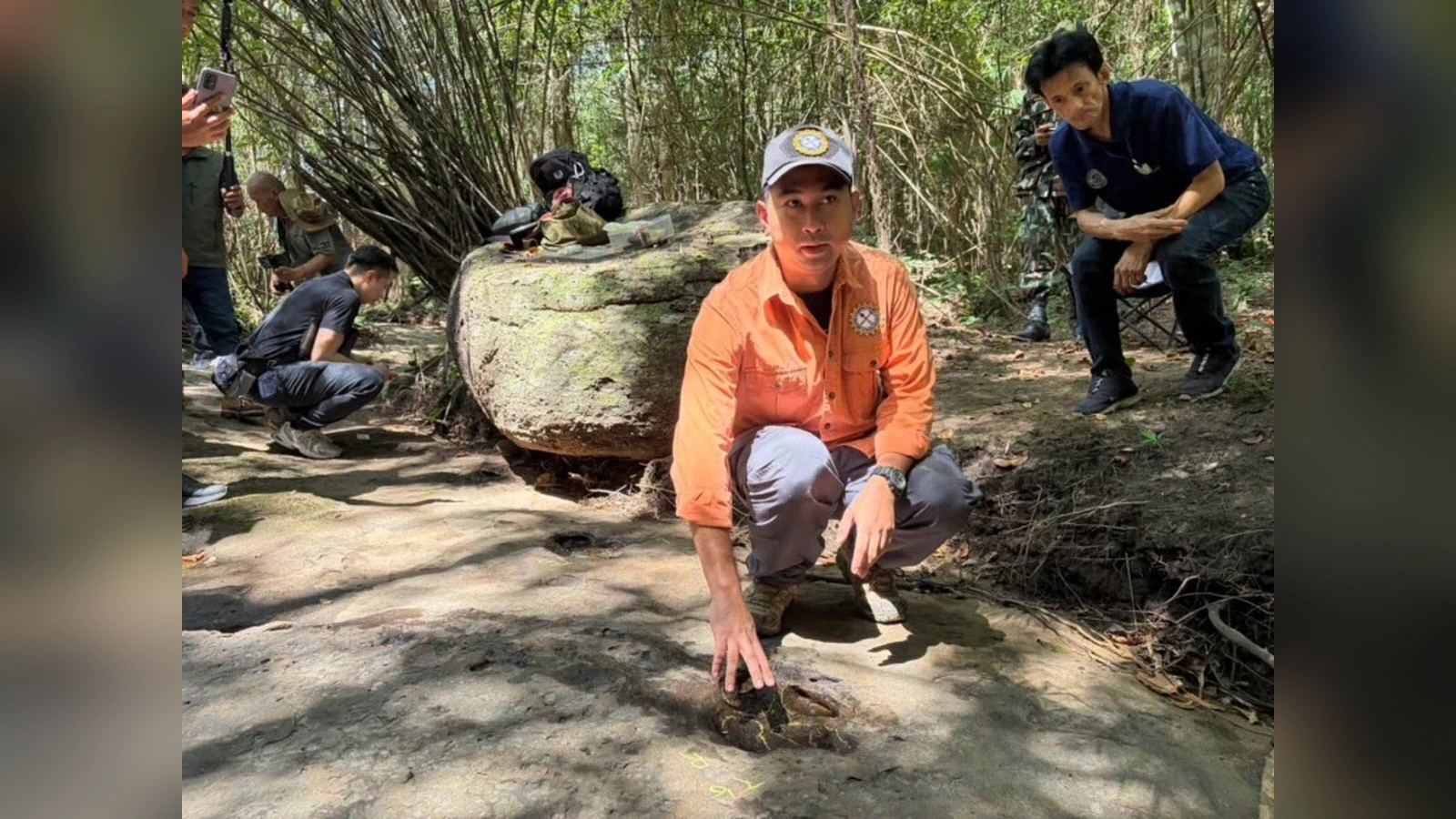
A field inspection by the Department of Mineral Resources on October 20 confirmed six footprints forming a single trackway in Phu Hin Chom That–Phu Phrabat National Park. They are preserved in rock belonging to the Phu Phan Formation, which dates to the Early Cretaceous, approximately 120 million years ago.
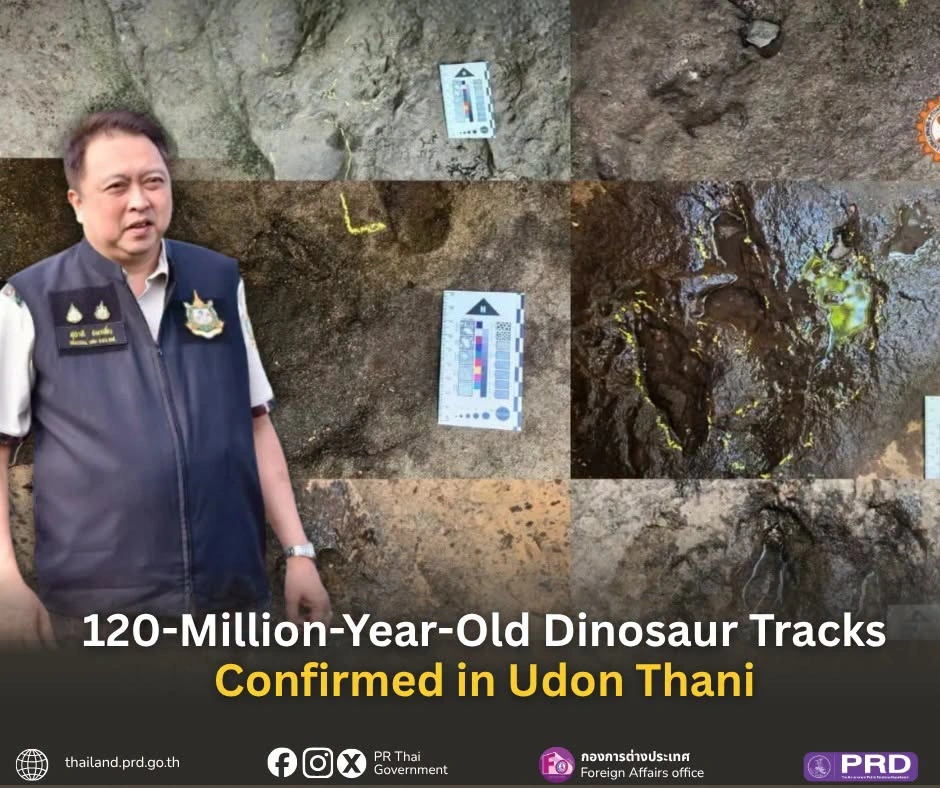
The three-toed prints measure approximately 29 centimetres long and 26 centimetres wide. Researchers attribute them to a meat-eating theropod that walked on its two hind legs, estimating an overall length of around 6.3 metres and a hip height of 1.42 metres. Those dimensions are estimates derived from the tracks.
A footprint can survive when an animal steps into soft sediment and fresh layers cover the impression before it is destroyed. As the sediment turns to rock, the shape of the footprint is preserved. These trace fossils can provide evidence of an animal’s movement and gait, adding to what researchers learn from skeletal remains.
Protecting the site and temporarily restricting access
In its October 21 announcement, the Thai government said the discovery area had been temporarily closed to protect it from erosion and human disturbance while examinations continued. It also asked the public not to dig, move or disturb any evidence.
No skeletal remains were found at the site. The announcement explains that fossil protection also covers traces left by prehistoric life. Preserving the trackway is intended to support future research and educational use of the site.
Getting a photograph in front of the right people
The path from a public post to field research recalls the tourist’s photograph that led to the discovery of a new plant species in Portugal. In both cases, a visitor recorded an unusual detail, specialists saw the image, and scientific investigation followed.
What we think
For those of us who photograph nature, this is a good reason to keep images that will never make it into a portfolio. An odd mark in a rock can deserve a clear photograph even when we have no idea what it is. A wider view of the location, a close-up and a record of the place and date give a specialist much more to work with.
That also means leaving a discovery as we find it. Cleaning or highlighting a track to make it look better in a photograph could damage the very information that makes the image useful. What matters here is that the photograph reached people who could assess it and return to the location.