

Summary
- A tourist's iNaturalist photo triggered field research that led to the scientific description of Linaria alfercensis in Portugal.
A smartphone photo taken by a German tourist in Monchique, Portugal, became the starting point for the description of a new plant species, Linaria alfercensis.
The photo was taken in March 2023 and uploaded to iNaturalist, the citizen-science platform where users record observations of plants and animals. Portuguese botanist João Farminhão, a researcher at the University of Coimbra’s Centre for Functional Ecology, noticed it because the flower pattern did not match the known species in the group.
From an iNaturalist observation to field research
The original observation was not enough to prove that this was a new species. In 2024, Farminhão travelled to Cerro do Castelo de Alferce in the municipality of Monchique, Algarve, where he found a small population of the plant. The subsequent research combined field collections, herbarium material, citizen-science records and phylogenomic analysis.
The study involved researchers affiliated with the University of Coimbra, the University of Lisbon, the University of Barcelona and Madrid’s Real Jardín Botánico. It was published on 25 August 2026 in Plant Ecology and Evolution.
The new species Linaria alfercensis
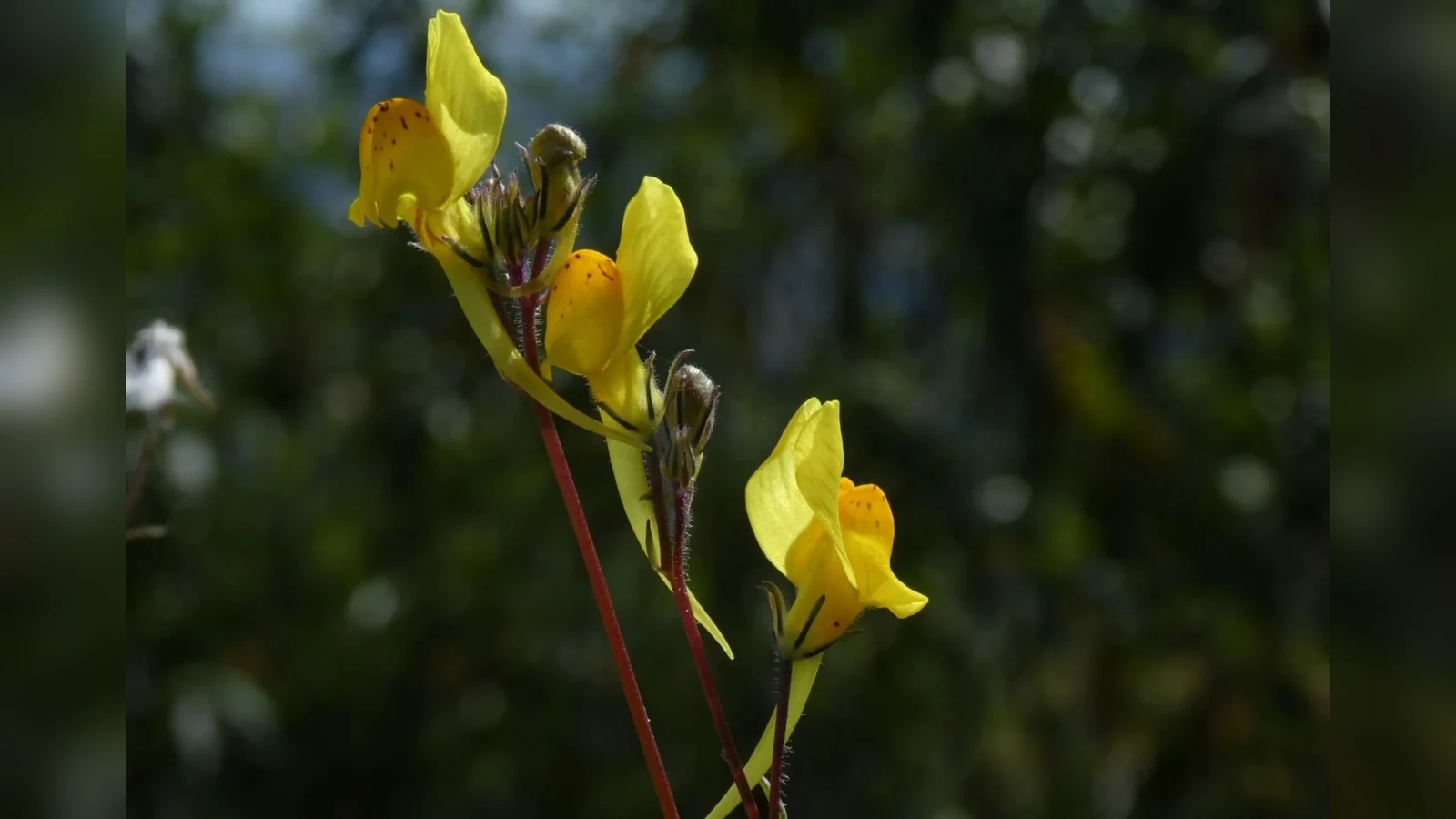
The new species was named Linaria alfercensis after Alferce, where it was found. Its scientific description notes a yellow corolla with spotting and two orange to reddish-brown bands in the flower throat, along with dense inflorescences.
Its known distribution is extremely restricted within the Serra de Monchique. The study’s authors preliminarily assess it as Endangered, as its small known population and habitat degradation make it vulnerable.
When a photograph becomes a scientific clue
The story highlights an often overlooked aspect of nature photography: an image can become a record that allows a specialist to spot something unusual. In the case of Linaria alfercensis, the iNaturalist photo was the first signal, but scientific confirmation required fieldwork, morphological comparison and genomic data.
That is also the key limit of citizen science. A photograph can open the door to a discovery, but documenting a new species requires far more than a striking frame.
What we think
The significance of this story is not the technical complexity of the original photo, but the fact that the observation was recorded, shared with place and time information, and reached a specialist. For nature photographers, it is a useful reminder that systematic documentation can have value beyond the aesthetics of an image.
Frequently asked questions
Which photo led to the discovery?
It was a smartphone photo taken by a German tourist in Monchique in March 2023 and uploaded to iNaturalist.
Who realised the plant might be an unknown species?
Botanist João Farminhão of the University of Coimbra’s Centre for Functional Ecology spotted the observation and began the field investigation.
How was it confirmed as a new species?
The team combined morphological study, herbarium material, citizen-science data and phylogenomic analysis before formally describing Linaria alfercensis.
Is the new species considered threatened?
Yes. The researchers preliminarily assess it as Endangered because of its extremely restricted distribution and pressure on its habitat.