

Summary
- Yellowstone’s Geology team has removed more than 20,100 pieces of trash from hydrothermal areas so far in 2026.
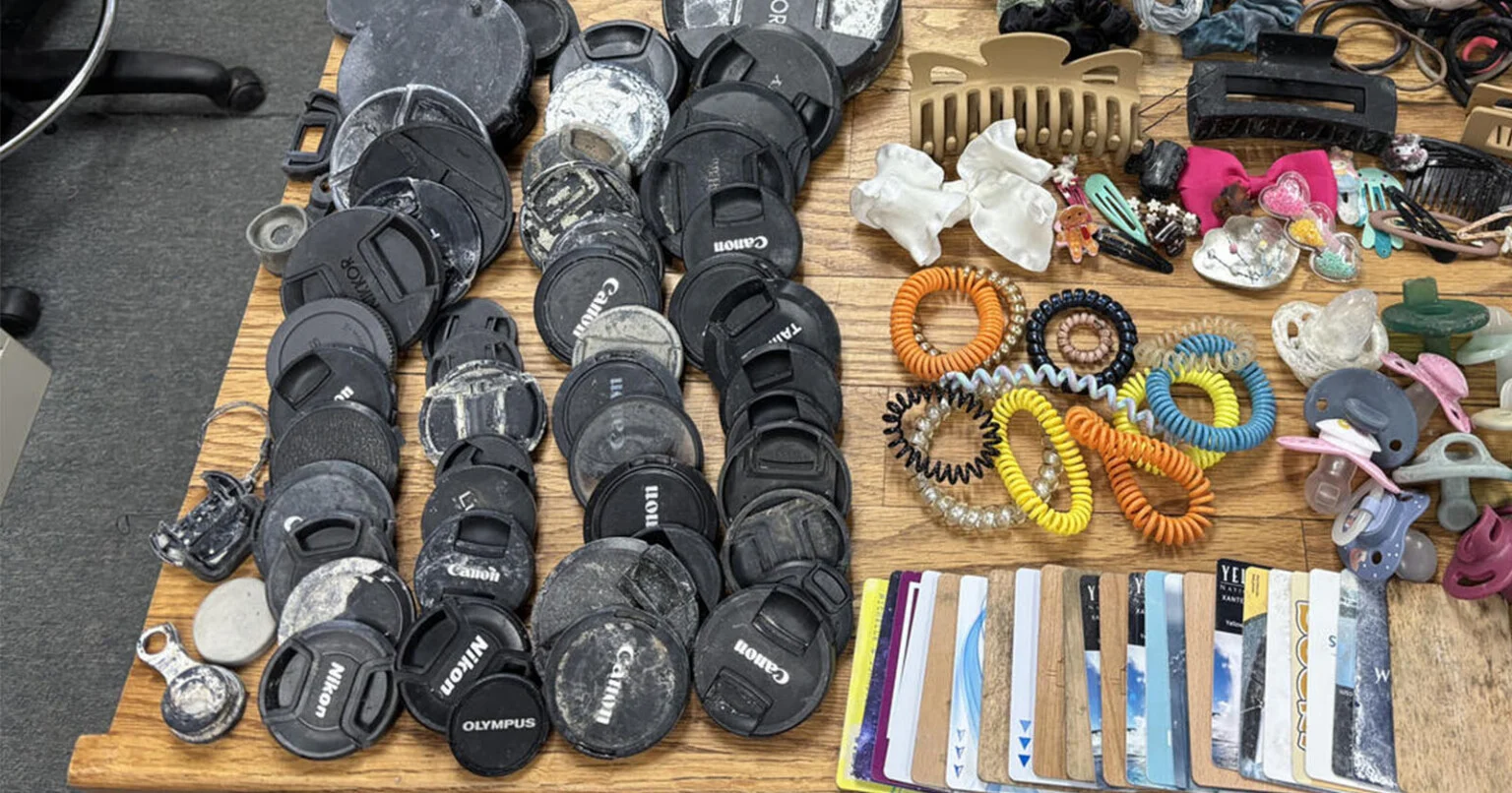
- Among the most common items were 54 camera lens caps, along with 36 pairs of sunglasses, 47 hair ties and 42 pencils.
- Foreign material can clog water supplies, alter runoff channels or introduce chemicals and sediment into hydrothermal features.
- Photographers are urged to secure loose items and never leave boardwalks or trails to retrieve gear that falls into a thermal area.
At Yellowstone, lens caps have become one of the most common objects ending up where they should not: inside the national park’s fragile hydrothermal areas.
According to the U.S. Geological Survey’s Yellowstone Volcano Observatory, by early September 2026 Yellowstone’s Geology team had removed more than 20,100 pieces of trash, about 5,600 rocks and sticks and more than 280 hats from hydrothermal areas across the park. The observatory described 2026 as a record-setting year so far.
54 lens caps in thermal areas
Among the most commonly recovered items were 54 camera lens caps. The team also found binocular parts, camera body caps and other small photography-related items, while seven instant photographs had also ended up in hydrothermal areas.
The list also included 47 hair ties, 17 pacifiers, 20 hotel key cards, 42 pencils and 36 pairs of sunglasses. Stranger finds included AirPods, airline pins, golf tees, toys and even a single Uno card.
Why a small lens cap can become a problem
This is not merely a cosmetic issue. The Yellowstone Volcano Observatory explains that foreign material can permanently alter a hydrothermal feature by clogging its water supply, blocking or diverting runoff, or introducing chemicals and sediment.
Morning Glory Pool is a well-known example of a feature historically affected by objects thrown or dropped by visitors. The National Park Service also stresses that visitors must stay on boardwalks and designated trails because scalding water and unstable ground in thermal areas can cause severe injuries.
What photographers should do
For photographers, the practical message is straightforward: secure small, lightweight accessories before entering hydrothermal areas, especially in windy conditions. If a lens cap or another item falls beyond the safe route, it is not worth leaving the boardwalk to retrieve it.
The National Park Service’s own photography guidance for Yellowstone tells visitors to remain on boardwalks and trails in thermal areas. Protecting equipment comes second to photographer safety and to protecting an exceptionally sensitive natural system.
What we think
The 54 lens caps are a small but concrete example of how photographing popular natural destinations also carries practical responsibility. A simple tether, a secure pocket or removing the cap before reaching the shooting position can keep a small object from entering an environment where retrieval is dangerous and the object itself can cause harm.
Frequently asked questions
How many lens caps were found in Yellowstone in 2026?
By early September, 54 camera lens caps had been removed from hydrothermal areas in the park.
How much trash has been removed in total?
Yellowstone’s Geology team reported more than 20,100 pieces of trash, along with about 5,600 rocks and sticks and more than 280 hats.
Why should visitors not retrieve a dropped object?
Hydrothermal areas contain extremely hot water and dangerous, unstable ground. Visitors must stay on boardwalks and designated trails.
Can small objects damage thermal features?
Yes. USGS says foreign material can clog water supplies, alter runoff and introduce chemicals or sediment into the system.